Food
Nature
Where to see autumn colours in the Madonie: 6 places with beech, holly and maple, the best weeks, how to get there from Palermo and Cefalù, park rules.
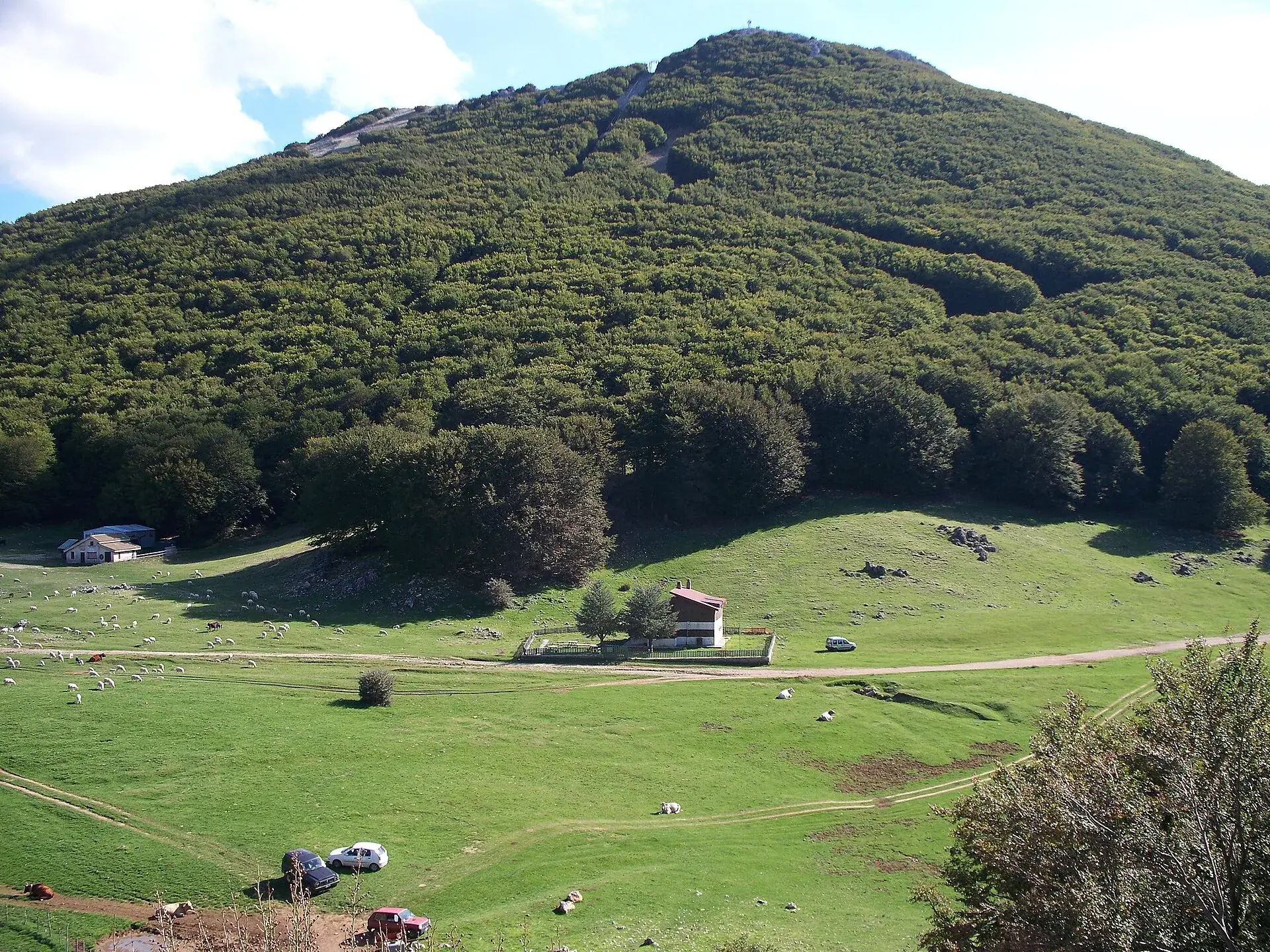
Autumn colours in the Madonie are at their best in the high beech woods, which according to ISPRA grow almost only between 1,500 and just over 1,900 metres: Piano Battaglia and Monte Mufara, the Pizzo Carbonara loop, Monte San Salvatore, Piano Pomo and the Vallone Madonna degli Angeli. Local guides point to October and the first half of November. From Palermo to Piano Battaglia it is about 97 km.
At a glance
The beech is a tree of central and northern Europe. In the Madonie it reaches the end of the line and goes no lower: that is why you find it almost only above 1,500 metres, in the coolest and shadiest spots. This comes from the ISPRA nature sheet on the Madonie Geopark.
The same sheet mentions a place worth the trip. In the Vallone Madonna degli Angeli, near Polizzi Generosa, beech and holm oak grow on opposite sides of the valley: the beech on the shady slope, the holm oak on the sunny one. In autumn one turns yellow and the other stays green.
Other trees from colder climates also grow in the Madonie, such as wych elm, sessile oak and sycamore maple (again ISPRA). They lose their leaves in winter and change colour together with the beeches in autumn.
No public body publishes a foliage calendar for the Madonie. Local guides point to a window from October to the first half of November: Balarm already wrote this in 2017. In 2024, for example, an AIGAE nature guide took a group into the beech wood at Portella Colla “in a typically autumnal range of colours” on 3 November.
The colours depend on cold nights, wind and rain in any given year. A strong storm can strip the branches within a few days, so check the situation before you set off:
In 2026 the last weekend of October coincides with the Funghi Fest in Castelbuono and the Festa dei Sapori Madoniti d’Autunno in Petralia Sottana, both from 23 to 25 October. You can combine woods and food festival, but expect more traffic. Programmes and tips for doing both festivals are in our article on the weekend of 23-25 October.
| Place | Municipality | Start |
|---|---|---|
| Piano Battaglia and Monte Mufara | Petralia Sottana | Piano Battaglia |
| Pizzo Carbonara loop | Petralia Sottana, Isnello | Piano Battaglia |
| Monte San Salvatore | Polizzi Generosa | Portella Colla |
| Vallone Madonna degli Angeli | Polizzi Generosa | SP119, Portella Colla |
| Piano Pomo | Castelbuono, Petralia Sottana | Piano Sempria |
| Piano Zucchi | Isnello | Piano Zucchi |
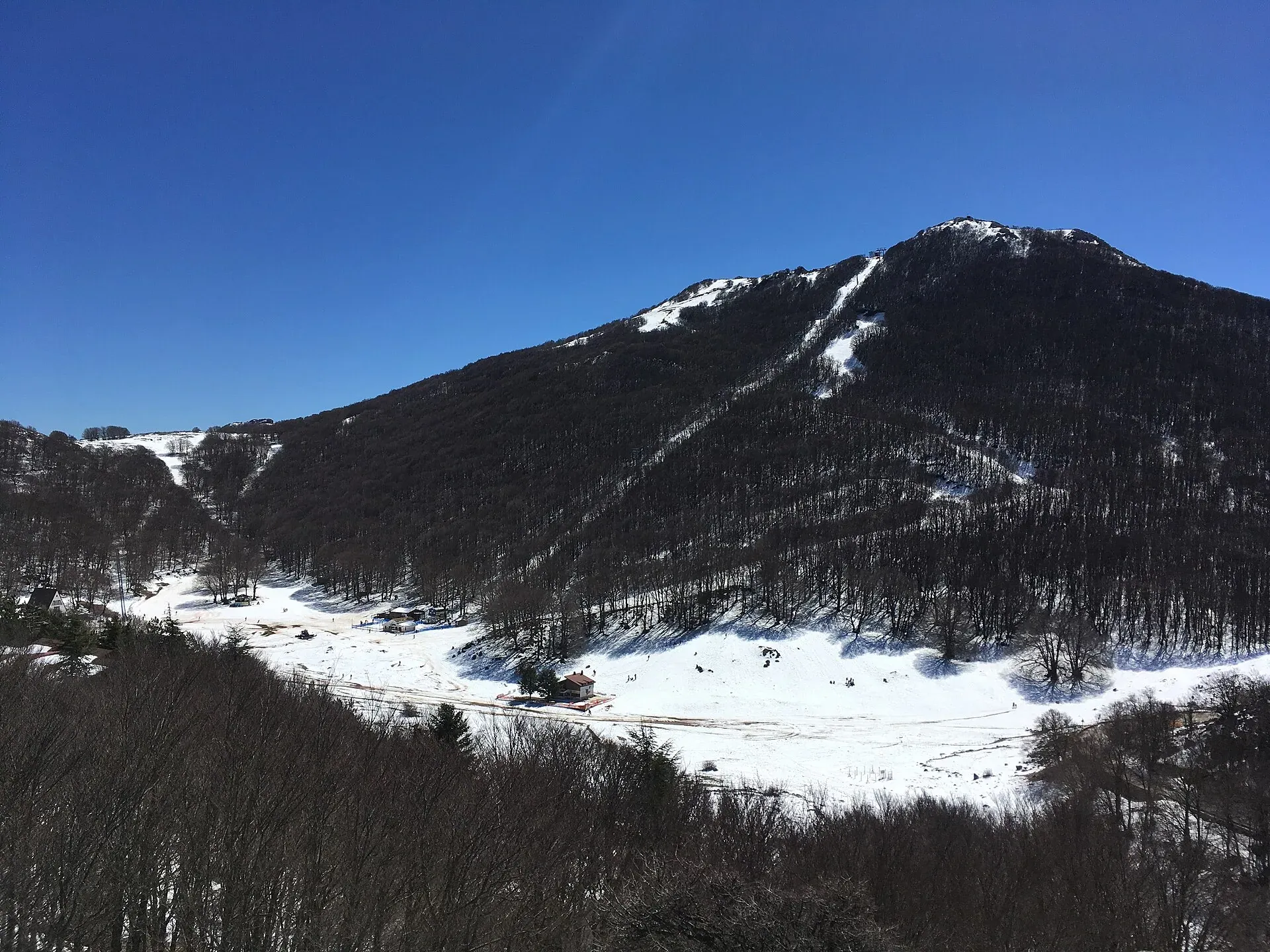
This is the easiest beech wood to reach: Balarm describes it as one of the most beautiful and accessible in Sicily. The plateau lies at about 1,600 metres, between Monte Mufara and Monte San Salvatore (Metropolitan City of Palermo).
If you do not want to climb a peak there are two waymarked trails. The Battaglietta-Portella Colla geology trail is about 5.2 km long, with 12 stops on the rocks and fossils of the Geopark. The Filippo Arena nature trail climbs the slopes of Monte Mufara.
Pizzo Carbonara, 1,979 metres, is the highest peak in the Madonie. The loop from Piano Battaglia climbs through the beech wood and then comes out onto the karst plateau, where the trees end and the limestone shows in slabs and sinkholes.
According to our Pizzo Carbonara trail page it is about 7 km and 2 hours 30, not counting stops, CAI grade E. In autumn fog rises quickly: if you can no longer see the waymarks on the plateau, turn back.
Monte San Salvatore reaches 1,912 metres (Ente Parco delle Madonie). The climb from Portella Colla passes through high beech woods and comes back the same way.
You will find the start and tips on our Monte San Salvatore trail page. Up high the wind can be strong even in summer: bring a windproof jacket even if it is warm down in the valley.
This is the valley of Abies nebrodensis, the fir that grows wild only here. The Ente Parco counts 30 individual trees, scattered between the valley, Monte Cavallo, Monte Pene and Monte Scalone.
In autumn you see three colours at once: the dark green of the firs, the yellow of the beeches and the green of the holm oaks on the opposite slope. Balarm suggests parking along the SP119 (Polizzi-Portella Colla) near km 8. The route is on our Abies nebrodensis trail page.
Along the nature trail from Piano Sempria, after about 1.3 km, you walk into the holly wood of Piano Pomo: 317 trees at about 1,400 metres, with a maximum estimated age of 350 years (Ente Parco delle Madonie). Hollies stay green all year, so in autumn they stand out against the yellow beeches.
Next to the wood stands the monumental beech of Piano Pomo, 26 metres tall, with an estimated age of 350 to 400 years. The loop from Piano Sempria is on our Bosco di Castelbuono trail page.
In September 2026 the Ente Parco asked hikers not to linger at the foot of monumental trees: branches can fall even without wind.
Piano Zucchi, in the municipality of Isnello, lies lower and has a different wood: holm oak dominates. The Ente Parco lists a monumental holm oak about 800 years old at 950 metres and a Montpellier maple at 1,050 metres, with a crown about 23 metres wide.
It is a good stop if you drive down from Piano Battaglia towards Isnello or Collesano: the SP54 runs right past it.
There are two roads. The SP54 climbs from Collesano and Isnello (the Cefalù side) and from Petralia Sottana; the SP119 comes from Polizzi Generosa and the Palermo-Catania motorway (Metropolitan City of Palermo), but it has been closed by a landslide near Portella Colla since February 2026.
| From | Km to Piano Battaglia | Main roads |
|---|---|---|
| Palermo | 89 | A19, SS113, SP9, SP54 |
| Cefalù | 45 | SP54 bis, SP9, SP54 |
| Catania | 152 | A19, SS120, SP54 |
| Petralia Sottana | 16.5 | SP54 |
| Castelbuono | 35 | SP9, SP54 |
| Polizzi Generosa (to Portella Colla) | 12 | SP119, closed by a landslide since February 2026 |
We calculated these distances on OpenStreetMap with OSRM. The route planner estimates about 1 hour 35 from Palermo and 1 hour from Cefalù without stops: on mountain roads allow more time.
Along the SP54 the Metropolitan City lists several car parks, including Piano Zucchi, Portella Colla and the parking areas on the Piano Battaglia plateau.
There are no visitor figures for autumn. We do know that on snowy weekends the Metropolitan City estimates 7,000 to 9,000 visitors a day at Piano Battaglia, and that the road copes badly with peaks.
The advice is simple: go on a weekday if you can. If you go at the weekend, arrive early and choose quieter places such as Piano Pomo or the Vallone Madonna degli Angeli.
The Ente Parco points out that outside the tourist areas there are no water points, refreshments or toilets. Up high the temperature can drop quickly.
In the park it is forbidden to pick or damage plants or parts of them, light fires, camp, leave litter or park outside car parks (Ente Parco delle Madonie, list of prohibitions, June 2026). This also applies to leaves, branches and cones.
The Ente Parco also publishes “danger zone” notices for days of wildlife control with firearms, naming the areas involved: check them before you leave the main trails. For the other rules read our guide to safety on Madonie trails.
The handiest bases for the beech woods are Petralia Sottana (16.5 km from Piano Battaglia) and Castelbuono (35 km). You will find places to stay under where to stay in Petralia Sottana and where to stay in Castelbuono.
A few metres from the plateau is the Rifugio Giuliano Marini, which according to the Metropolitan City has 68 beds. For a meal after your walk see where to eat in Castelbuono.
Page updated on 19 October 2026