16 m a.s.l. · Madonie Park
Cefalù
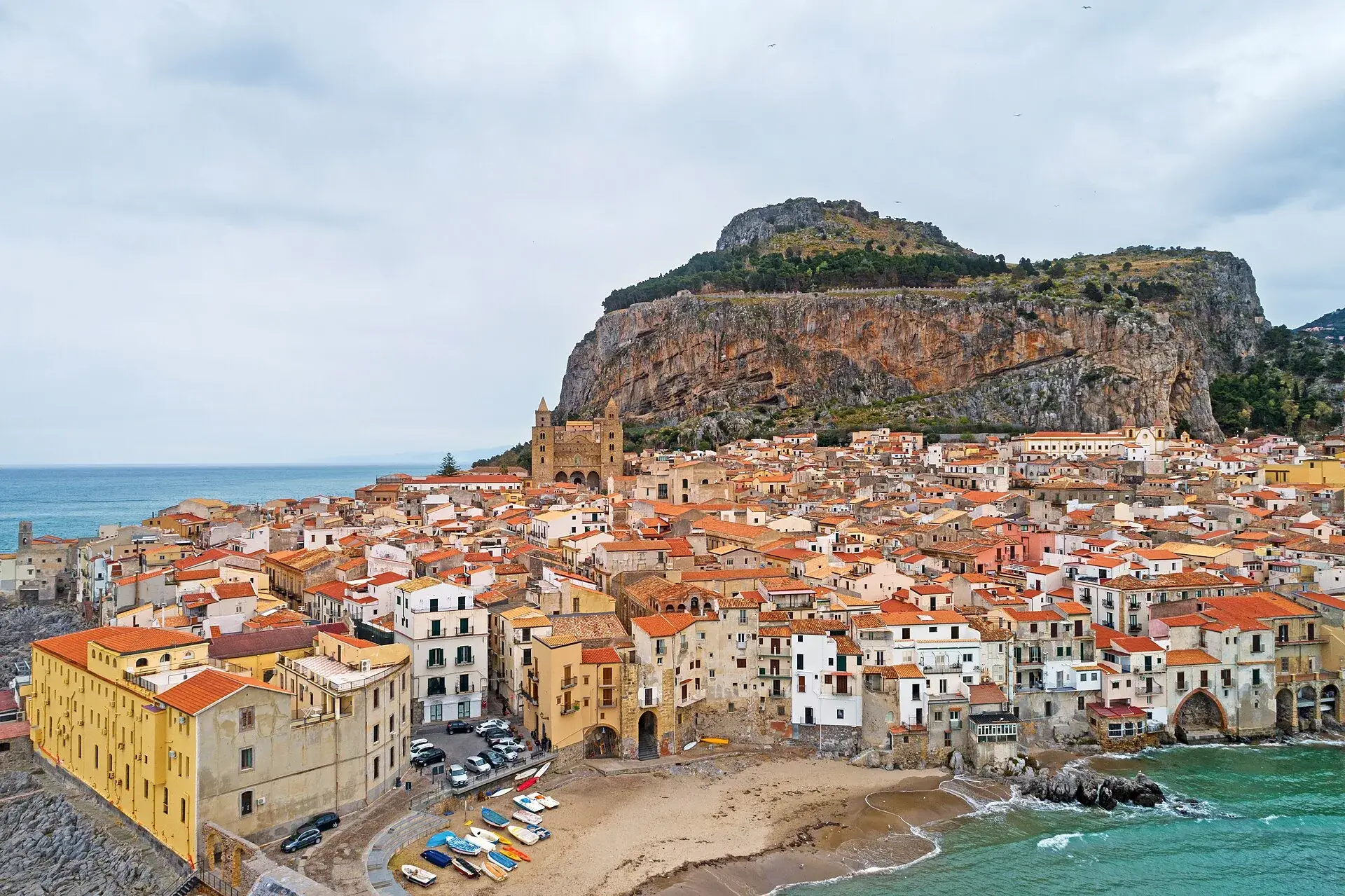
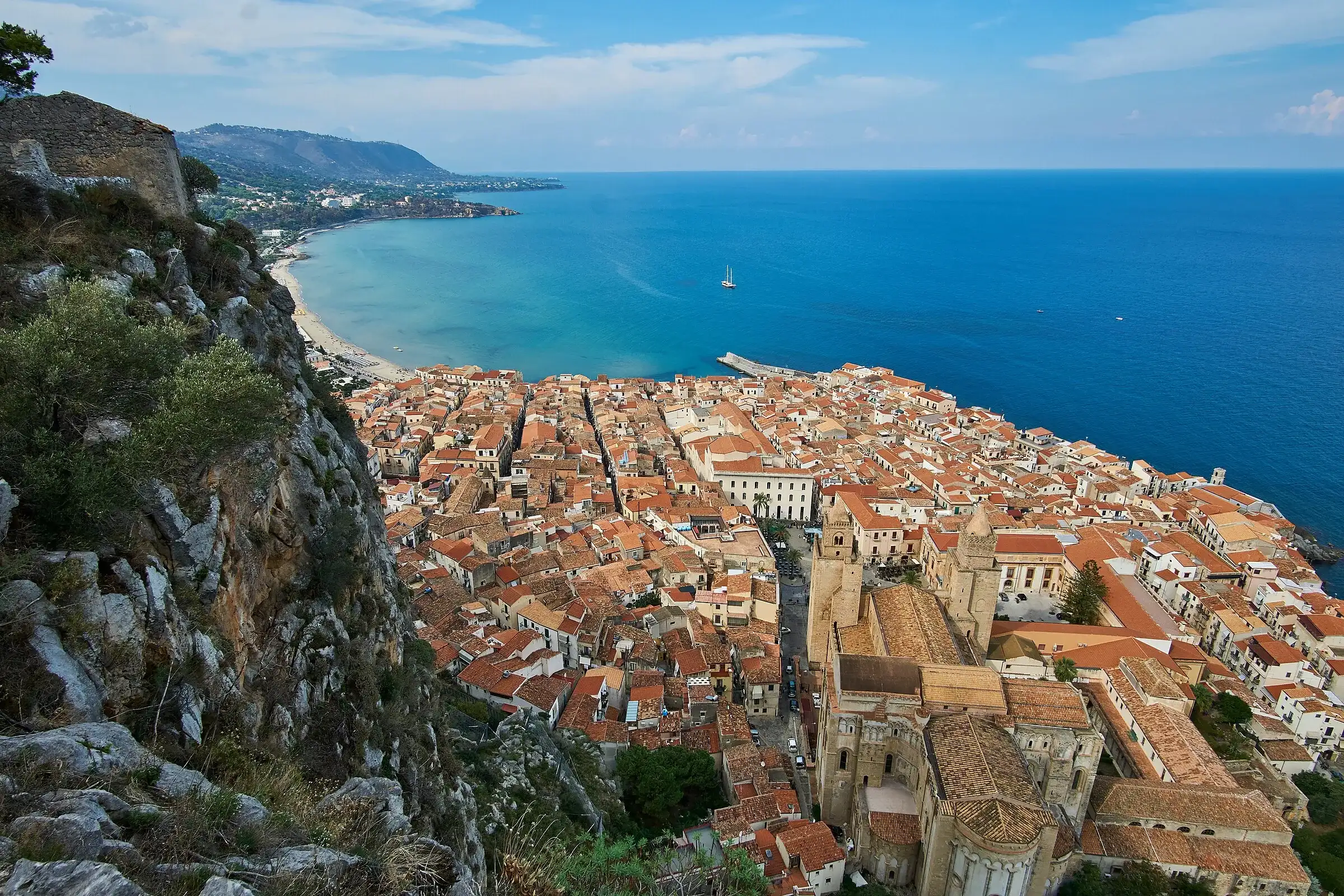
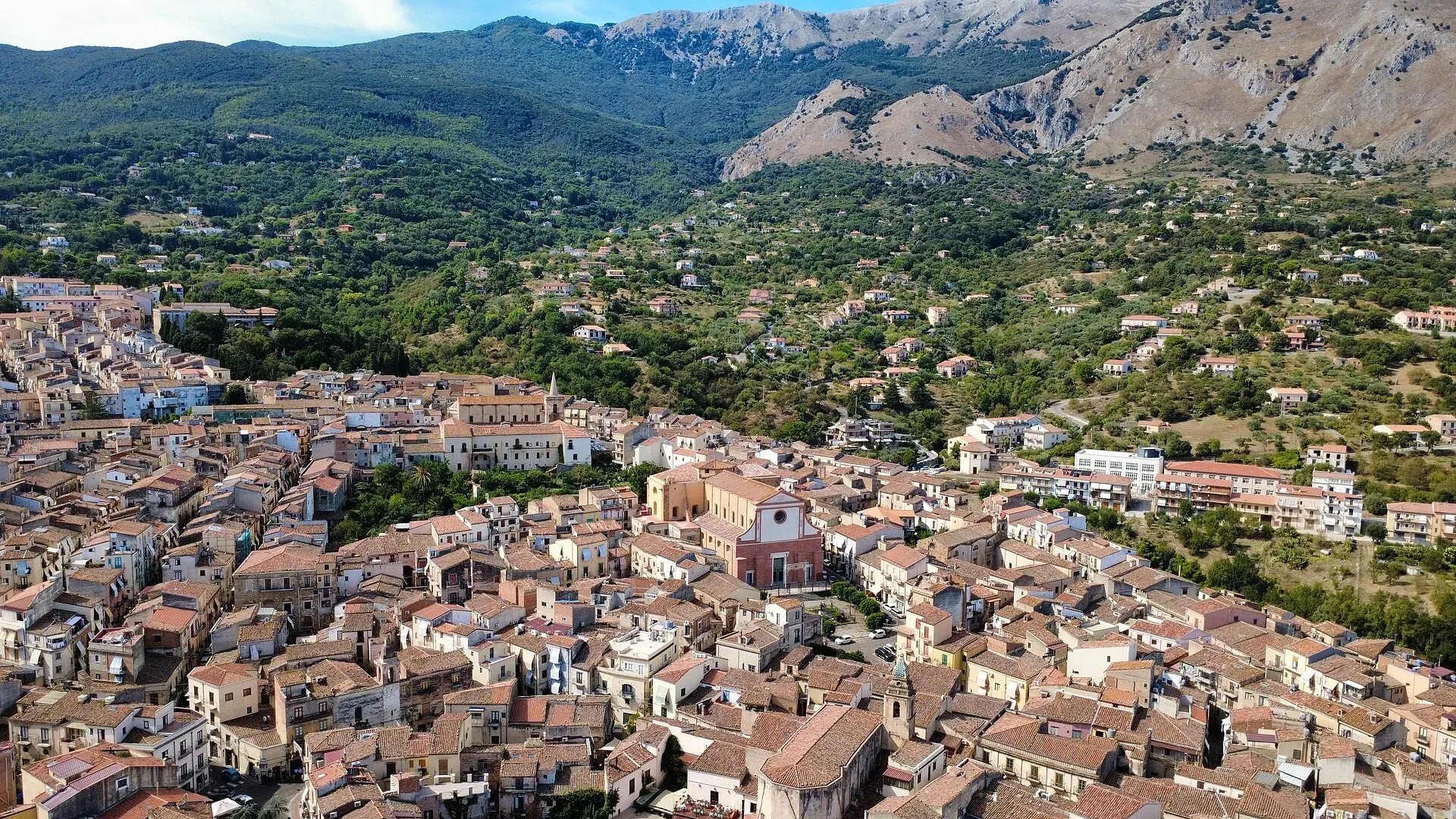
The Norman cathedral, the Rocca and the sea at the foot of the Madonie
- UNESCO · Arab-Norman Palermo
- Borghi più belli d'Italia
What to see in Cefalù: the UNESCO Norman cathedral, the Rocca and Temple of Diana, Museo Mandralisca, the medieval wash-house. Hours, tickets, festivals.
Page updated on 19 October 2026
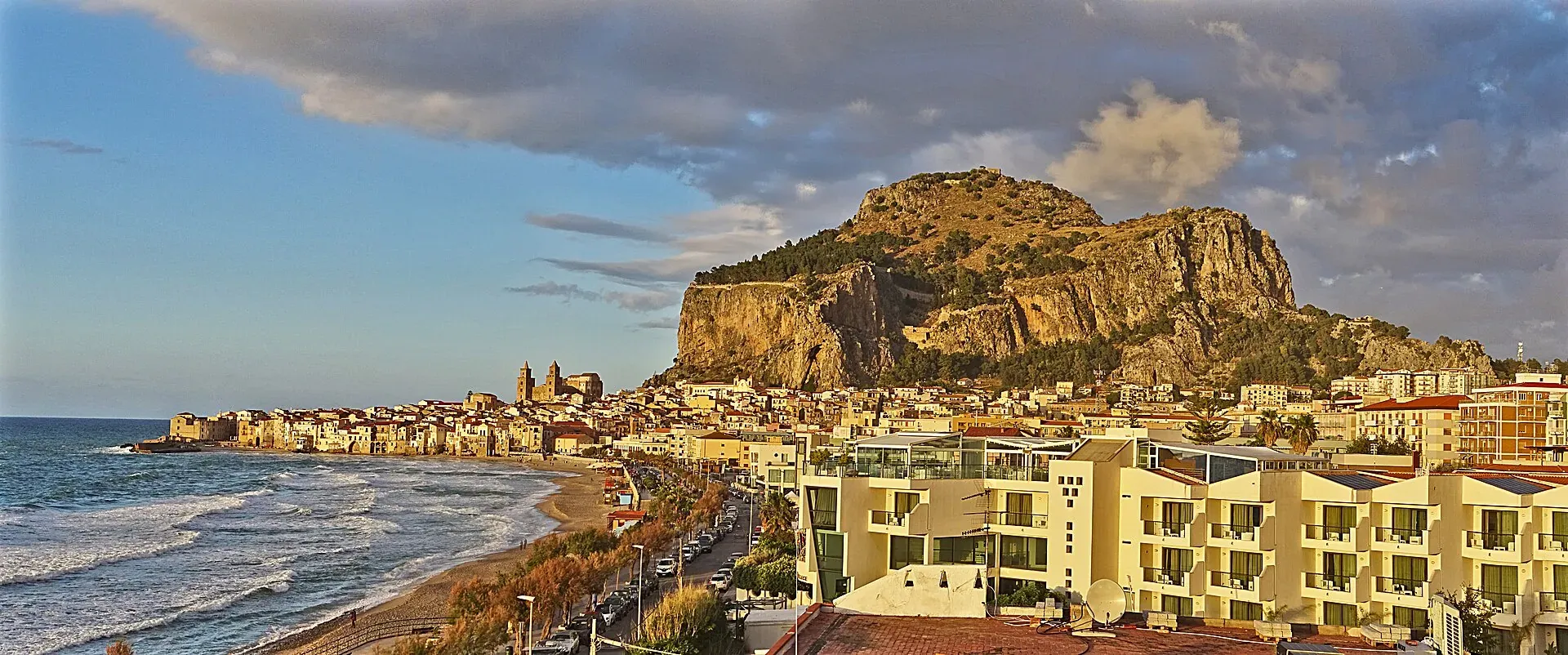
Cefalù is a town of 13,846 people (ISTAT estimate at 1 January 2026) on the Tyrrhenian coast, about 70 km from Palermo, and it is the municipality of the Madonie Park (Parco delle Madonie) that sits on the sea. You come for the 1131 Norman cathedral, a UNESCO World Heritage Site since 2015, for the Rocca with the Temple of Diana, for the medieval old town and for the beach right below the houses.
You can see the centre in a day. Stay longer and Cefalù becomes your base for the Madonie: Castelbuono and Isnello are half an hour away by car.
Cefalù at a glance
The key facts, with sources listed at the bottom of the page.
| Where | North coast of Sicily, province of Palermo, inside the Madonie Park |
| Altitude | 16 m (the centre); the Rocca rises behind the town |
| Population | 13,846 (ISTAT estimate at 1 January 2026) |
| From Palermo | 72 km, about 1 hour 6 minutes (A19, A20) |
| From Catania | 184 km, about 2 hours 23 minutes |
| By train | Cefalù station on the Palermo-Messina line |
| Patron saint | Santissimo Salvatore, feast from 2 to 6 August |
| Don’t miss | Cathedral and cloister, Rocca, Museo Mandralisca, medieval wash-house |
A short history
The Rocca was already inhabited in prehistoric times. The megalithic walls that still surround the old town and the Temple of Diana date from the 5th century BC, before the Greeks.
The Greeks called the place Kefaloidion, probably from kefalé, “head”, after the shape of the headland. Then came the Syracusans in 307 BC, the Romans in 254 BC, who called it Cephaloedium, the Byzantines, who moved the town up onto the Rocca, and the Arabs in 858.
The town you see today was born with the Normans. Roger I conquered it in 1063, and in 1131 Roger II refounded it on the coast and began the cathedral. Legend says it was a vow made by the king during a storm at sea. Its role as a fortress probably mattered too.
From 1752 foreign consulates opened and Cefalù joined the Grand Tour routes. In 1922 the occultist Aleister Crowley lived here and founded his “Abbey of Thelema”, closed a year later by government order.
What to see in Cefalù
The old town has narrow streets paved with pebbles and limestone from the Rocca. Almost everything worth seeing lies between Piazza Duomo, Corso Ruggero and the old harbour.
The Norman cathedral
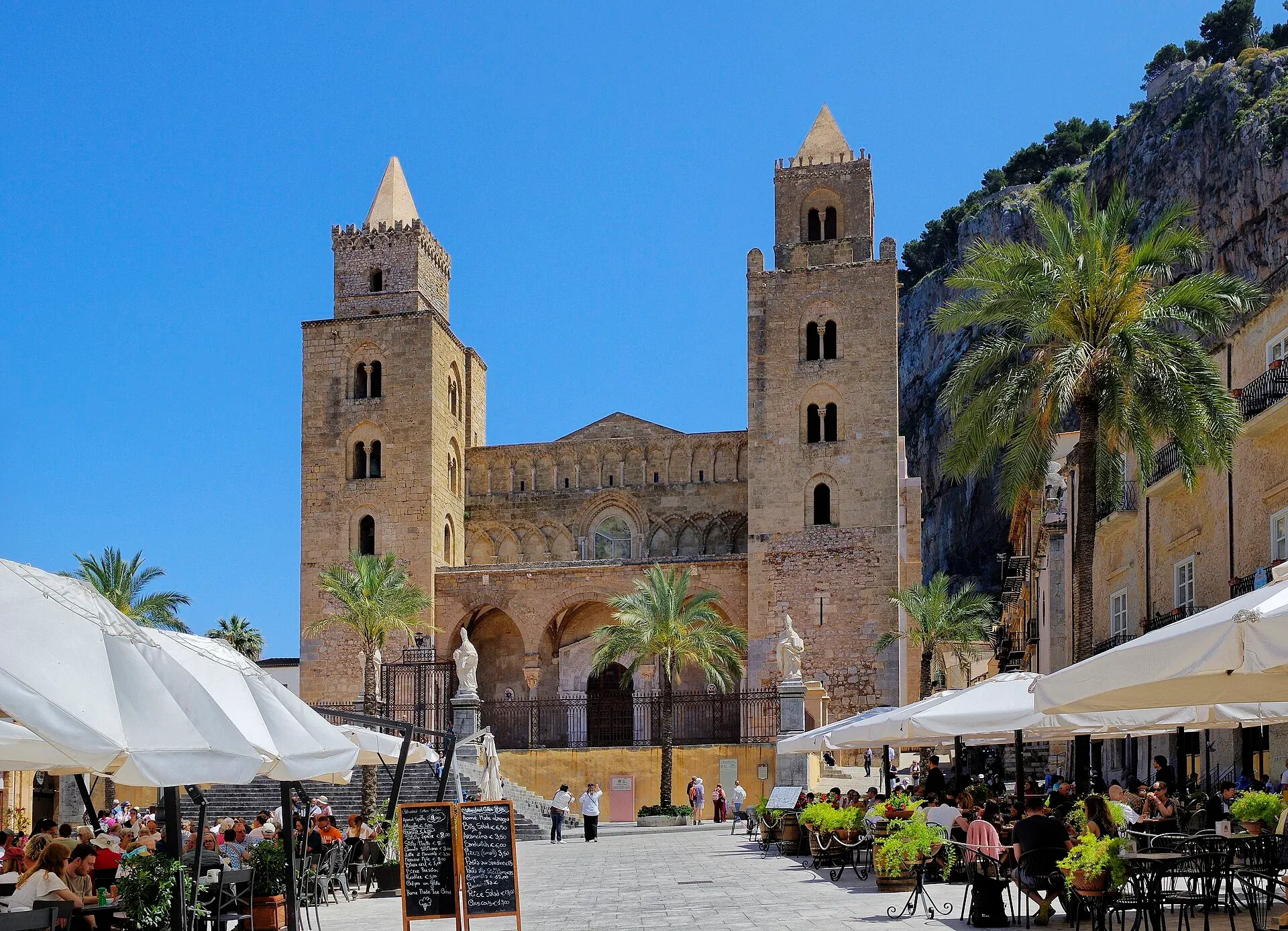
Cefalù Cathedral is dedicated to the Santissimo Salvatore, the Holy Saviour. Since 3 July 2015 it has been part of the UNESCO site “Arab-Norman Palermo and the Cathedral Churches of Cefalù and Monreale”. Outside you recognise it by the two towers on the façade; inside, the apse is covered by Byzantine mosaics with Christ Pantocrator.
Roger II also wanted it as his family’s mausoleum: in 1145 he had two porphyry sarcophagi made, but they stayed empty, and in 1215 Frederick II took them to Palermo.
Entry to the church is free; shoulders must be covered, and no shorts or very short skirts. The upper parts and the treasury are visited on paid routes (prices from the official site, October 2026):
| Route | What you see | Full price | Approx. time |
|---|---|---|---|
| Red | towers, roofs, sacristy, treasury, bishop’s chapel, cloister | €13 | 55 minutes |
| Blue | towers and view over the square | €10 | 30 minutes |
| Green | sacristy, treasury, Sala Sansoni, bishop’s chapel, cloister | €10 | 30 minutes |
From March to September the routes are open every day from 10 am to 1 pm and from 3.30 pm to 6.30 pm. Each tower has about 80 steps: you go up the north tower and down the south one. The cloister, with paired columns and carved capitals, is worth the route on its own. The other churches in the area, from the mother churches to the Gagini marbles, are in the guide to the churches of the Madonie.
The Rocca and the Temple of Diana
The Rocca is the limestone headland behind the town. You walk up from Salita Saraceni to the Temple of Diana, a megalithic building raised over an older cistern, and to the remains of medieval fortifications and cisterns. From up there you understand how Cefalù is laid out.
Practical tips are on the trail page for the Rocca di Cefalù.
The Museo Mandralisca
The museum is at Via Mandralisca 13, in the house of Baron Enrico Piraino di Mandralisca, who left his collections to the town in the 19th century. Its most famous piece is the Portrait of an Unknown Sailor by Antonello da Messina. Then 15th-century paintings, archaeological finds, a collection of ancient coins and a shell collection.
Opening hours, according to the Fondazione Mandralisca (checked on 19 October 2026):
| Period | Hours |
|---|---|
| April, May, October | every day, 9 am-7 pm |
| June-September | every day, 10 am-8 pm |
| November-March | Tuesday-Sunday, 9 am-7 pm (closed Monday) |
A full ticket costs 8 euros, a reduced one 6 euros. Cefalù residents get in free. The other museums in the area, town by town, are in the guide to the museums of the Madonie.
The medieval wash-house
On Via Vittorio Emanuele, a stone staircase leads down to the public wash-house. Water flows from twenty-two cast-iron spouts, fifteen of them shaped like lions’ heads, fills the basins and runs through a small passage to the sea. The wash-house was rebuilt in 1514 and restored in 1991.
The Osterio Magno
At the corner of Corso Ruggero and Via Amendola stands the Osterio Magno, the medieval palace linked to the Ventimiglia family. The cathedral route ticket includes it; on its own it costs 2 euros. It is spread over several floors connected only by stairs.
The Santuario di Gibilmanna
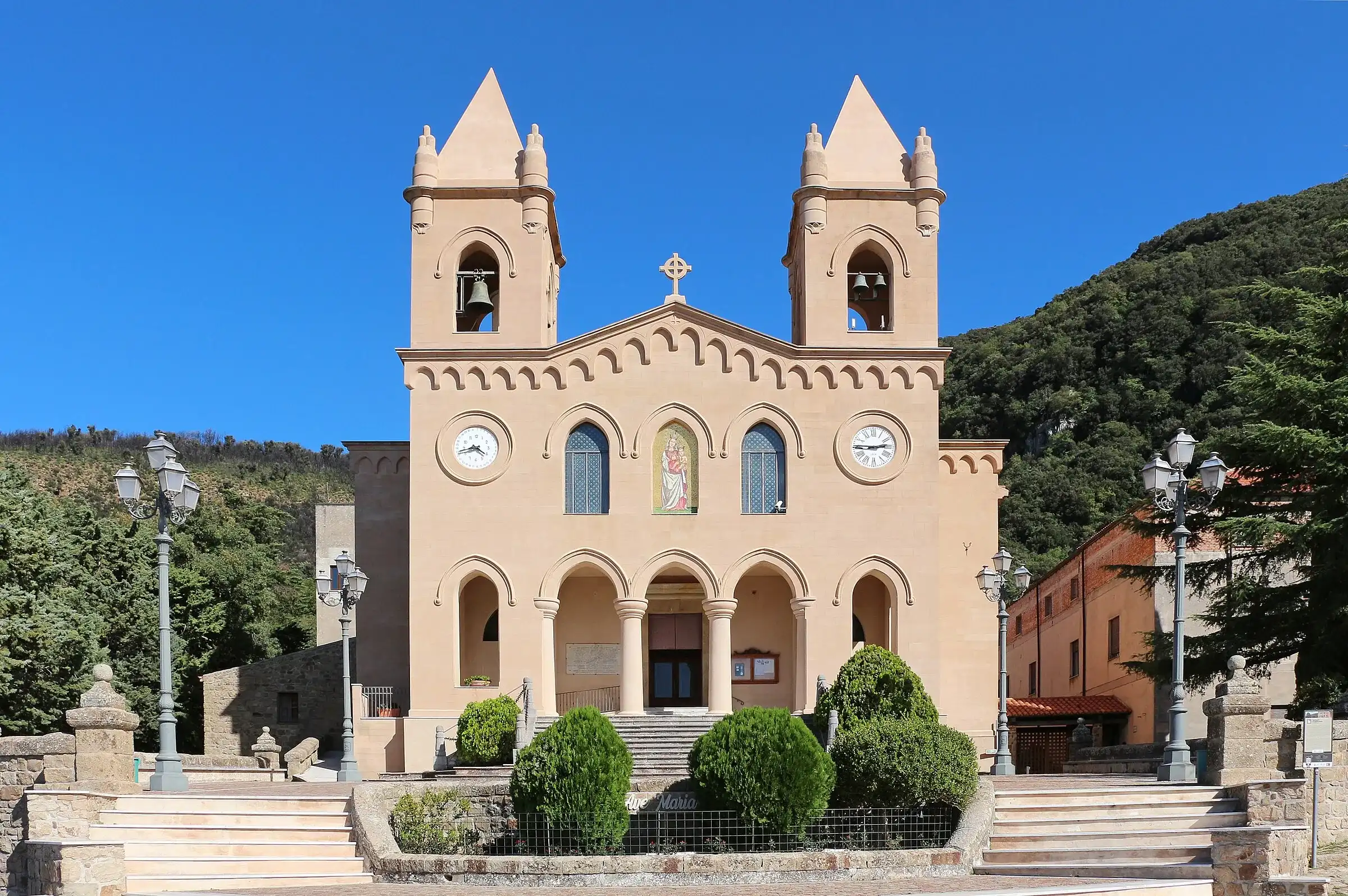
In the hills above Cefalù, in the hamlet of Gibilmanna, is the sanctuary of Maria Santissima di Gibilmanna, run by Capuchin friars. It is a pilgrimage site and lies on the road towards Isnello and the Madonie.
Things to do in and around Cefalù
After the old town you have two directions: the sea or the mountains.
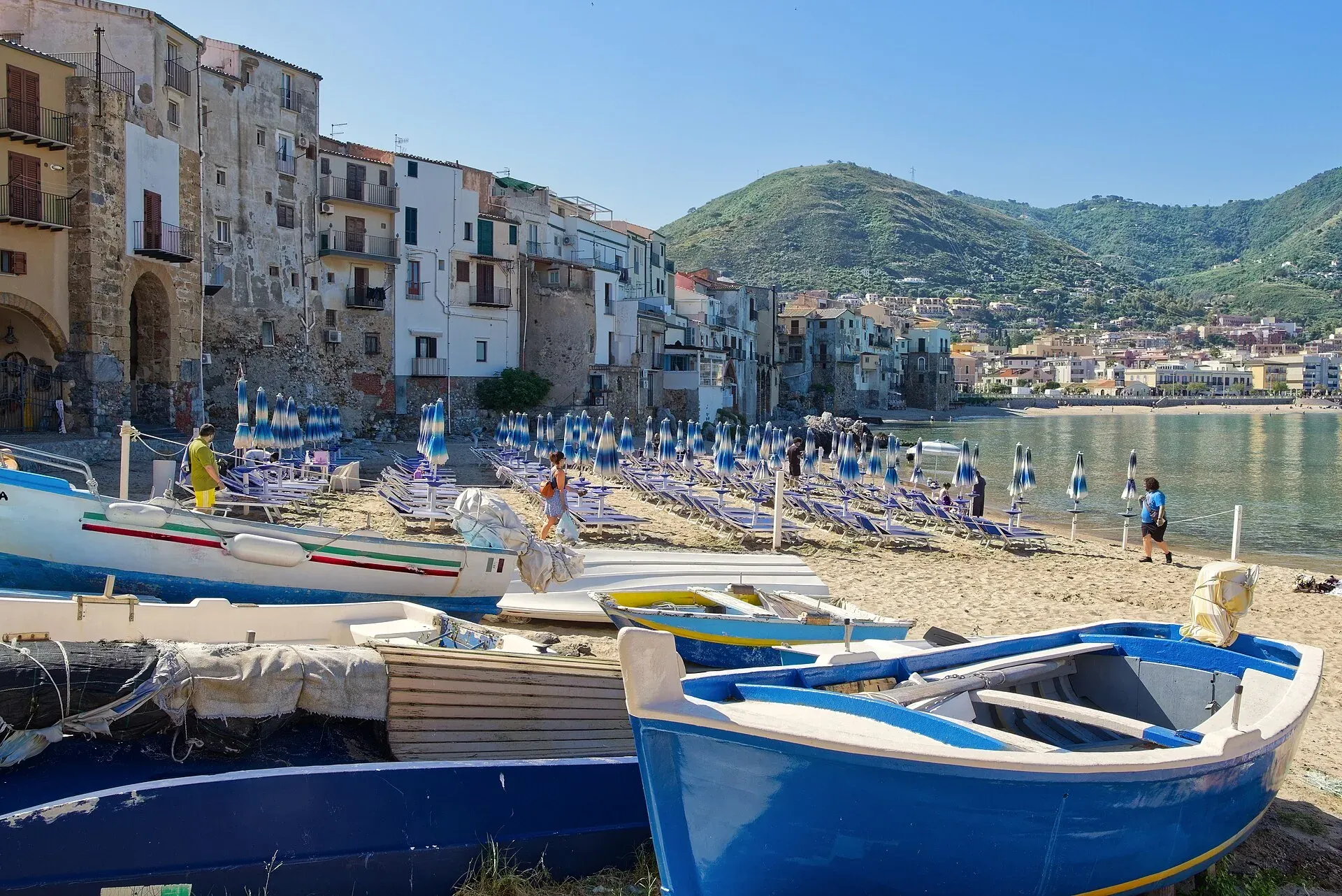
- Beach and old harbour. The beach runs right up to the houses of the centre; at the old harbour you find the fishing boats.
- The Rocca early in the morning. The climb to the Rocca is nicer before the heat.
- Castelbuono in half a day. 23 km away are the Ventimiglia castle, manna and testa di turco: read the page on Castelbuono.
- The stars at Isnello. 21 km away is the GAL Hassin astronomy park: all on the page on Isnello.
- A day in the mountains. Piano Battaglia is about 45 km and an hour’s drive away, with trails towards Pizzo Carbonara.
- Two days in the Madonie. If you have a weekend, follow our 2-day Madonie itinerary.
More ideas on things to do in Cefalù.
What to eat in Cefalù
- Pasta a taianu. Cefalù’s dish: pasta, meat ragù, fried aubergine and pecorino, layered in a terracotta pan. It is made for the feast of the Santissimo Salvatore in August.
- Fish. The catch of the day and oily fish, landed by the fishing fleet that works from the harbour.
- Sicilian pastries. Cannoli, cassata, granita in summer.
- Madonie produce. Cheeses, cured meats, olive oil and Castelbuono manna come down from the park villages: find them in the food of the Madonie section.
To pick a place, see where to eat in Cefalù.
Festivals and events in Cefalù
The periods below are the usual ones. Dates and programmes for the year are on each event page.
| Period | Event |
|---|---|
| Saturday before Palm Sunday | The Passion of Christ in Piazza Duomo |
| Holy Week | Holy Week in Cefalù |
| First half of August | Cefalù Art Expo |
| 2-6 August | Feast of the Santissimo Salvatore |
| 6 August, afternoon | ’Ntinna a mari |
| Mid or late August | Rassegna Internazionale del Folklore |
| Early November | Festa del Corbezzolo in Sant’Ambrogio |
| Early December - 6 January | Magico Natale a Cefalù |
| 8 December - 6 January | La Via dei Presepi |
There is also a New Year tradition: the “vecchia strina”, the old woman who lives on the Rocca and brings presents to children on the night between 31 December and 1 January. All dates are on events in Cefalù.
When to go to Cefalù
Cefalù has a Mediterranean climate: hot, dry summers and mild, rainy winters.
- Spring and autumn: the best time for the old town, the Rocca and trips into the mountains. Fewer people and good walking temperatures.
- Summer: sea and beach, but also crowds, heat and high prices. In August there is the patron saint’s feast.
- Winter: the town is quiet, the Museo Mandralisca closes on Mondays, and December brings Magico Natale and the Via dei Presepi. When it snows, Piano Battaglia is an hour away.
Before you leave, check the Cefalù weather.
How to get to Cefalù
Cefalù is the easiest place in the Madonie to reach, even without a car. We calculated the driving distances with OSRM on OpenStreetMap data, without traffic.
| From | Distance | Time | Road |
|---|---|---|---|
| Palermo | 72 km | 1 h 6 min | A19, then A20 to the Cefalù exit |
| Catania | 184 km | 2 h 23 min | A19, A20 |
| Messina | 162 km | 2 h 2 min | A20 |
| Castelbuono | 23 km | 26 min | SS113, SS286 |
| Isnello | 21 km | 34 min | SP54bis, SP9 |
By train, Cefalù station is on the Palermo-Messina line. The marina, east of the centre, has seasonal summer connections to the Aeolian Islands.
The old town is a limited traffic zone: park in the paid car parks outside the centre and walk along Corso Ruggero. For roads, roadworks and winter rules, see our guide to driving in the Madonie.
Where to stay and where to eat
You can stay in the old town, on the seafront or in the hills towards Gibilmanna. The updated lists, with a source for each listing, are on where to stay in Cefalù and where to eat in Cefalù. For walks, see trails near Cefalù.
What to see
- Norman cathedral and the mosaic of Christ Pantocrator
- Cathedral towers, roofs and cloister
- Rocca di Cefalù and Temple of Diana
- Museo Mandralisca and the Portrait of an Unknown Sailor
- Medieval wash-house (lavatoio)
- Osterio Magno
- Corso Ruggero and the old harbour
- Santuario di Gibilmanna
Weather in Cefalù
Full forecast →21°
Mostly clear
- Today
- 19° / 26°
- Wind
- 3 km/h SW
- Snow on ground
- no
- Freezing level
- 3,800 m
- Tue 2019° 26°
- Wed 2120° 24°
- Thu 2219° 23°
- Fri 2318° 22°
- Sat 2417° 22°
Updated on 20 October at 08:48 · Forecasts Open-Meteo.com (CC BY 4.0)
What to taste
Dates
Frequently asked questions
- How much does it cost to enter Cefalù Cathedral?
- Entry to the cathedral itself is free. The visitor routes cost extra: the Red route, covering towers, roofs, treasury, bishop's chapel and cloister, costs 13 euros full price; the Blue route, for the towers, and the Green route, for the treasury and cloister, cost 10 euros. The ticket also includes the Osterio Magno (official site duomocefalu.it, October 2026).
- What are the opening hours of Cefalù Cathedral?
- The cathedral is open from 8.30 am to 1 pm and from 3.30 pm to 6.30 pm, with hours that may change for services. From March to September the paid routes are open every day from 10 am to 1 pm and from 3.30 pm to 6.30 pm, last entry 30 minutes before closing. During Mass the sacristy and mosaics cannot be visited.
- How do you get from Palermo to Cefalù?
- By car it is about 72 km and just over an hour: the A19 from Palermo, then the A20 towards Messina to the Cefalù exit. By train, Cefalù station is on the Palermo-Messina line. The old town is a limited traffic zone: leave the car in the car parks outside the centre and continue on foot.
- How do you climb the Rocca di Cefalù?
- You walk up from Salita Saraceni in the old town, on steps and a paved path between the medieval walls. At the top are the Temple of Diana, a megalithic building from the 5th century BC, the cisterns and viewpoints over the cathedral and the sea. Entry is paid. In summer set off early, because the path is exposed to the sun.
- Is Cefalù part of the Madonie Park?
- Cefalù is one of the municipalities of the Madonie Park and its gateway on the sea. From the centre you reach Castelbuono and Isnello in half an hour and Piano Battaglia in about an hour. That is why many people stay in Cefalù and drive up into the mountains for the day, especially in spring and autumn.
- What do people eat in Cefalù?
- Cefalù's own dish is pasta a taianu: pasta, meat ragù, fried aubergine and pecorino, cooked in layers in a terracotta pan and made for the feast of the Santissimo Salvatore in August. Then fresh fish and oily fish, and Madonie produce coming down from the nearby villages, such as Castelbuono manna.
- When is the feast of Cefalù's patron saint?
- The feast of the Santissimo Salvatore, the town's patron, runs from 2 to 6 August. On the afternoon of 6 August the 'Ntinna a mari is held at the old harbour: contestants walk along a long greased pole stretched over the sea to grab a flag. In the evening the procession with the statue of the Saviour sets off.
Sources
- ISTAT, popolazione residente al 1° gennaio 2026 (stima), comuni della Città metropolitana di Palermo
- Duomo di Cefalù, FAQ: orari, ingressi, Osterio Magno
- Duomo di Cefalù, Itinerario Rosso (prezzi)
- Duomo di Cefalù, Itinerario Verde (prezzi e contenuto)
- Duomo di Cefalù, la Cattedrale patrimonio dell'umanità
- Fondazione Mandralisca, info e tariffe del Museo Mandralisca
- I Borghi più belli d'Italia, Cefalù
- Wikipedia, Cefalù (storia, monumenti, tradizioni, trasporti)
- Wikipedia, Santuario di Gibilmanna
- Balarm, la pasta a taianu di Cefalù
- OSRM su dati OpenStreetMap, distanze stradali calcolate il 19 ottobre 2026
Page updated on 19 October 2026
Nearby
Villages a few kilometres away
680 m a.s.l.
Gratteri
The terrace over the Tyrrhenian Sea above Cefalù
583 m a.s.l.
Isnello
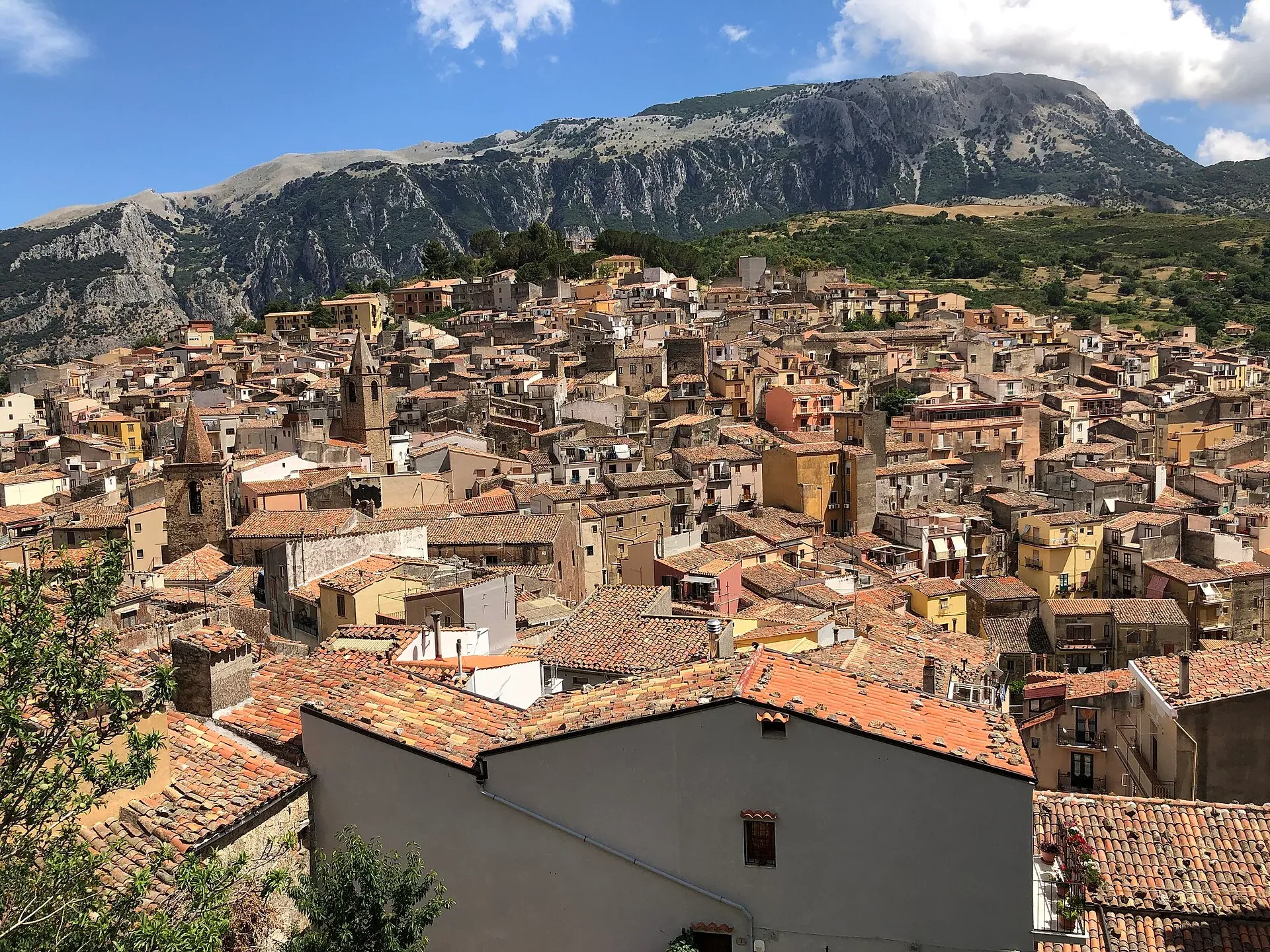
The town of the stars, beneath the Madonie cliffs
664 m a.s.l.
Pollina
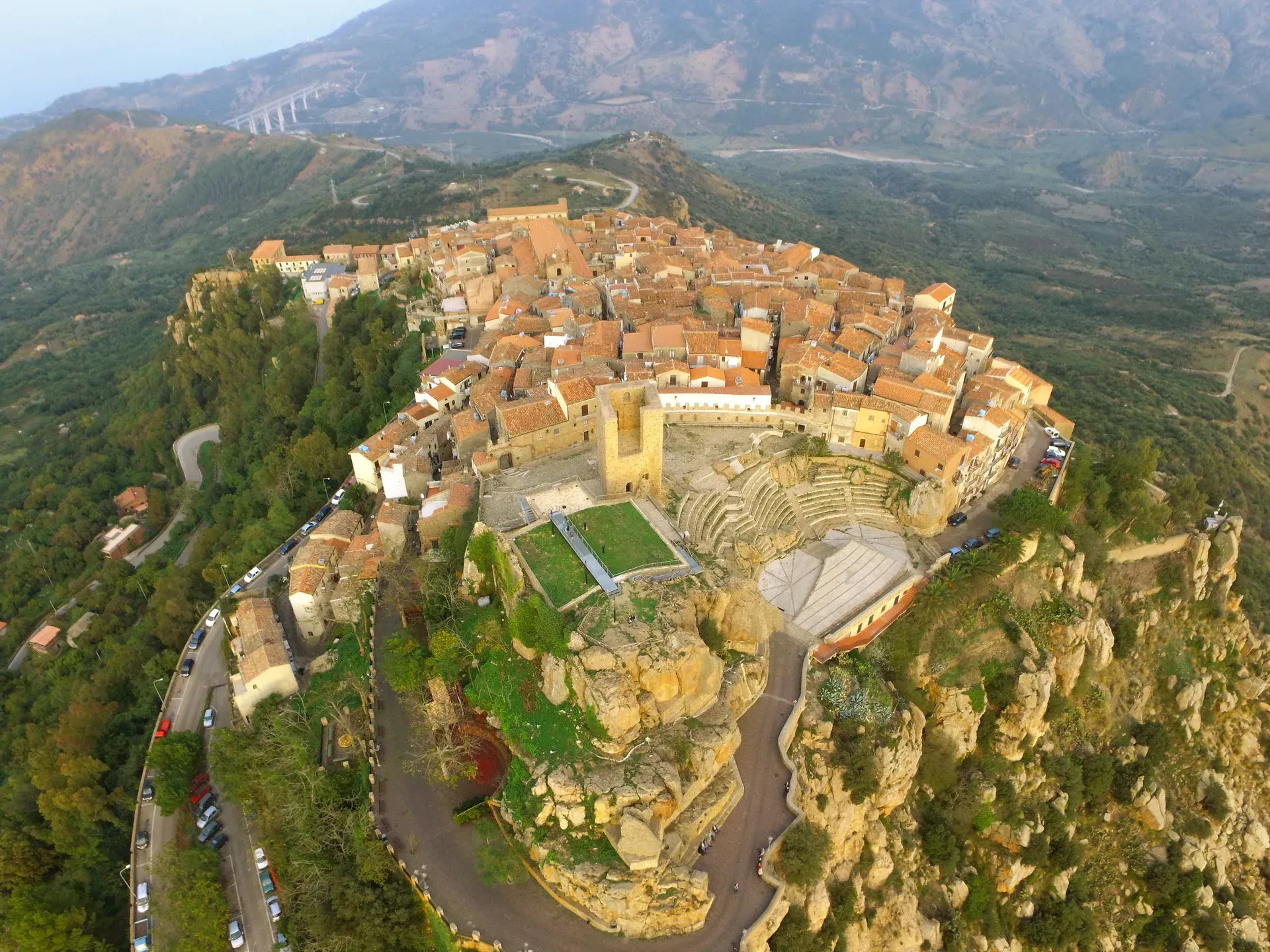
The stone theatre and the manna, above the sea at Finale
423 m a.s.l.
Castelbuono
The town of the Ventimiglia castle, manna and testa di turco