680 m a.s.l. · Madonie Park
Gratteri
The terrace over the Tyrrhenian Sea above Cefalù
- Grotta Grattara
- Sea views
- Early music
Things to do in Gratteri, 17 km from Cefalù: the Grotta Grattara, the Abbazia di San Giorgio, churches and medieval bridges. Festivals, food, getting there.
Page updated on 19 October 2026
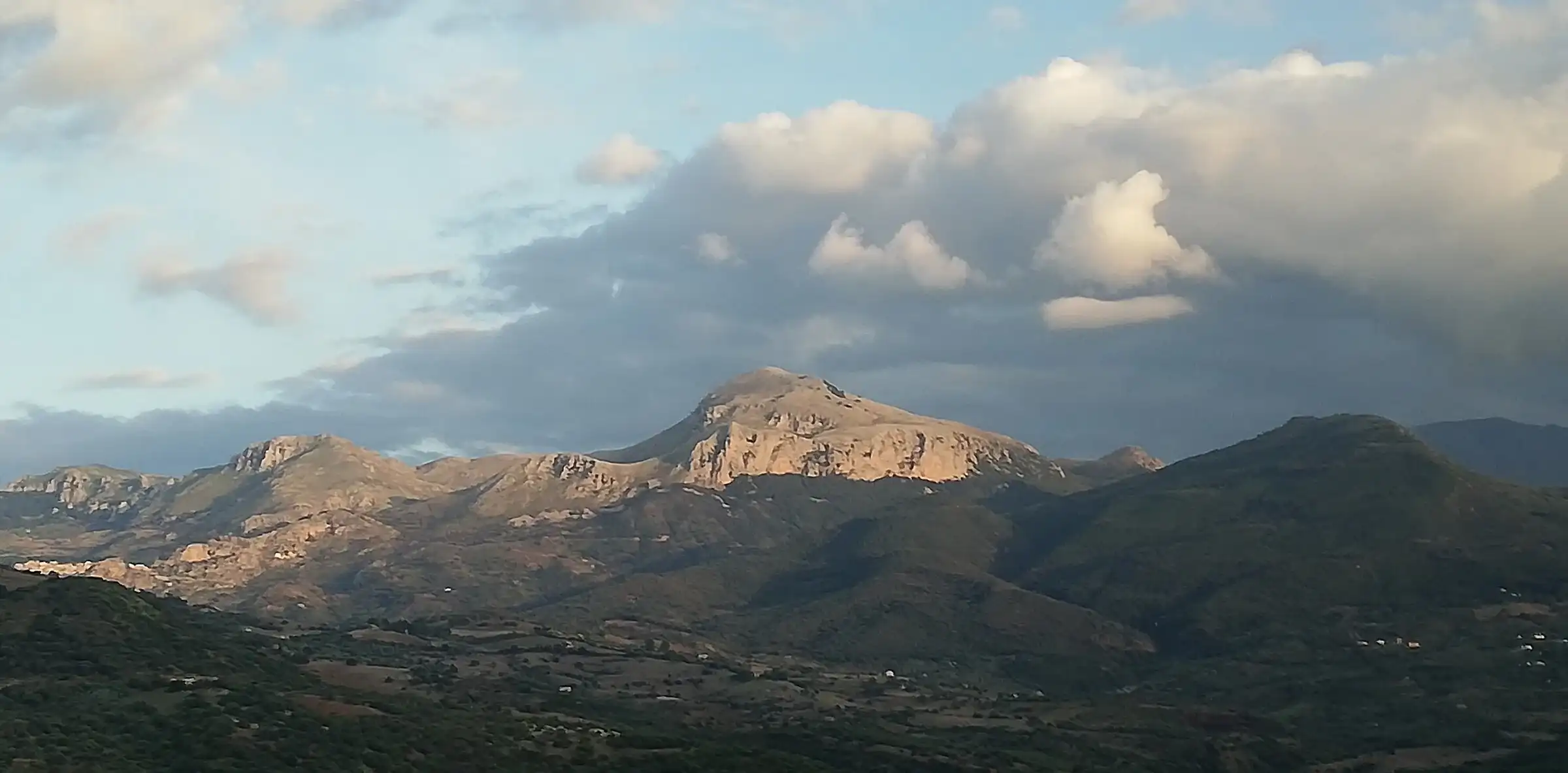
Gratteri is a village of 853 people, 680 metres above sea level, on the northern side of the Madonie Park (Parco delle Madonie), 17 km from Cefalù. People call it the terrace over the Tyrrhenian: from its streets you see the coast as far as Monte San Calogero, above the gulf of Termini Imerese. Above the village is the Grotta Grattara, the cave of the Befana legend, and to the south the Norman ruins of the Abbazia di San Giorgio.
You come here for half a day from Cefalù, or for a summer festival: between July and September the village has food festivals, processions and an early music festival with twenty years of history.
Gratteri at a glance
The main figures, with sources at the bottom of the page.
| Where | Northern side of the Madonie Park, above Cefalù |
| Altitude | 680 m at the town hall (ISTAT) |
| Population | 853 (ISTAT estimate, 1 January 2026) |
| Area | about 38 km² |
| From Cefalù | 17 km, less than half an hour by car |
| Patron saint | San Giacomo (25 July and early September) |
| Don’t miss | Grotta Grattara, Abbazia di San Giorgio, Via Fiume |
A short history
There are two theories about the name. The historian Francesco Maurolico linked it to a mountain called Cratos; others think of the Crati, the stream that comes down from Pizzo Dipilo and runs through the village. The name of the Grotta Grattara may have played its part too.
People were already here at the end of the Bronze Age: a hoard of axes and a ring was found in the area and is now in Palermo. Under the Normans the abbeys of Sant’Anastasia and San Giorgio were founded. The first known lord of Gratteri is a certain Guglielmo, mentioned in 1112; then came the Monforte and, from the fifteenth century, the long barony of the Ventimiglia.
The castle stood on the rock of San Vito. Between the eighteenth and nineteenth centuries it was demolished and its stones were used for the new mother church. A gallery of pointed arches survives under the Matrice Vecchia.
Things to see in Gratteri
The Grotta Grattara
It is a large cave at the foot of Pizzo Dipilo, above the village. In the middle is a boulder hollowed into a basin by water dripping for centuries. You climb to it from the San Nicola plateau on a winding path through the pine wood.
The cave is also a story. According to the village tale it was the home of the Befana, a vecchia strina, who on the last night of the year came invisibly down the chimneys to fill the stockings of Gratteri’s children. The cave’s spring, with a dove above it, also appears on the town coat of arms. The park’s other caves are in our guide to Madonie gorges and caves.
The Abbazia di San Giorgio
South of the village, among oak woods, stand the walls of the church of an abbey founded around 1140 by Duke Roger. It was entrusted to the Premonstratensian canons, perhaps from a French canonry. The three-nave outline, the apses and the portal with Norman-style decoration survive. You reach it on an easy path of about 1.7 km from the upper part of the village.
The village churches
The Matrice Vecchia, dedicated to San Michele Arcangelo, was built by the Ventimiglia in the first half of the fourteenth century, next to the castle: one of its bells bears the date 1390. The Good Friday procession leaves from here.
The church of Santa Maria di Gesù dates back to the twelfth century and has belonged to the Franciscans since 1313; the convent next door is now the town hall. Inside is the Ventimiglia funerary monument in coloured marble. The fifteenth-century church of Sant’Andrea has a gilded wooden statue of the saint signed by Francesco Reyna in 1690. The church of San Giacomo, from 1686, holds the statue of the patron saint.
Via Fiume, the bridges and the clock tower
The Crati stream still flows under Via Fiume, dividing the old village from the new one. Along the street are the three medieval bridges and a cistern, the Fantina well, covered after the war to let cars through. From the small square of Ponte Silvio, the Salita Orologio, called Via dei Saraceni until 1900, leads up to the clock tower, one of the village’s symbols.
Near the small church of San Giacomo is u cabbubbu, a stone structure for collecting rainwater. In front of the mother church, in a small garden, stands the Fontana della Ninfa.
Things to do in and around Gratteri
- The two walks: to the Grotta Grattara and to the Abbazia di San Giorgio. From the abbey a path continues to Santa Maria del Pedale and Collesano.
- The sea: Cefalù is 17 km away. You can stay by the sea and come up to Gratteri for the day.
- Music: at the end of August, the Early Music Festival, with free concerts in the church and the square.
- Nearby villages: Isnello is 14 km away, Collesano 17.
More ideas on the page things to do in Gratteri.
When to go
Summer is the liveliest season: the small feast of San Giacomo on 25 July, food festivals in August, the music festival at the end of the month and the main feast in September. For walking to the cave and the abbey, spring and autumn are better. Holy Week is worth the trip for the Sulità. Check the weather in Gratteri before you go up.
How to get to Gratteri
From Cefalù take the SS113 towards Palermo and then the SP28, which climbs to the village. From Palermo take the A19 to Buonfornello and then the same road. Distances are calculated on OpenStreetMap.
| From | Distance | Driving time |
|---|---|---|
| Cefalù | 17 km | about 30 min |
| Palermo | 68 km | about 1 h 15 |
| Catania | 179 km | about 2 h 30 |
| Isnello | 14 km | about 20 min |
| Collesano | 17 km | about 30 min |
We have not found official, up-to-date bus timetables for Gratteri: for now a car is best. Roadworks and closures are on the page about Madonie roads. For all roads and connections there is the guide on how to get to the Madonie.
What to eat in Gratteri
The village speciality is vastedda fritta, a leavened bread fried on the spot: it has its own festival in mid-August. The other is purpietta c’addauru, a meatball cooked in bay leaves, celebrated with the meatball festival at the Ganci Battaglia viewpoint. For other local produce, see our guide to Madonie food.
Festivals and events
- Sulità, on Good Friday: the procession of the four confraternities, introduced by the Spanish in 1612, leaves the Matrice Vecchia and crosses the village to the sound of drums.
- San Giacomo: small feast on 25 July, main feast in early September with the procession of the relic and the statue. Festival page.
- Vastedda fritta festival and meatballs in bay leaves festival, in August.
- Early Music Festival, the last week of August.
All dates are on the page about events in Gratteri.
Where to stay and where to eat
There are very few places to stay in the village: the one we know is in where to stay in Gratteri, together with tips for Cefalù and Isnello. Places to eat are in where to eat in Gratteri.
What to see
- Grotta Grattara
- Ruins of the Abbazia di San Giorgio
- Matrice Vecchia (San Michele Arcangelo)
- Santa Maria di Gesù church
- Sant'Andrea church
- San Giacomo church
- Via Fiume and its three medieval bridges
- Clock tower
Weather in Gratteri
Full forecast →18°
Mostly clear
- Today
- 16° / 24°
- Wind
- 5 km/h S
- Snow on ground
- no
- Freezing level
- 3,800 m
- Tue 2016° 24°
- Wed 2116° 23°
- Thu 2215° 20°
- Fri 2313° 19°
- Sat 2414° 19°
Updated on 20 October at 08:48 · Forecasts Open-Meteo.com (CC BY 4.0)
What to taste
Dates
Frequently asked questions
- What is there to see in Gratteri?
- The main sights in Gratteri are the Grotta Grattara, a large cave above the village linked to the legend of the Befana, and the ruins of the Abbazia di San Giorgio, founded around 1140. In the village there are the Matrice Vecchia, the churches of Santa Maria di Gesù, Sant'Andrea and San Giacomo, Via Fiume with its three medieval bridges and the clock tower.
- How do you get to the Grotta Grattara?
- You reach the Grotta Grattara on foot from the San Nicola plateau above Gratteri, on a winding path through a pine wood up to the boulder called lazzu di vuoi, the oxen's bed, and then along a short level stretch. The cave lies at the foot of Pizzo Dipilo. Wear walking shoes and bring water.
- How far is Gratteri from Cefalù?
- Gratteri is about 17 km from Cefalù, just under half an hour by car according to routing on OpenStreetMap: take the SS113 towards Palermo and then the SP28, which climbs to the village. Palermo is about 68 km away, an hour and a quarter via the A19, and Catania about 179 km.
- What is the Sulità in Gratteri?
- The Sulità is Gratteri's Good Friday procession. It leaves the Matrice Vecchia in the evening with the village's four confraternities, each carrying its own scene of the Passion, and crosses the village in silence, with only the roll of the drums. The name comes from the Spanish soledad: the custom was introduced in 1612.
- When is the feast of San Giacomo in Gratteri?
- Gratteri celebrates its patron, Saint James, twice. On 25 July there is the small feast, on the saint's day. The main feast is in early September and ends with the procession of the relic and the gilded statue: in 2026 it ran from 7 to 9 September. Until 1860 the main feast was held in July.
- Where is the Abbazia di San Giorgio in Gratteri?
- The ruins of the Abbazia di San Giorgio lie south of Gratteri, in a valley among oak woods. According to the Madonie Park authority you reach them on an easy path of about 1.7 km that starts in the upper part of the village, near the castle ruins. The abbey was founded around 1140 and entrusted to the Premonstratensian canons.
- What do people eat in Gratteri?
- Gratteri's signature dish is the vastedda fritta, a fried bread made from leavened dough, celebrated every August with a festival in Piazza San Francesco. The other speciality is meatballs cooked in bay leaves, the purpietta c'addauru, which have their own festival at the Ganci Battaglia viewpoint in the second half of August.
Sources
- ISTAT, popolazione residente al 1° gennaio 2026 (stima)
- ISTAT, principali statistiche geografiche sui comuni (altitudine del municipio, superficie)
- Ente Parco delle Madonie, scheda del Comune di Gratteri (PDF)
- Ente Parco delle Madonie, La Grotta Grattara di Gratteri
- Ente Parco delle Madonie, sentiero ai ruderi dell'Abbazia di San Giorgio
- Wikipedia, Gratteri
- Distanze e tempi in auto: OSRM su dati OpenStreetMap
Page updated on 19 October 2026
Nearby
Villages a few kilometres away
583 m a.s.l.
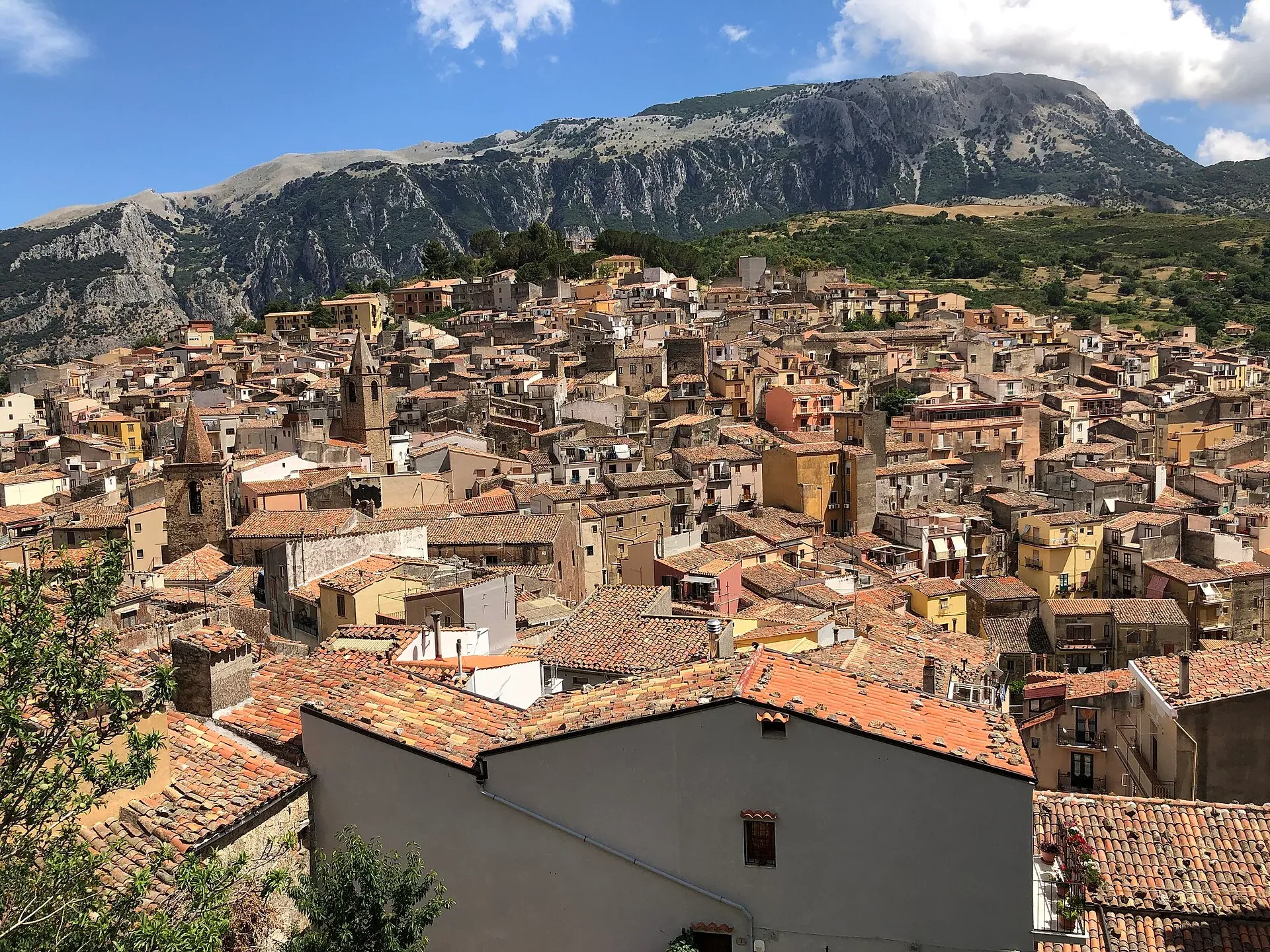
Isnello
The town of the stars, beneath the Madonie cliffs
470 m a.s.l.
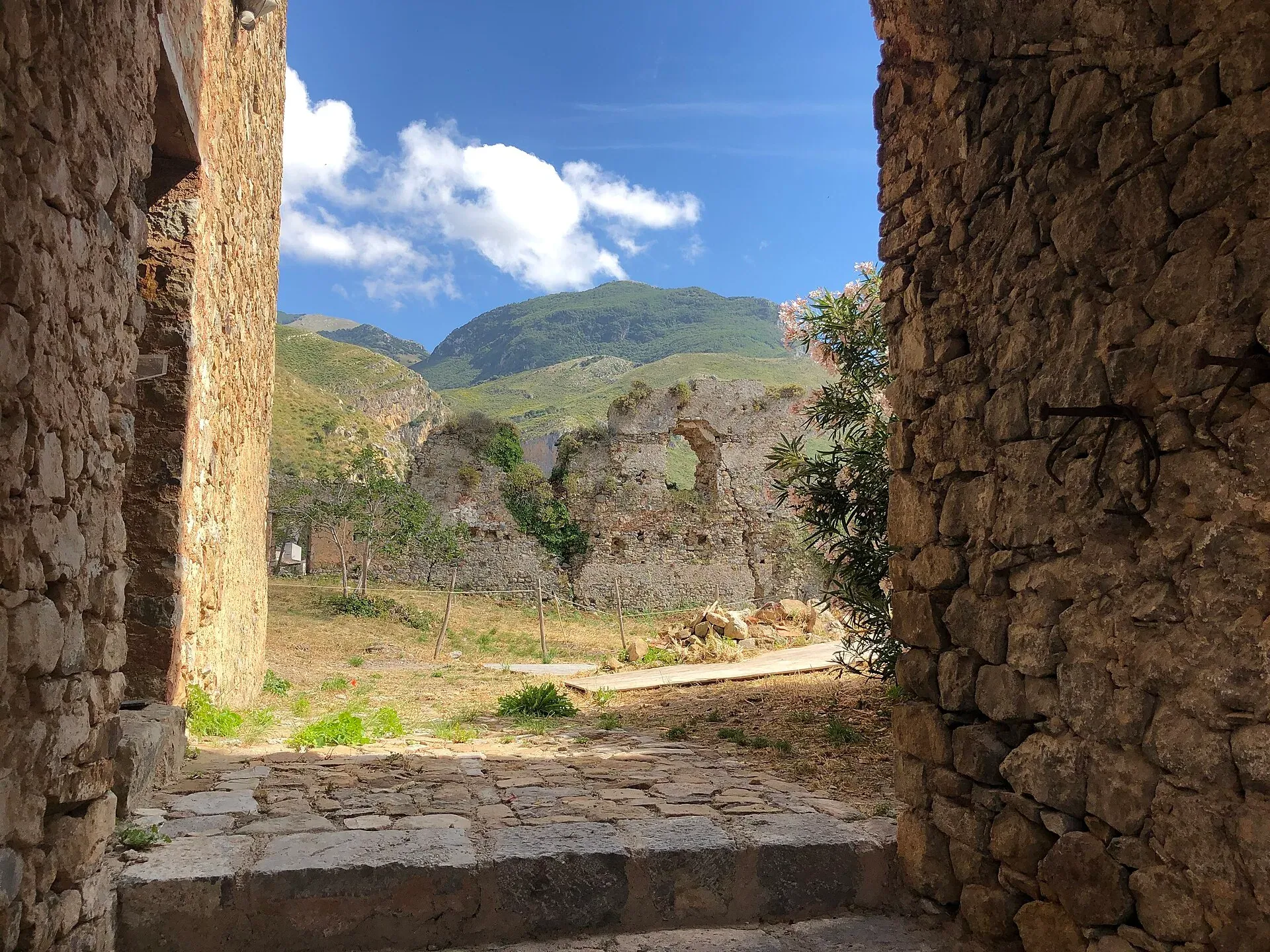
Collesano
Ceramics, a castle and the Targa Florio museum
16 m a.s.l.
Cefalù
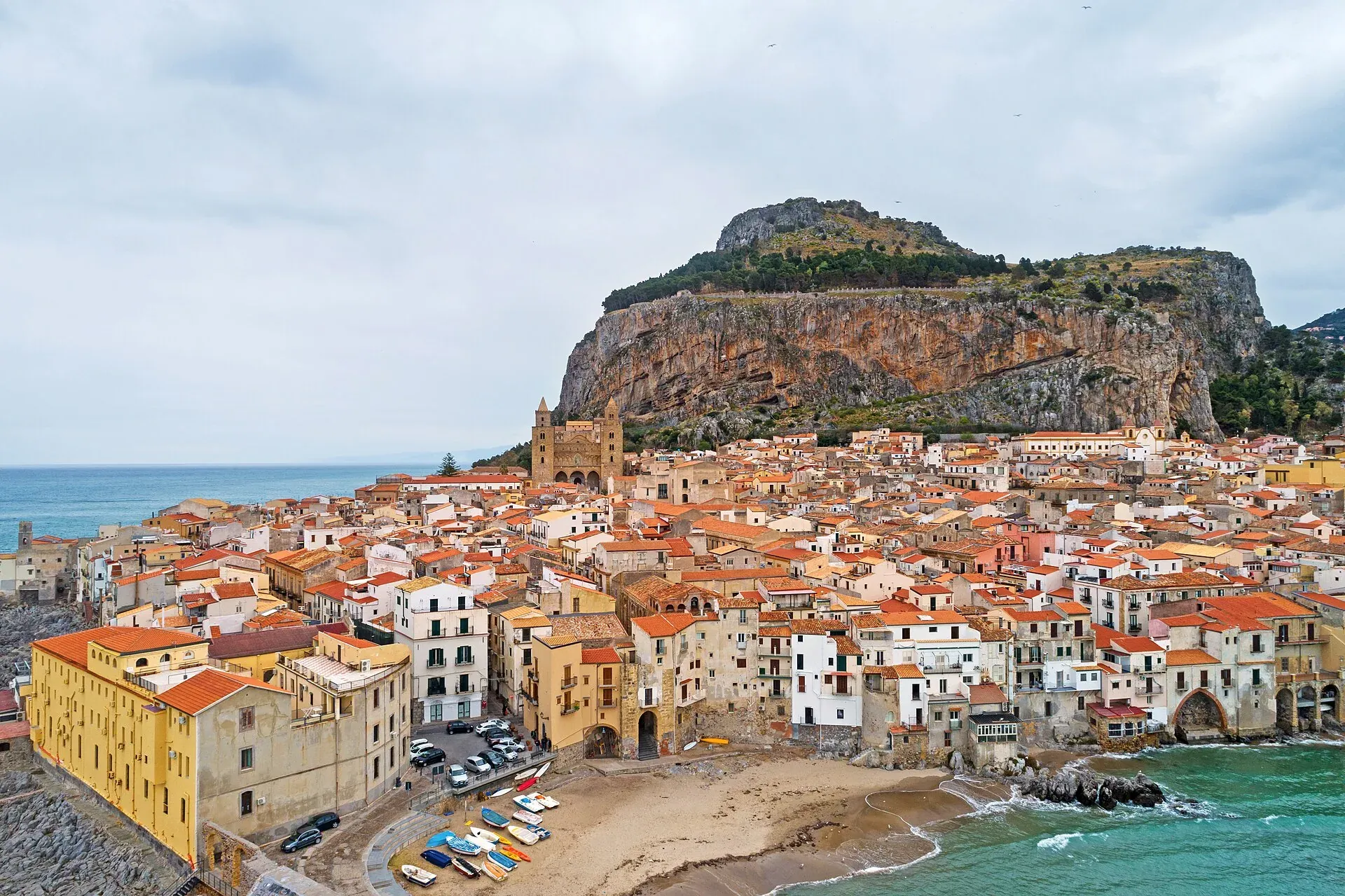
The Norman cathedral, the Rocca and the sea at the foot of the Madonie
423 m a.s.l.
Castelbuono
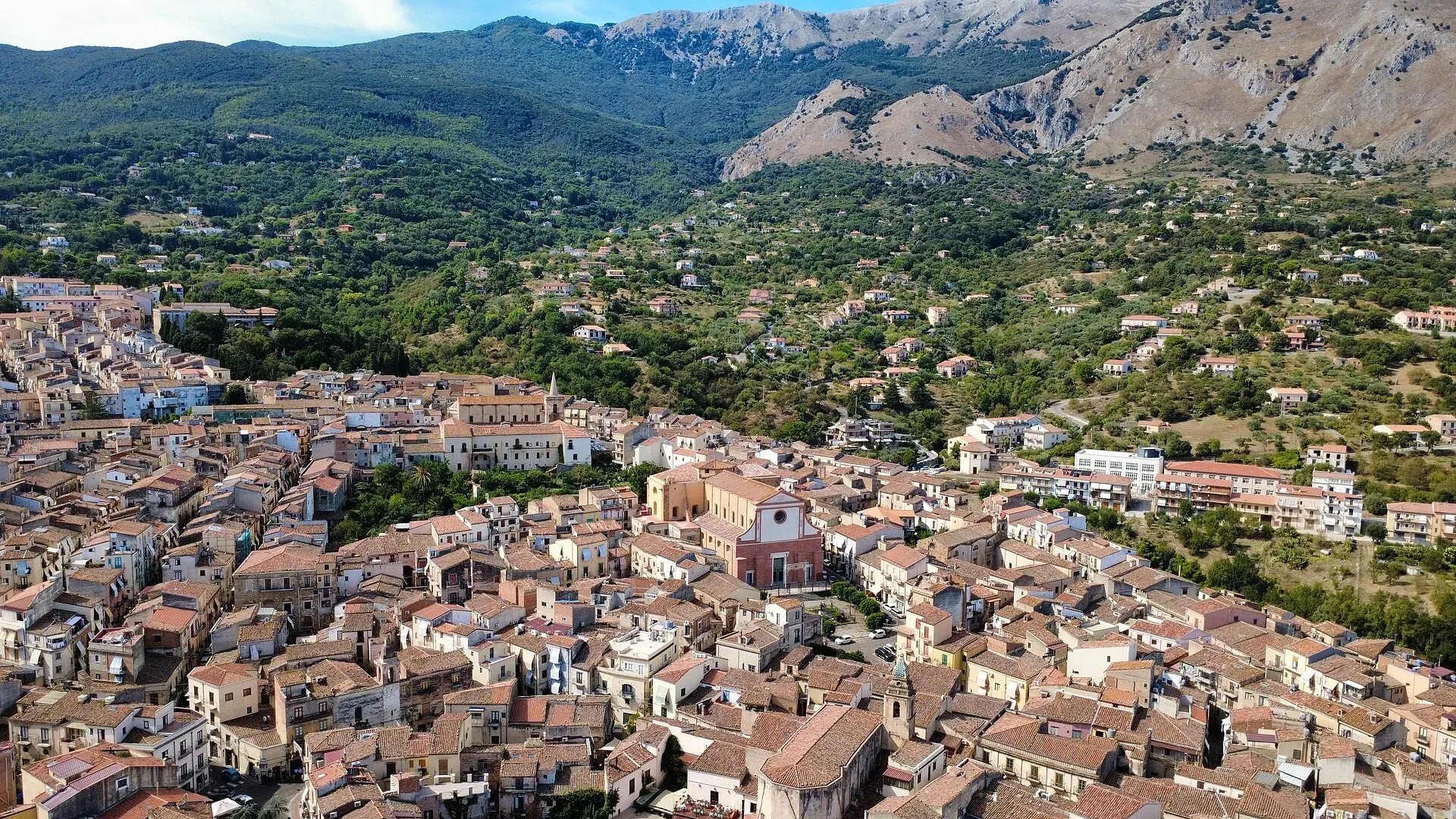
The town of the Ventimiglia castle, manna and testa di turco