Culture
History and culture
The Targa Florio was born in 1906 on the roads of the Madonie: history of the race, its three circuits, Floriopoli, the Collesano museum and today's events.
The Targa Florio is the motor race born on 6 May 1906 on the roads of the Madonie, created by the Palermo entrepreneur Vincenzo Florio. As a road speed race it lasted until 1977, with 61 editions. Today the name lives on in two events that come back every year to the same roads: the Targa Florio Rally in May and the Targa Florio Classica in October.
At a glance
Vincenzo Florio, from the Palermo family of shipowners and industrialists. He was born in 1883, so in 1906 he was barely in his twenties, and he raced himself: in 1904 he came third in a Mercedes at the Brescia motor week, and in 1905 he put up the Coppa Florio, run near Brescia.
For his Sicilian race he chose the Madonie, the opposite of the flat circuits on the mainland. Mountain roads, hairpins, climbs to over 1,000 metres and one village after another. As the historian Salvatore Requirez put it at the presentation of the 2026 Classica, Florio chose those roads to make the difference.
The first edition was run on 6 May 1906. Three laps of the Great Circuit, more than 440 km. Alessandro Cagno won in an Itala 35/40 HP, in 9 hours and 32 minutes.
In 71 years the race changed its route several times. Three circuits all loop around the Madonie, and their names tell you the length.
| Circuit | Length | Years | Towns on the route |
|---|---|---|---|
| Great Circuit | 148 km | 1906-1911, then 1931 | Cerda, Caltavuturo, Castellana Sicula, Petralia Sottana, Petralia Soprana, Geraci Siculo, Castelbuono, Isnello, Collesano, Campofelice di Roccella |
| Medium Circuit | 108 km | 1919-1930 | Cerda, Caltavuturo, Polizzi Generosa, Collesano, Campofelice di Roccella |
| Small Circuit | 72 km | 1932-1936 and 1951-1977 | Cerda, Caltavuturo (turn-off), Scillato, Polizzi Generosa (turn-off), Collesano, Campofelice di Roccella, Buonfornello |
Lengths and years come from the Italian Wikipedia entry on the Targa Florio, based on Sergio Alessandro’s history of the race.
This was the route of the first six editions and the most spectacular to drive today. It started at contrada Pistavecchia, in the municipality of Campofelice di Roccella, climbed inland through Cerda and Caltavuturo, crossed the high Madonie through Castellana Sicula, the two Petralias and Geraci Siculo, then came down to Castelbuono, Isnello and Collesano.
It came back for one year in 1931, shortened to 146 km, because a flood had made the Medium Circuit impassable. That year Tazio Nuvolari won in an Alfa Romeo 8C 2300.
Used for twelve editions in a row, from 1919 to 1930. It cuts out the high Madonie and passes through Polizzi Generosa. Start and finish were in Cerda.
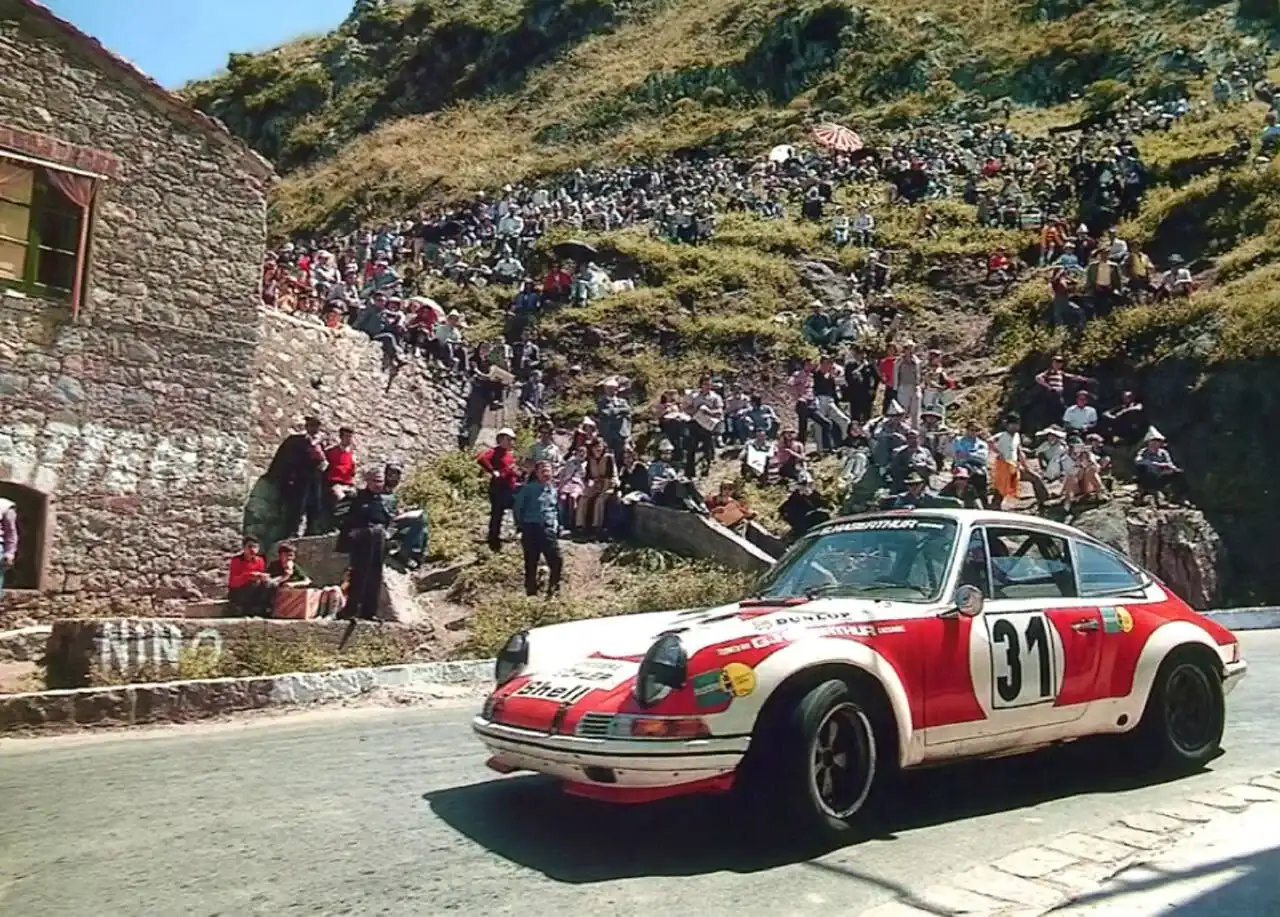
This is the Targa Florio you know from photos: Ferraris, Porsches and Alfa Romeos between the house walls of Collesano, spectators on the pavements. It was 72 km long and lapped many times: in 1972 Arturo Merzario and Sandro Munari covered 792 km.
After the Cerda grandstands the lap climbed through Portella di Cascio and Portella di Sette Frati, reached the Caltavuturo turn-off, dropped to Scillato, passed below Polizzi Generosa and arrived in Collesano. From there it went down to Campofelice di Roccella and the long Buonfornello straight by the sea, before returning to the pits.
The fastest race lap is still Leo Kinnunen’s in a Porsche 908/3 in 1970: 33 minutes 36 seconds, an average of over 128 km/h on mountain roads.
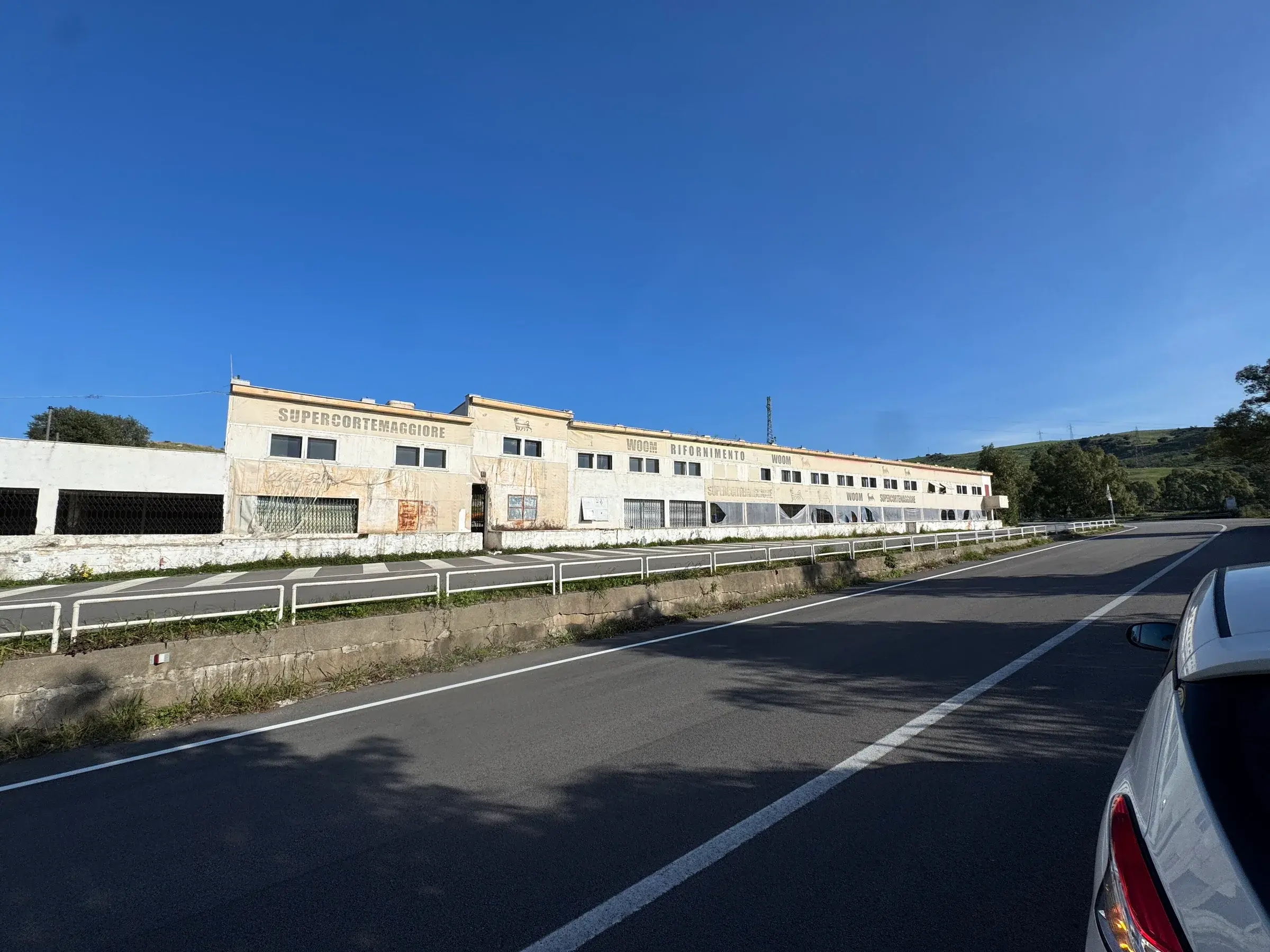
Floriopoli is the race village: pits, paddock, grandstands and timing tower. The masonry buildings date from the 1920s and had two jobs, supporting the drivers and giving the public a show. The grandstands held about a thousand people (Balarm).
They are called the “Cerda grandstands”, but they stand in the municipality of Termini Imerese. To get there, just past Cerda railway station you reach the junction of the SS113 and SS120; turn left towards Fiumefreddo and after a few hundred metres the pits are by the roadside.
What you see today: a long row of pits with period advertising still readable on the facade, and the grandstands opposite. The road is the race road and is open to traffic, so only stop where you can park. The buildings belong to the Città Metropolitana di Palermo.
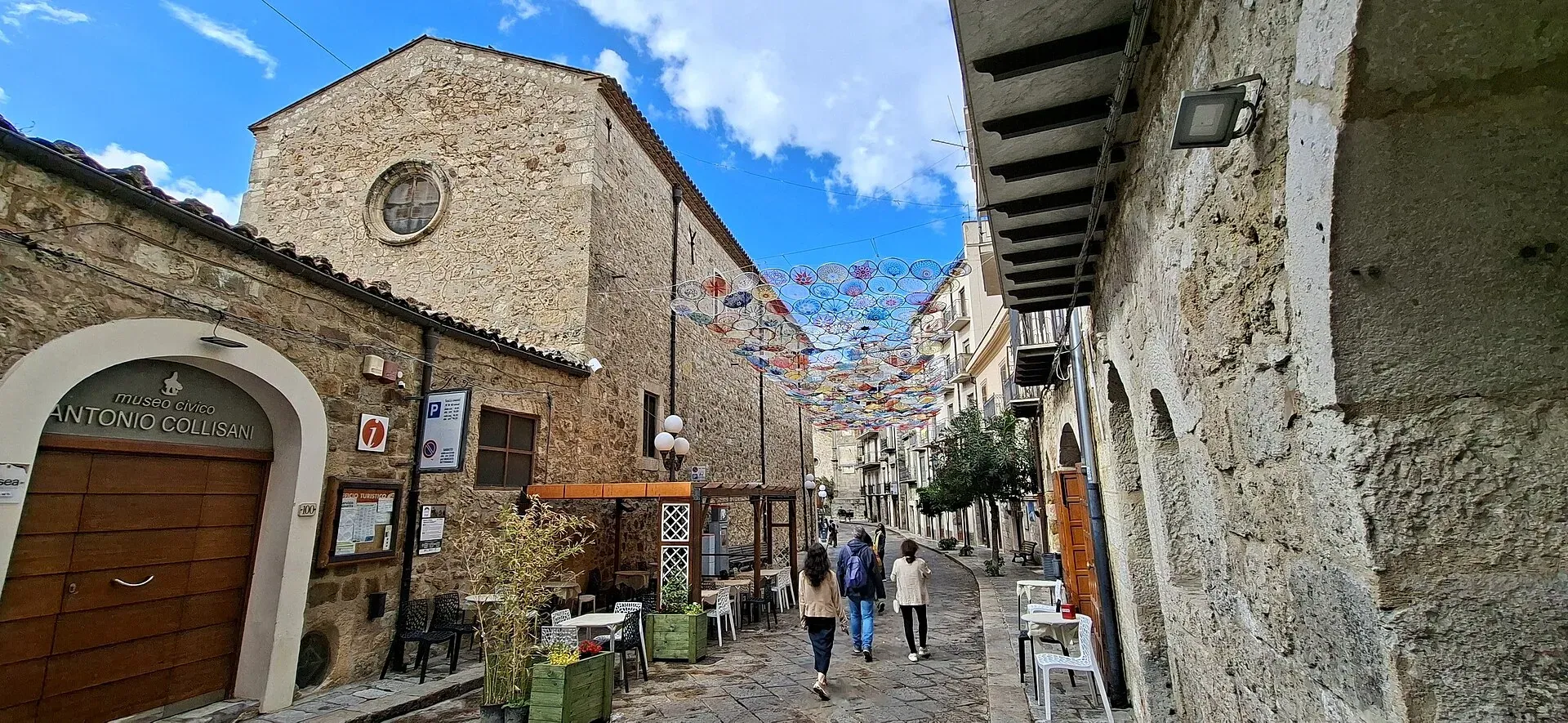
Collesano is the town most tied to the race: the Small Circuit ran right through its centre. The museum is on corso Vittorio Emanuele and is run by the Comune di Collesano, which posts closure notices on its website.
Inside are photographs, documentaries, objects and memorabilia of the race. On 21 December 2025 a new wing opened dedicated to Elio Lombardo, a figure of Sicilian motoring, thanks to a donation from his widow Emanuela Sciara: 129 books on motor sport, 215 models of historic racing cars, ten photo albums on the Targa Florio and the Giro di Sicilia, badges and original documents (Balarm).
Before you go: the opening hours published around do not match and change between summer and winter. The council announces closures of even half a day, such as on 14 September 2026. Check the news on the Comune di Collesano website or call the tourist office on +39 0921 664684 (number given by the park page on Parks.it).
The rest of the town, with its ceramics and churches, is on the Collesano page.
Almost all the great European makes raced at the Targa Florio. In the 60 editions run as speed races (1957 was a regularity event and does not count), the wins break down like this:
| Manufacturer | Wins |
|---|---|
| Porsche | 11 |
| Alfa Romeo | 10 |
| Ferrari | 7 |
| Lancia | 5 |
| Bugatti | 5 |
| Maserati | 4 |
| Mercedes-Benz | 3 |
Data from the Italian Wikipedia entry on the Targa Florio.
Among drivers, the name that counts in Sicily is Nino Vaccarella from Palermo, who won three times: in 1965 with Lorenzo Bandini in a Ferrari, in 1971 with Toine Hezemans in an Alfa Romeo 33/3, in 1975 with Arturo Merzario in an Alfa Romeo 33 TT/12. Tazio Nuvolari, Achille Varzi, Stirling Moss with Peter Collins (Mercedes-Benz 300 SLR, 1955) and Jo Siffert with Brian Redman (Porsche 908/3, 1970) also won here.
In 1935, with the family businesses in crisis, the race passed to the Automobile Club of Palermo. From 1958 to 1973 it was a round of the World Sportscar Championship, with a first appearance as early as 1955.
The cars kept getting faster and the roads stayed the same, narrow and lined with people. After 1973 the Targa Florio left the world championship and carried on for three years as a national race.
On 15 May 1977, during the 61st edition, Gabriele Ciuti’s Osella-BMW left the road near the Buonfornello straight and hit some spectators: two dead and three injured, including the driver. The race was stopped after four of the eight planned laps. It was the last Targa Florio run as a speed race.
From 1978 the race became a rally, which kept its name and the numbering of the editions. That is why ACI calls it the oldest motor race in the world: 2026 marked 120 years since the first edition and the 110th edition of the rally.
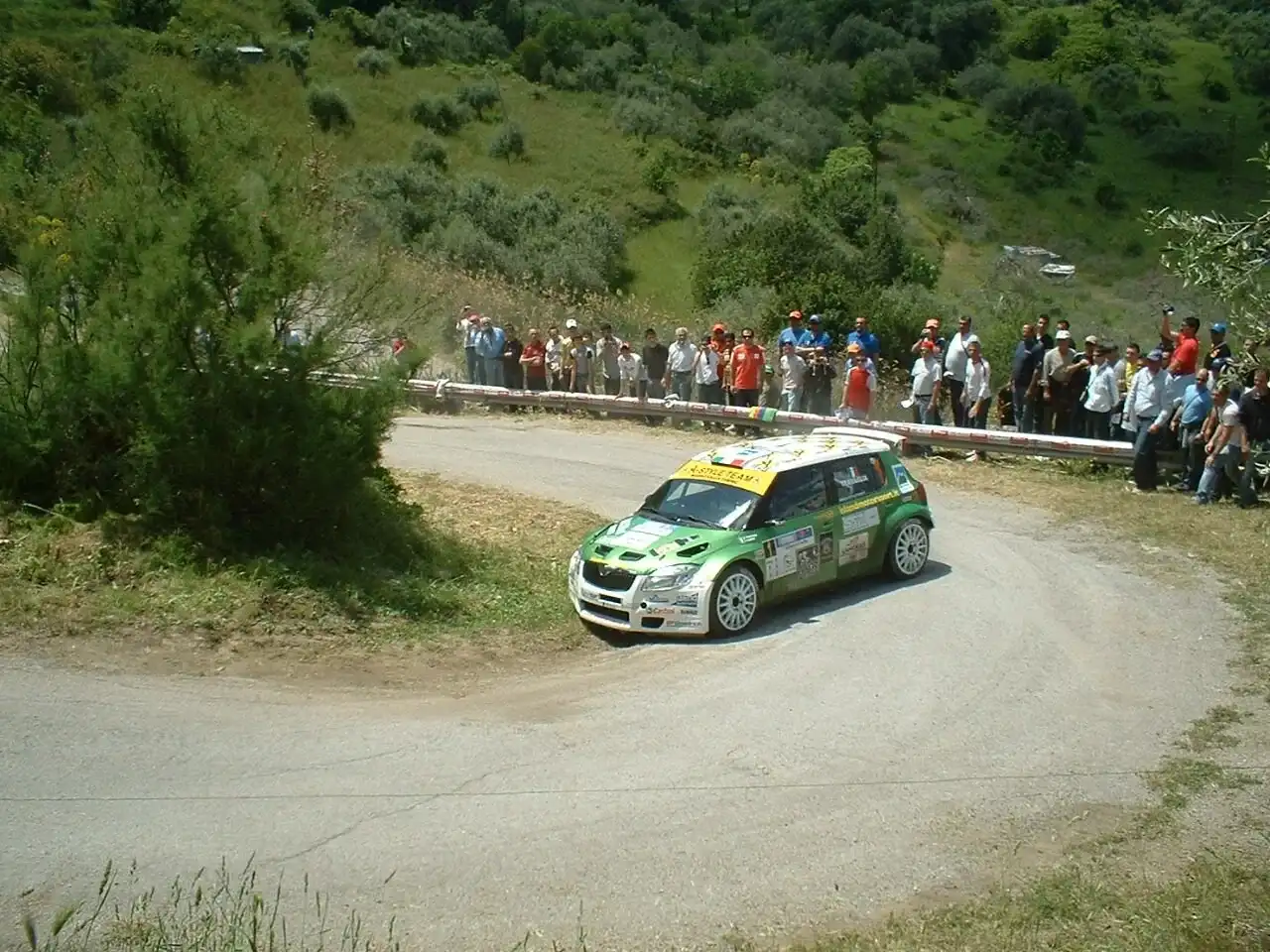
A round of the Italian Rally Championship (CIAR), organised by Automobile Club Palermo. In 2026 the 110th edition ran from 14 to 16 May, starting from piazza Verdi in Palermo, with special stages in the Madonie: La Montedoro, Scillato-La Generosa, Geraci-Castelbuono and Pollina. The Targa Florio Historic Rally for historic cars runs on the same days.
The stage roads are closed for hours. Dates, times and road closures for this year’s edition are on the Targa Florio Rally page.
A regularity race for historic cars, organised by ACI. The 2026 edition, for the 120th anniversary, ran from 15 to 18 October with 200 crews and over 600 km between Palermo and Trapani. On Saturday 17 October the Madonie stage followed the Great Circuit: Campofelice di Roccella, Collesano, Polizzi Generosa, Castellana Sicula, Geraci Siculo, Castelbuono, lunch in Pollina, then Cerda passing the Floriopoli grandstands, Caltavuturo and Termini Imerese (Madonie Press).
On the day of the Madonie stage the cars stop in the town squares and you can see them up close. This year’s programme is on the Targa Florio Classica page.
The Targa Florio roads are state and provincial roads open to traffic. You can drive the Small Circuit in half a day, or the Great Circuit in a full day with stops in the villages.
A possible lap of the Small Circuit, in race direction:
These are narrow, winding mountain roads. Drive calmly: it is an ordinary road, open to everyone, where you may meet farm vehicles and animals. Before you set off, check closures and roadworks on the Madonie roads page.
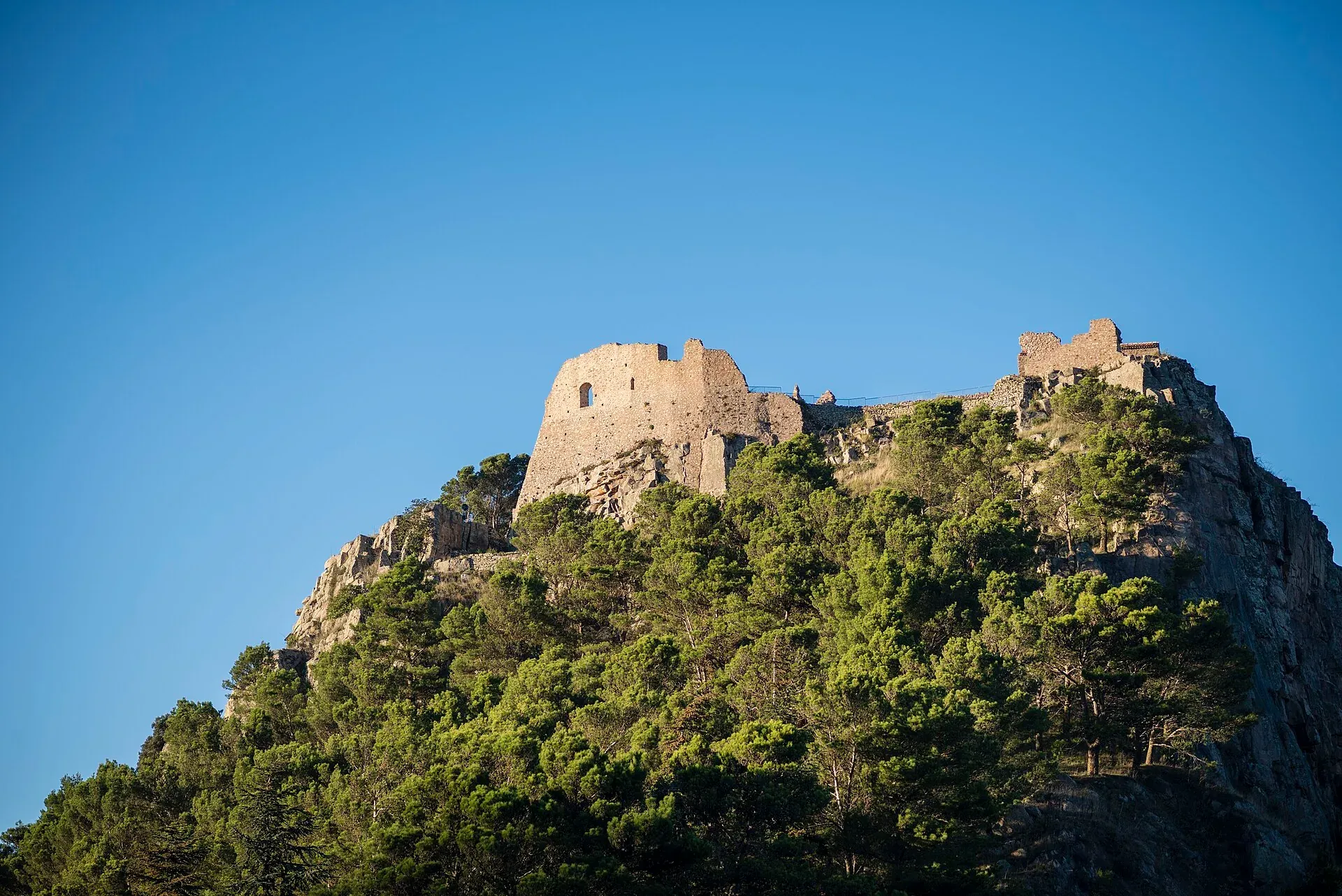
The Great Circuit also passes through Castelbuono and Geraci Siculo, the Ventimiglia towns: you can combine the drive with the visits described in our article on the Ventimiglia castles. More places from Madonie history are in the History and culture section.
Updated on 19 October 2026
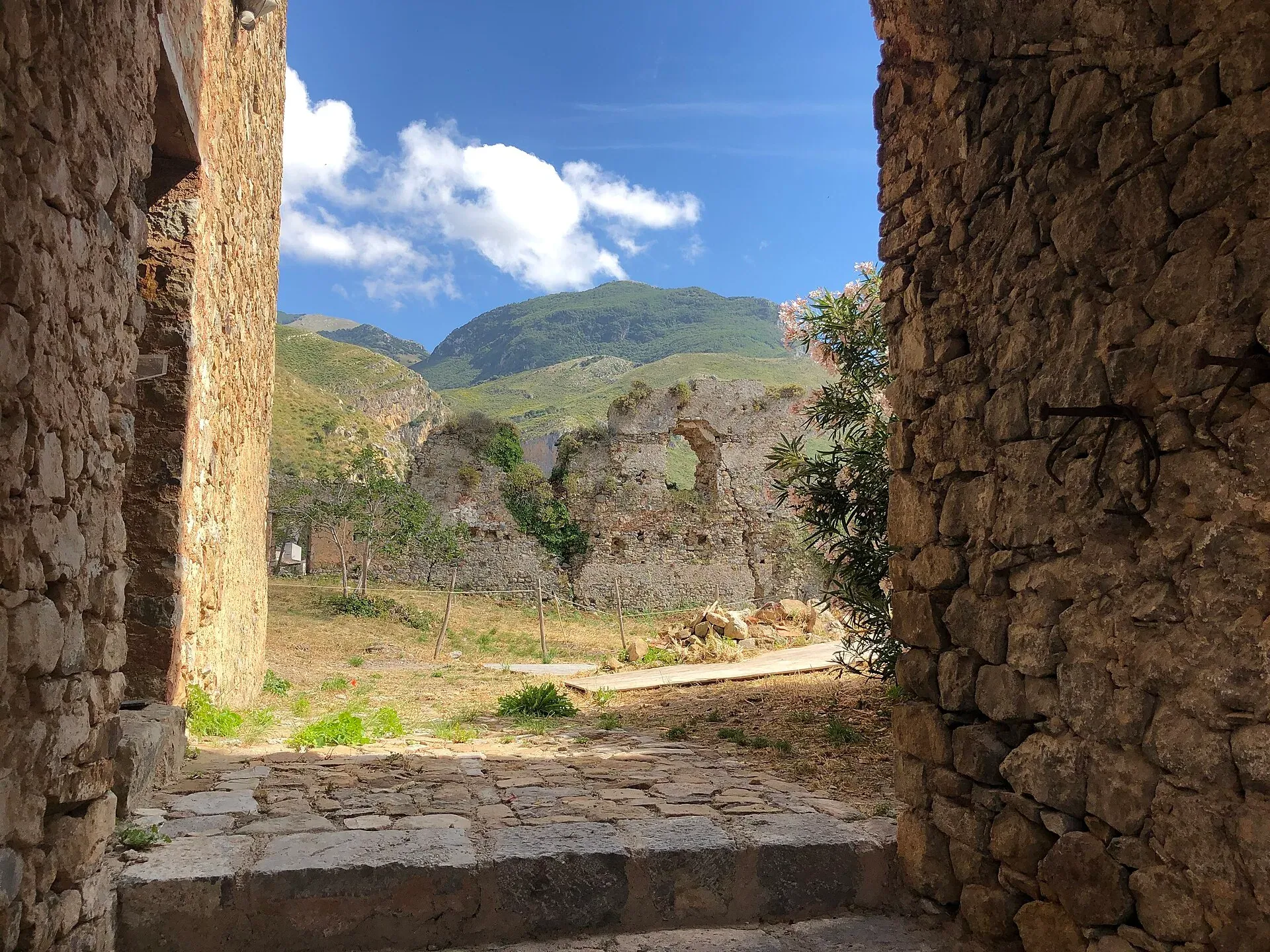
470 m a.s.l.
Ceramics, a castle and the Targa Florio museum
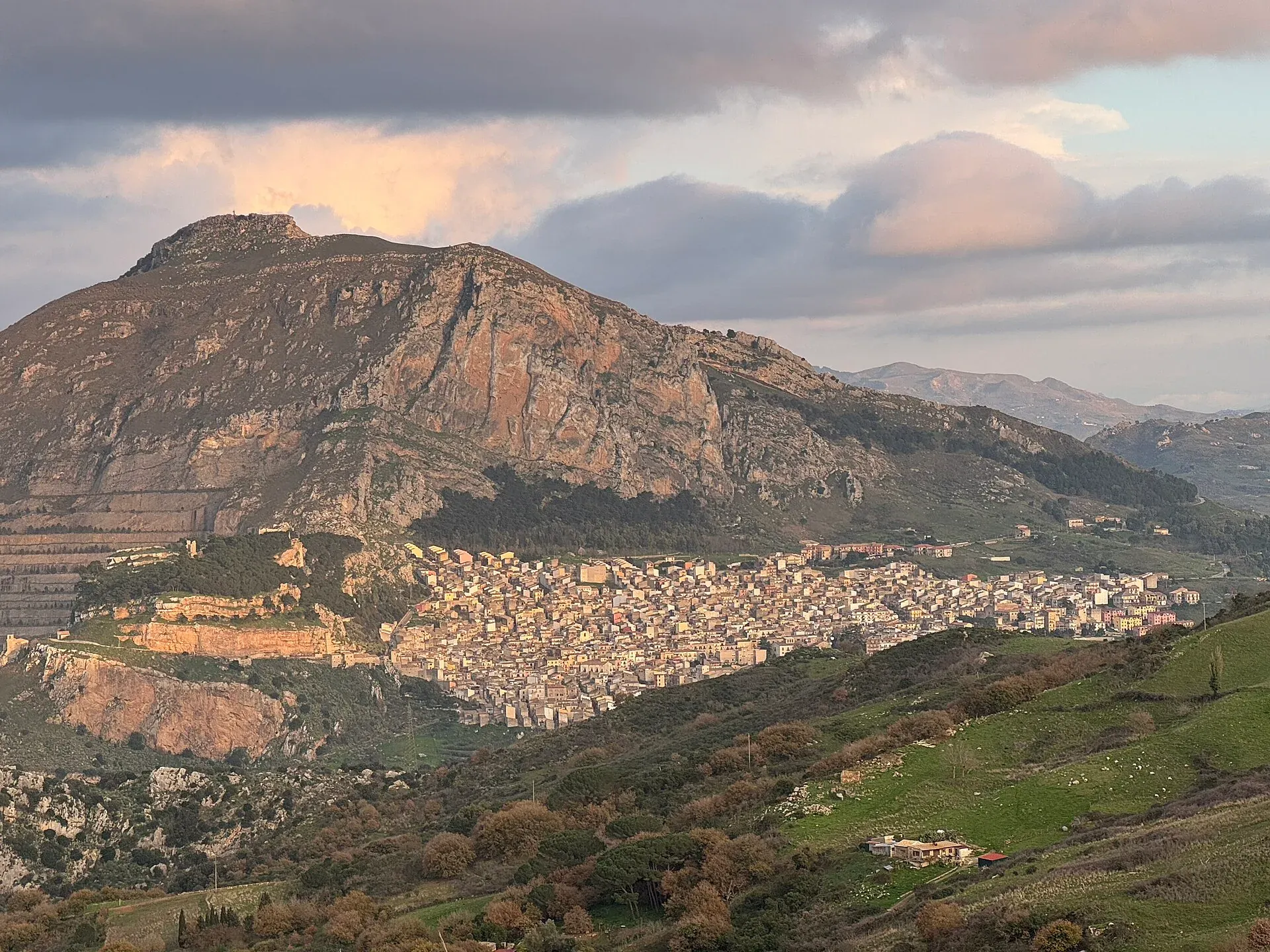
631 m a.s.l.
The village below the Rocca di Sciara
239 m a.s.l.
Springs, water mills and oranges
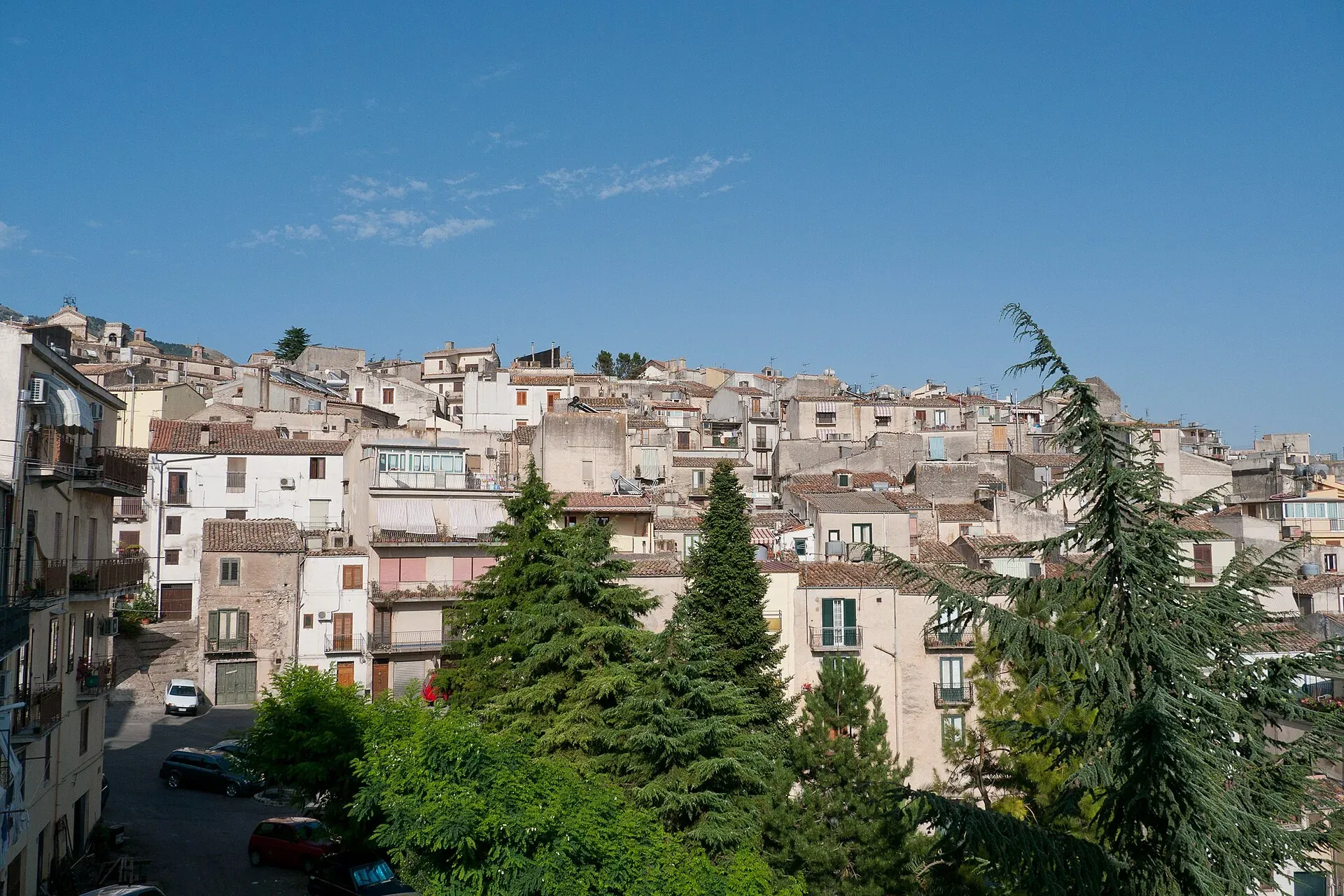
920 m a.s.l.
The town of the Abies nebrodensis, sfoglio and badda beans
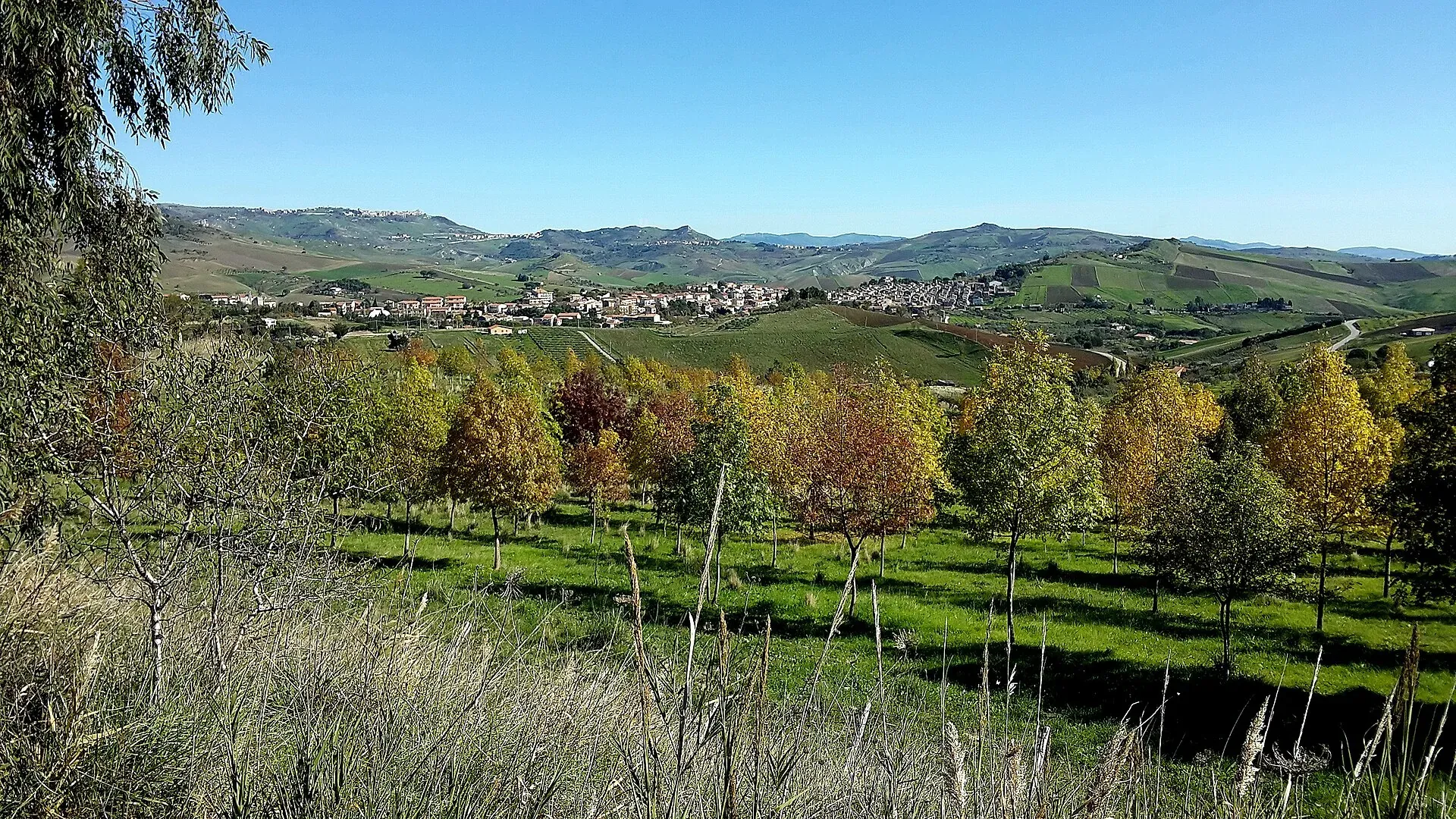
774 m a.s.l.
The village of hamlets and murals
1,039 m a.s.l.
Home of the Madonie Park, at the foot of Piano Battaglia
1,147 m a.s.l.
The highest town in the Madonie, Borgo dei Borghi 2018
1,077 m a.s.l.
The first capital of the Ventimiglia, above the Madonie woods
423 m a.s.l.
The town of the Ventimiglia castle, manna and testa di turco
583 m a.s.l.
The town of the stars, beneath the Madonie cliffs