755 m a.s.l. · Madonie Park
Sclafani Bagni
The walled village on the rock and its hot spring
- Walled village
- Hot spring
- Smallest municipality in the province
Things to do in Sclafani Bagni: the Porta Soprana, the castle tower, the Gothic Chiesa Madre, the geology trail and the hot spring. History and festivals.
Page updated on 19 October 2026
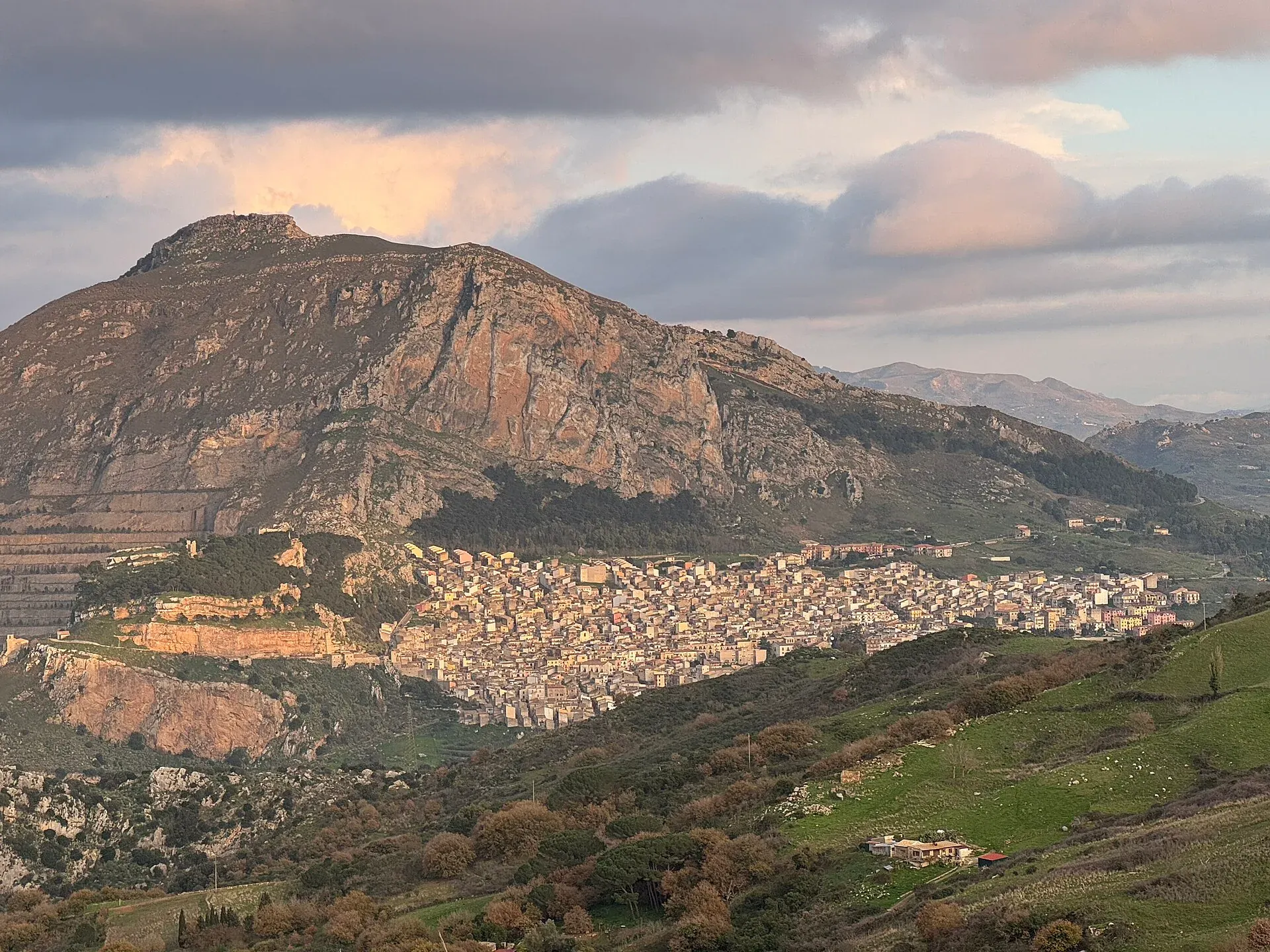
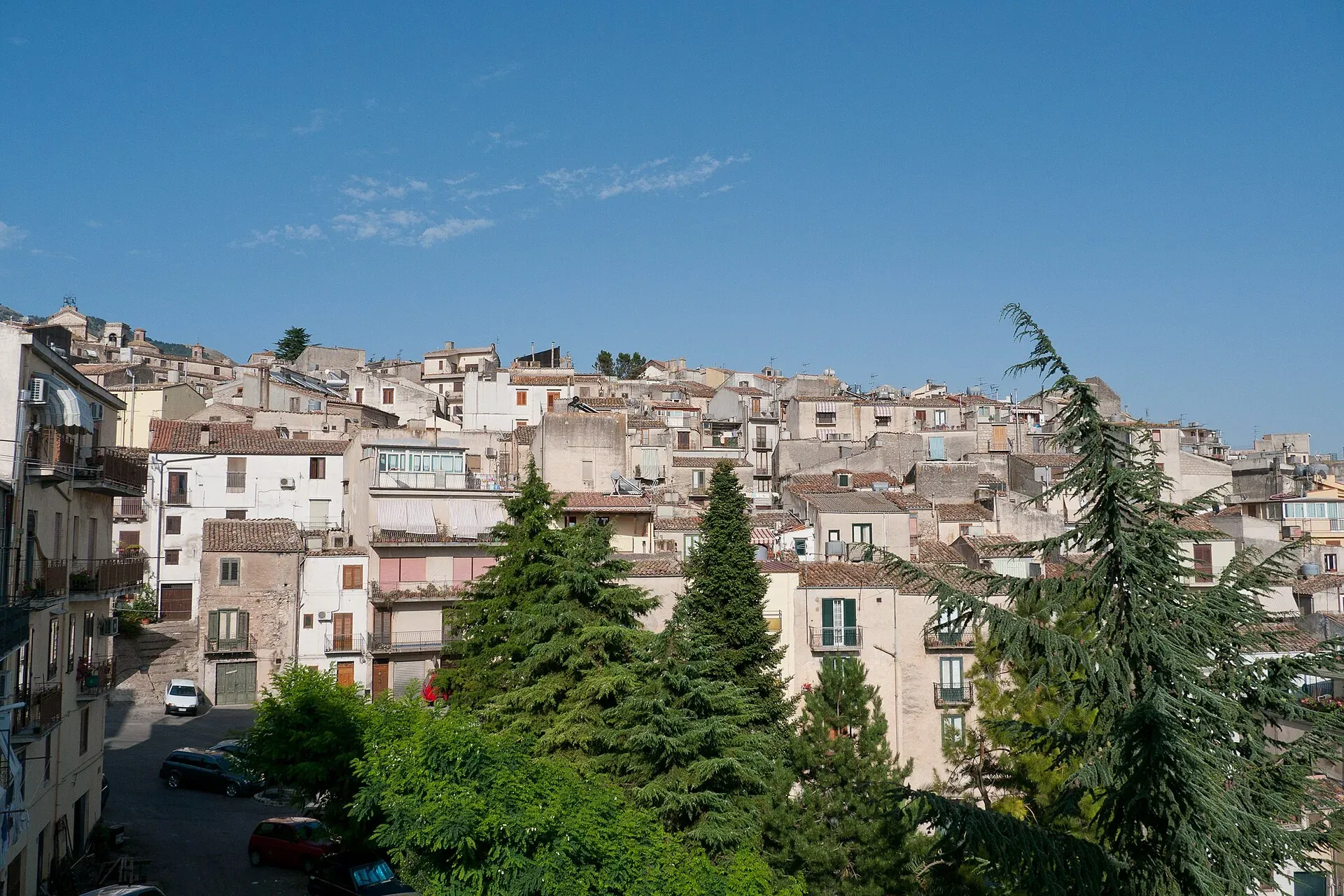
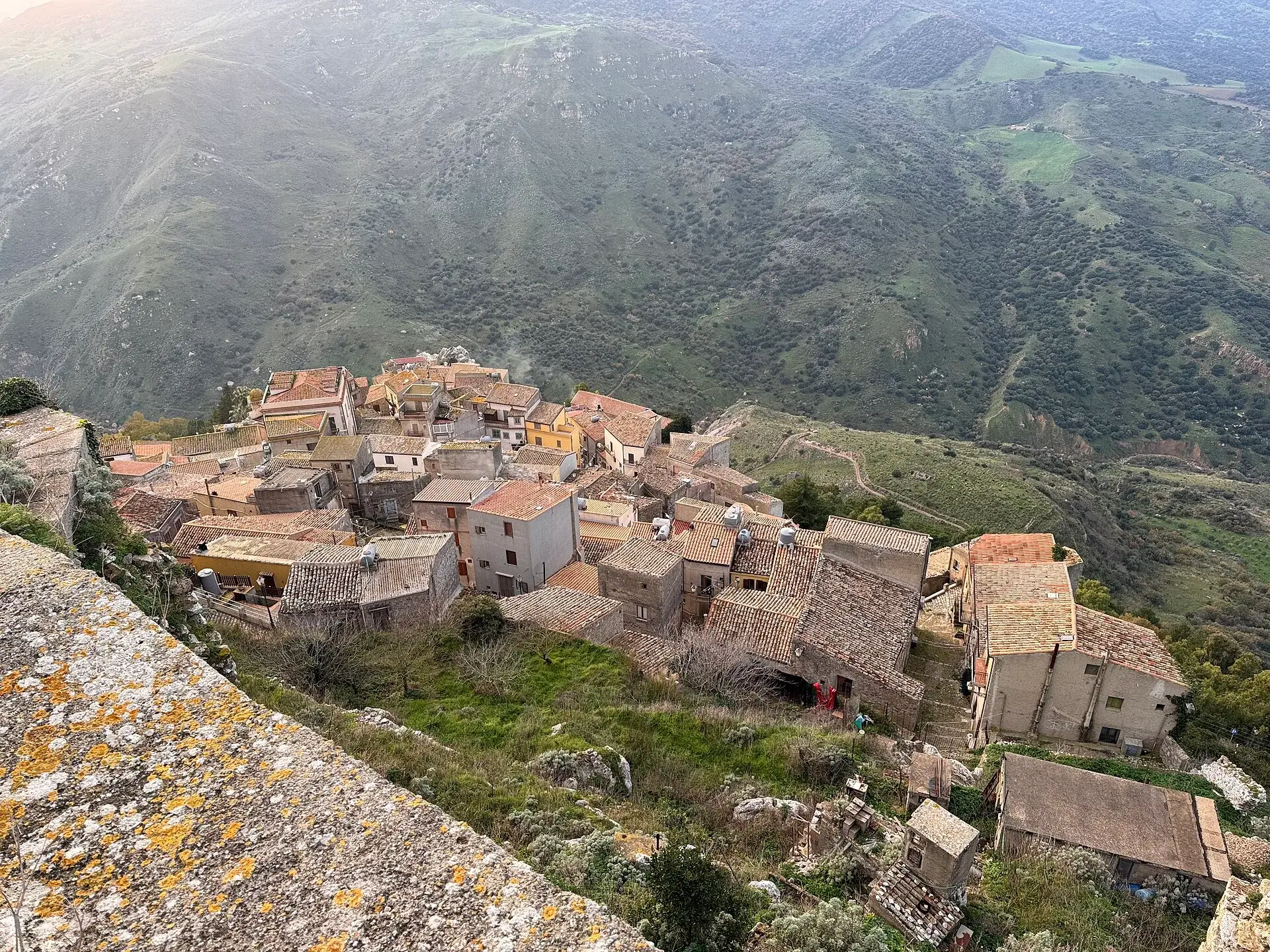
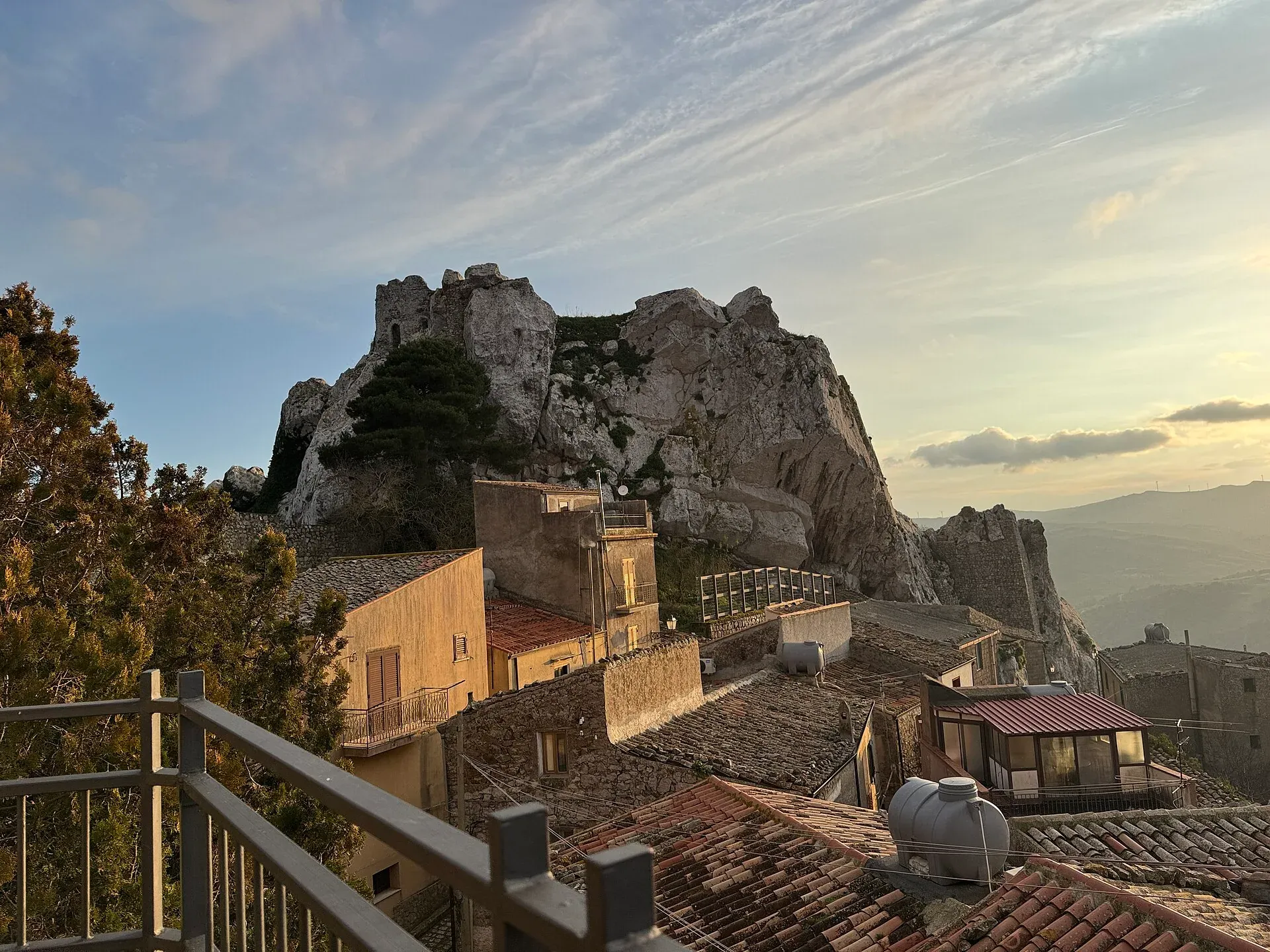
Sclafani Bagni is a village of 344 people on a rocky spur on the western side of the Madonie Park (Parco delle Madonie), 755 metres above sea level. It is the least populated municipality in the province of Palermo and one of the smallest in Sicily, but it has kept its medieval shape: the walls, the Porta Soprana, the castle tower and a Chiesa Madre with a Gothic portal. In the countryside there is a hot spring that gives the village its name.
You come here for a village you can walk round in a couple of hours, in silence, with the Imera valley below. And, if you like the idea, for a warm bath in the open air.
Sclafani Bagni at a glance
The key facts, with sources at the bottom of the page.
| Where | Western side of the Madonie Park, above the Imera valley |
| Altitude | 755 m at the town hall (ISTAT); the crest of Monte Sclafani reaches 813 m |
| Population | 344 (ISTAT estimate, 1 January 2026) |
| Area | about 135 km² |
| From Palermo | 76 km, about 1 h 30 by car |
| From Caltavuturo | 10 km, about 15 min |
| Known for | walled village, hot spring, Wine & Food Festival |
A short history
Local scholars linked Sclafani to an ancient Greek town and its name to a temple of Asclepius, but without proof. The first certain mention is from 938: the Cambridge Chronicle records that one of the Muslim warlords subdued the strongholds of Caltavuturo, Collesano and Sclafani.
Under the Normans the village passed to Jordan of Hauteville, son of Count Roger, and then to several families. Its golden age came with Matteo Sclafani, at the turn of the thirteenth and fourteenth centuries: between 1296 and 1333 he fortified the rock, enclosed the village in walls, built a bridge and the Chiesa Madre, and obtained the title of count from Frederick III. He is the same man who built Palazzo Sclafani in Palermo.
In 1483 the fair of Sant’Ippolito was established, on 13 August. The word Bagni is more recent: it was added in 1954 by a regional law, to recall the hot spring.
Things to see in Sclafani Bagni
The Porta Soprana and the walls
In the upper part of the village is the Porta Soprana, the only monumental gateway left in the walls. It still bears the coat of arms of the Sclafani family: a shield divided black and silver with two facing cranes.
The Castello Grande and the Castelluccio
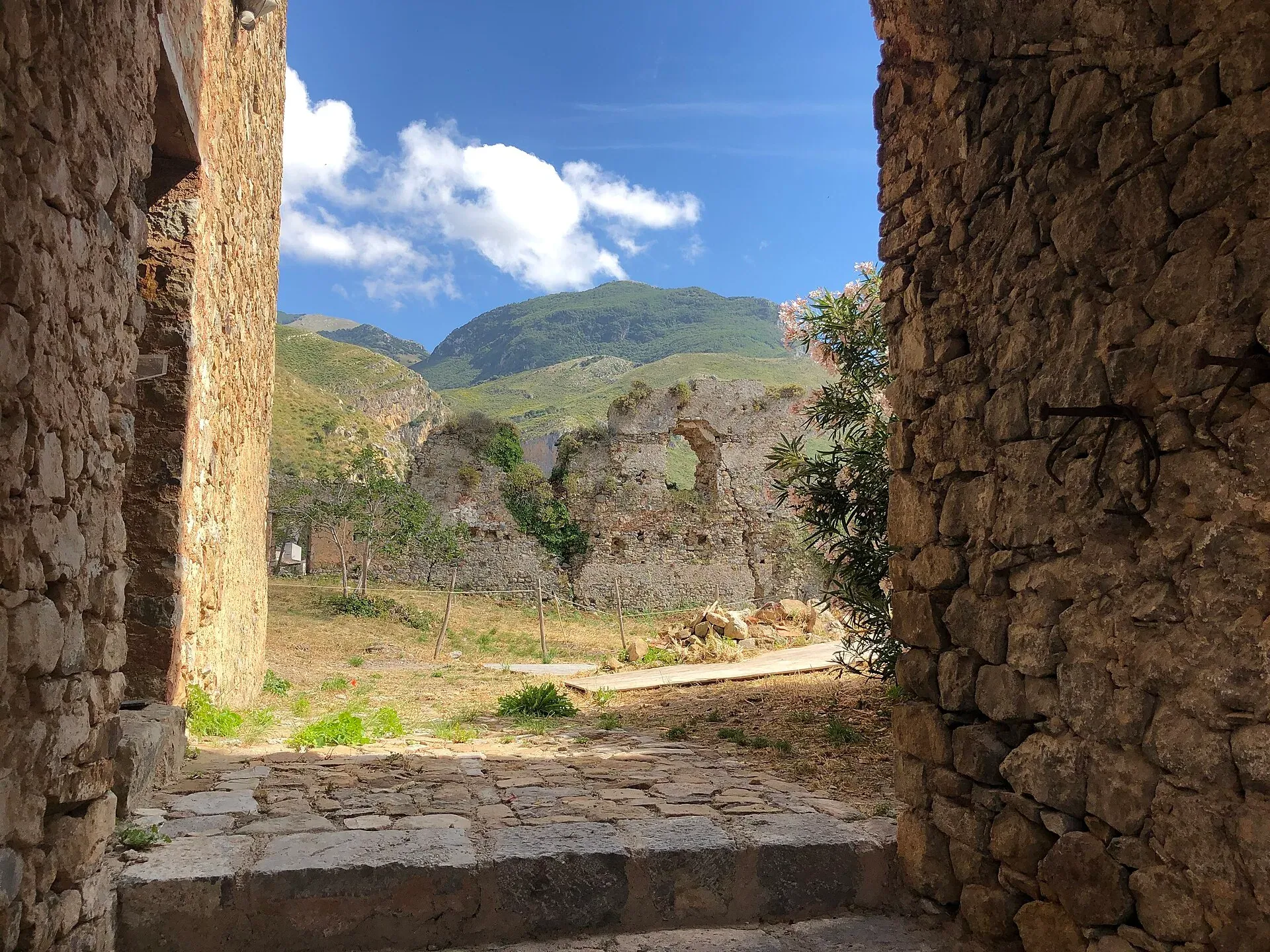
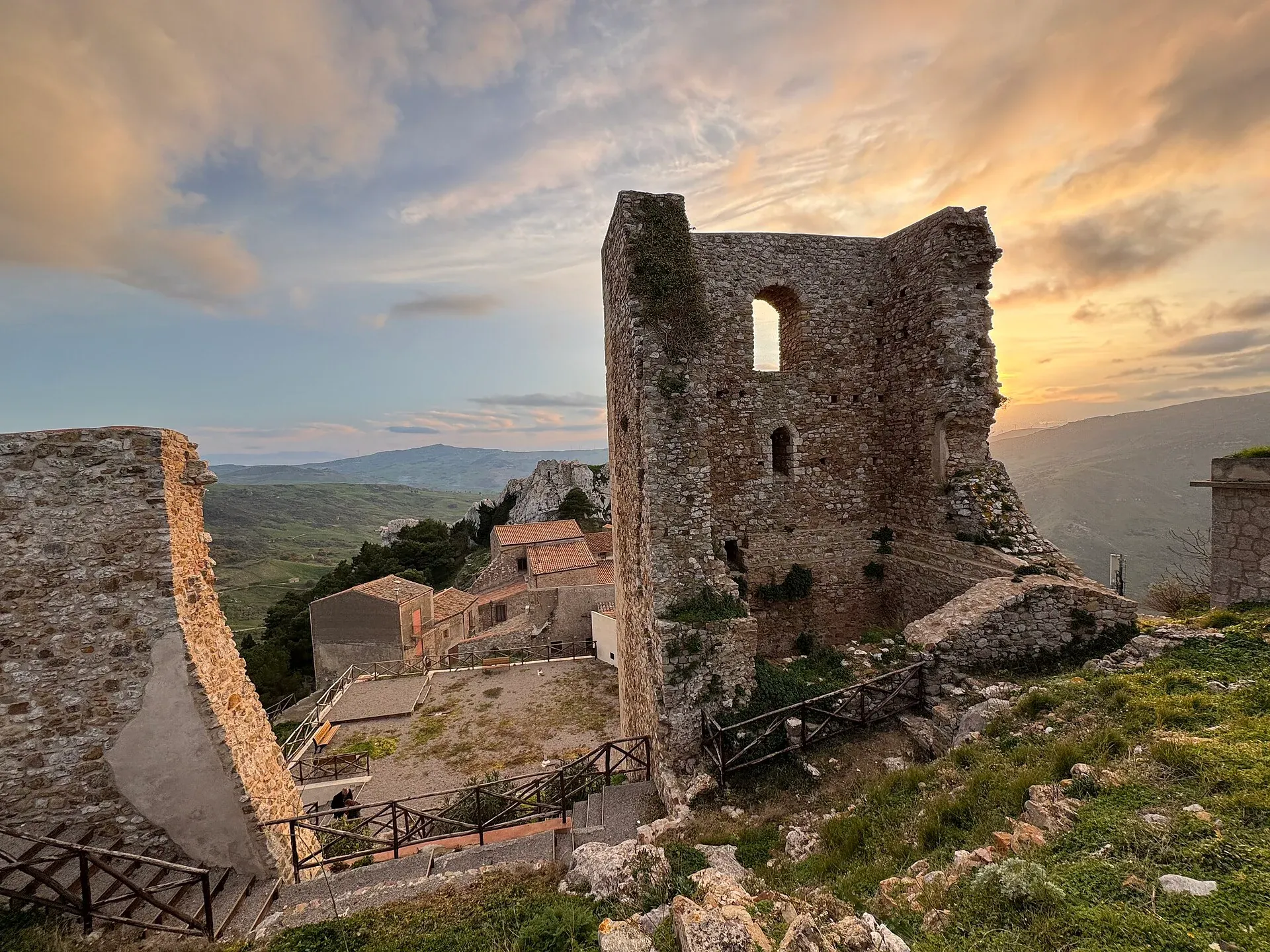
Of the Castello Grande part of the walls and the keep survive; the tower is about 20 metres high, with walls a metre and a half thick. It had three levels plus the terrace: the first two were lit by arrow slits facing south, the top, residential floor by a large opening. Next to it is still a barrel-vaulted cistern. The Castelluccio, on the opposite side of the walls, housed the guard; only a few remains are left.
The Chiesa Madre of Santa Maria Assunta
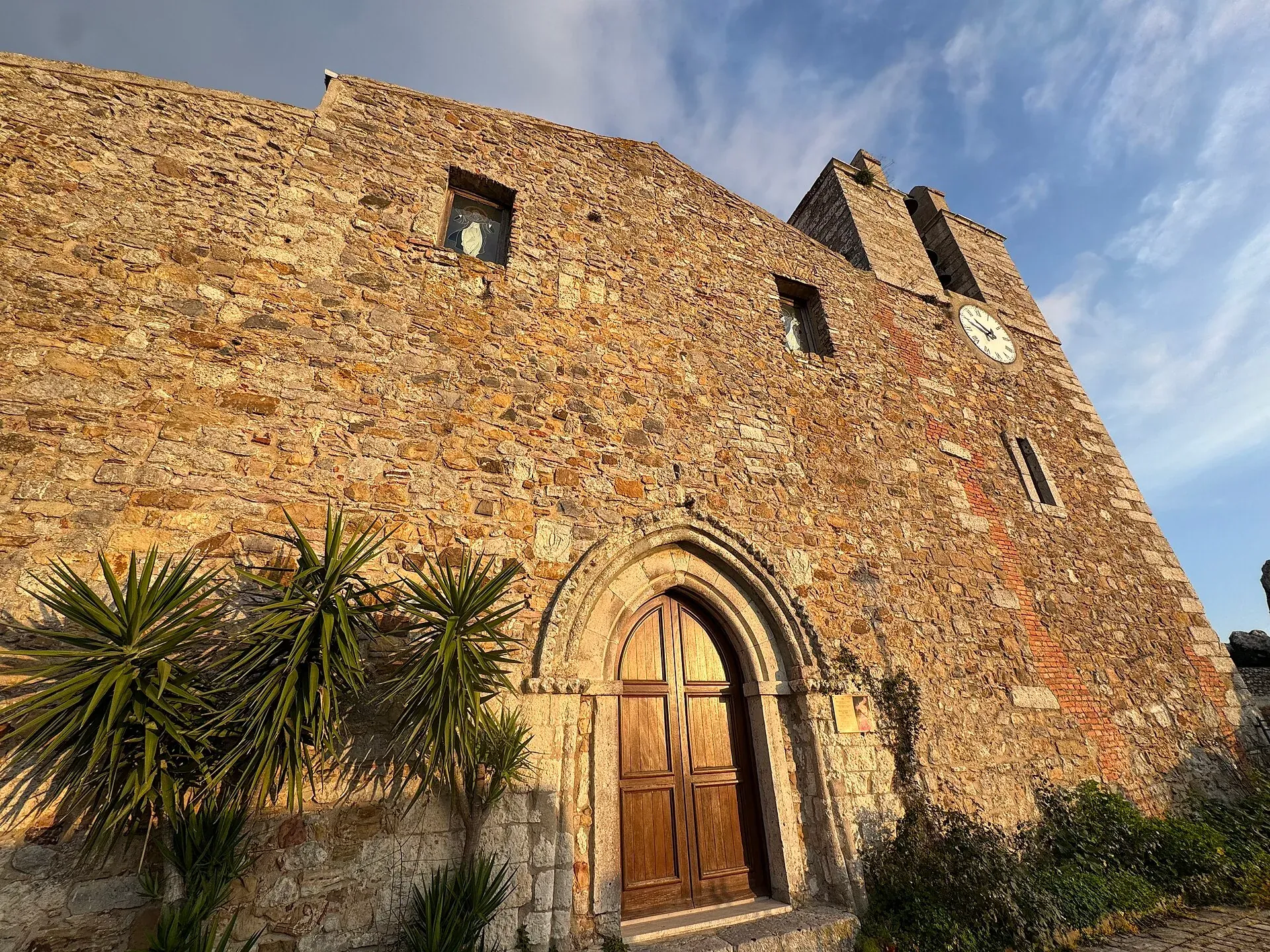
This is the village’s most important monument, built against the castle and the walls: it may have started as the chapel of the lords of Sclafani. The fine pointed portal is from the fourteenth century, the only element left of the first church. Today it has three naves and a massive bell tower that closes the facade like a fortified tower.
San Filippo, San Giacomo and the Badia
The church of San Filippo has three naves, a tall bell tower and a seventeenth-century facade on a small square; it already existed in 1573. The vara of the Crucifix, the processional float, is kept here. The church of San Giacomo, with three naves and stone columns, has been closed for decades and is in poor condition. The former convent of Santa Chiara, the Badia, was founded in 1629 and suppressed in 1867: today it hosts the cooking shows of the Wine & Food Festival.
The Madonie Park authority also mentions a Greek stone sarcophagus from the fourth century BC.
The village geology trail
The Park authority has set up a geology trail with bilingual panels that crosses the whole village. It shows the rocks outcropping between the houses, laid down in the deep sea between 200 and 24 million years ago. According to the Park, this landscape also struck the artist Escher.
The hot spring and the old spa
North-west of the village, in the countryside, there is a hot spring, on average 37 degrees according to the town council, where you can bathe. Next to it are the ruins of the old spa building, now abandoned.
Its end has a precise date. On 13 March 1851, after a storm, a rockfall broke away from the crest of Monte Sclafani and buried the spa, which stood at about 430 metres above sea level. There were no victims. The story is told by a study published in 2017 that located the exact site of the building.
Things to do in and around Sclafani Bagni
- Walk round the village with the geology trail: a couple of hours is enough.
- Bathe in the hot spring, with suitable shoes to get there.
- A picnic at the Piano Croce area, which has a giant bench. There is also a charging point for e-bikes in the village.
- Nearby villages: Caltavuturo is 10 km away, Scillato 15, Polizzi Generosa 33.
More ideas on things to do in Sclafani Bagni.
When to go
Spring and autumn are the best months for walking round the village and hiking. On the last weekend of August there is the Wine & Food Festival, the event that brings the most visitors. In summer the hot spring is less appealing; in winter a bath at 37 degrees has its charm, but check the weather in Sclafani Bagni before you go.
How to get to Sclafani Bagni
From Palermo take the A19 to Termini Imerese, then the SS120 through Cerda and finally the SP58 to Sclafani. Distances are calculated on OpenStreetMap:
| From | Distance | Driving time |
|---|---|---|
| Palermo | 76 km | about 1 h 30 |
| Cefalù | 56 km | about 1 h 10 |
| Catania | 147 km | about 2 h |
| Caltavuturo | 10 km | about 15 min |
| Scillato | 15 km | about 35 min |
We have not found official, up-to-date bus timetables: for now a car is best. Closures and roadworks are on the page about Madonie roads. For all roads and connections there is the guide on how to get to the Madonie.
What to eat in Sclafani Bagni
We have not found a local product tied only to Sclafani, but there is one day a year when the village sits down to eat: the Sclafani Bagni Wine & Food Festival, with Michelin-starred chefs in the former Badia, masterclasses in the castle and Madonie produce. The rest of the year, see our guide to Madonie food for cheeses, olive oil and sweets from the area.
Festivals and events
- Sclafani Bagni Wine & Food Festival, on the last weekend of August, with cooking shows and masterclasses to be booked.
- Estate sclafanese, the council’s summer programme.
All dates are on events in Sclafani Bagni.
Where to stay and where to eat
There are a couple of bed and breakfasts: you will find them on where to stay in Sclafani Bagni. The village restaurant is on where to eat in Sclafani Bagni; for more choice, Caltavuturo is a quarter of an hour away.
What to see
- Porta Soprana and medieval walls
- Castello Grande tower
- Remains of the Castelluccio
- Chiesa Madre of Santa Maria Assunta
- San Filippo church
- Former convent of Santa Chiara (Badia)
- Village geology trail
- Hot spring and ruins of the spa
Weather in Sclafani Bagni
Full forecast →16°
Mostly clear
- Today
- 15° / 23°
- Wind
- 11 km/h SE
- Snow on ground
- no
- Freezing level
- 3,850 m
- Tue 2015° 23°
- Wed 2115° 23°
- Thu 2214° 20°
- Fri 2311° 20°
- Sat 2412° 19°
Updated on 20 October at 08:48 · Forecasts Open-Meteo.com (CC BY 4.0)
What to taste
Frequently asked questions
- What is there to see in Sclafani Bagni?
- In Sclafani Bagni you visit the walled village: the Porta Soprana with the coat of arms of the Sclafani family, the Castello Grande tower, about 20 metres high, the remains of the Castelluccio, the Chiesa Madre of Santa Maria Assunta with its fourteenth-century Gothic portal and the church of San Filippo. A geology trail with information panels crosses the whole village.
- Is there a spa in Sclafani Bagni?
- In the countryside of Sclafani Bagni there is a hot spring, on average 37 degrees according to the town council, where you can bathe. The old spa building, however, is abandoned: on 13 March 1851 a rockfall from the crest of Monte Sclafani buried it, with no victims. The word Bagni was added to the village name in 1954.
- Why is it called Sclafani Bagni?
- The village used to be called simply Sclafani; Bagni, baths, was added in 1954 by a regional law, to recall the hot spring in the countryside, used for centuries as a spa. There are several theories about the name Sclafani: one links it to a temple of Asclepius, the god of medicine; the Arabic name was Sqlafiah.
- How many people live in Sclafani Bagni?
- Sclafani Bagni has 344 residents according to the ISTAT estimate for 1 January 2026. It is the least populated municipality in the metropolitan city of Palermo and the third smallest in Sicily, after Roccafiorita and Gallodoro. Its territory, however, is large, about 135 km².
- How far is Sclafani Bagni from Palermo?
- Sclafani Bagni is about 76 km from Palermo, an hour and a half by car according to routing on OpenStreetMap: take the A19 to Termini Imerese, then the SS120 through Cerda and finally the SP58 to Sclafani. Caltavuturo is about 10 km away, a quarter of an hour by road.
- When is the Sclafani Bagni Wine & Food Festival?
- The Sclafani Bagni Wine & Food Festival takes place at the end of August: the third edition was on Sunday 30 August 2026. There are cooking shows by Michelin-starred chefs in the former Badia and masterclasses in the castle, to be booked, plus tastings around the village. Next year's dates are published on the town council website.
Sources
- ISTAT, popolazione residente al 1° gennaio 2026 (stima)
- ISTAT, principali statistiche geografiche sui comuni (altitudine del municipio, superficie)
- Comune di Sclafani Bagni, luoghi (Porta Soprana, Castello Grande, Chiesa Madre, risorse naturali)
- Ente Parco delle Madonie, scheda del Comune di Sclafani Bagni (PDF)
- Contino e altri, Historical analysis of rainfall-triggered rockfalls: the case study of the ancient hydrothermal Sclafani Spa, NHESS 17, 2017
- Wikipedia, Sclafani Bagni
- Distanze e tempi in auto: OSRM su dati OpenStreetMap
Page updated on 19 October 2026
Nearby