Nature
Nature and landscapes
Abies nebrodensis: about 30 adult trees in the wild, all near Polizzi Generosa. What it looks like, why it may vanish, how it is protected, where to see it.
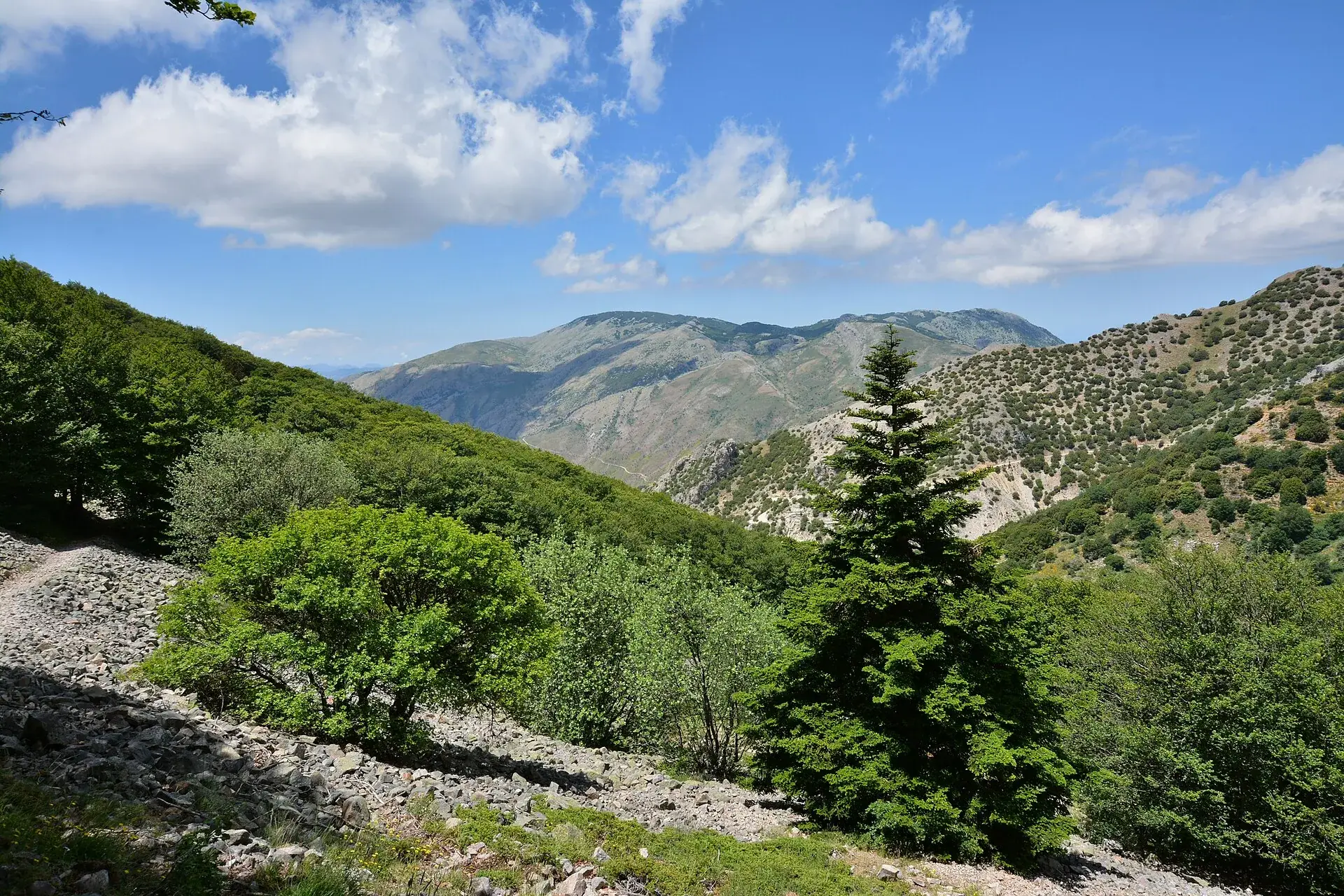
Abies nebrodensis, the Sicilian fir, is one of the rarest trees in the world: only about 30 adult trees survive in the wild, all in the municipality of Polizzi Generosa, between 1,400 and 1,650 metres. They grow on the north side of Monte Scalone and in the Vallone Madonna degli Angeli, in zone A of the Madonie Park (Parco delle Madonie). The IUCN lists it as critically endangered.
This page is about the species: what it looks like, where it comes from, why it was thought to be extinct and what is being done to save it. If you want to walk to the trees, the route is on the Abies nebrodensis trail page.
At a glance
It is smaller and stockier than the silver fir. According to the Park Authority a grown tree reaches 15 metres at most, with a wide, bell-shaped crown and a trunk with greyish-white bark.
The detail that gives it away is the pattern of the branches. From each main branch two side branches grow, and so on, forming lots of little crosses: hence the name arvulu cruci cruci, the cross-cross tree.
The needles are short, stiff and flat, with two white lines on the underside. The cones stand upright on the branches, grow up to 20 centimetres long and are covered in resin in summer. In autumn they fall apart on the tree and release the seeds.
For many years the trees in the valley were thought to be sterile. In recent decades some have started producing fertile seeds again, and the nursery seedlings were grown from those seeds.
For a long time botanists considered it a form of silver fir left isolated in Sicily. Today the Park Authority describes it as a species of its own, present on the island since the Tertiary, before the silver fir arrived with the last ice age.
The evidence lies underground. At a fossil site in the north-eastern Madonie it has been shown that 9,000 years ago the two species grew side by side. In the peat bog of contrada Pietra Giordano, near Geraci Siculo, the layers hold Abies nebrodensis pollen about 10,000 years old.
The name is confusing. In the 19th century “Nebrodi” was also used for the Madonie, so many species described here carry the word nebrodensis. The species was described by the botanist Giovanni Ettore Mattei in 1908.
The fir once covered many mountains of northern Sicily. Its timber was valuable: palaeobotanical studies quoted by the Park Authority show that the roof beams of churches and palaces in the Madonie were often made of fir. The ancient city of Halaesa, near today’s Tusa, minted coins showing this tree.
Logging almost wiped it out. At the end of the 18th century it was still fairly common; then all trace of it was lost and from 1900 it was considered extinct.
It was rediscovered at the end of the 1950s. The botanist Messeri, of the University of Palermo, recognised a large fir in a private garden in Polizzi Generosa. On the slopes of Monte Scalone another 25 trees were then found, numbered and fenced one by one. The Park Authority dates the rediscovery to 1957 on its museum page and to 1958 on its trail page.
The surviving trees grow stunted on stony slopes. They were probably saved precisely because they were small and of little use for timber, and because up there the stronger beech did not smother them.
The CNR lists the problems plainly. The population suffers from severe genetic erosion, the adult trees are related to each other and natural regeneration is poor. The soil is shallow and rocky, with local erosion, and young firs are grazed by wild herbivores and livestock.
The genetic analyses of the LIFE4FIR project, published in 2022, confirmed a high rate of inbreeding. That is why researchers pollinated the trees by hand, crossing different individuals to obtain more varied seedlings.
Then there is the risk of hybridisation. With reforestation, exotic firs such as the silver fir and the Greek fir were planted around the natural area: the University of Palermo is studying whether they can cross with the Sicilian fir.
The latest threat is recent. In its 2025 report the Park Authority reports damage by wild boar and their hybrids to the natural population, and in September 2026 the Park Council cited damage to Abies nebrodensis and to the experimental plots when it asked the Region to declare a state of emergency over fallow deer and wild boar.
Protection has been going on for more than forty years. This table lists the main steps, with data from the official sources.
| Year | Action | Source |
|---|---|---|
| 1984 | The Sicilian Region creates a nature reserve for the firs of the valley | Madonie Park Authority |
| 1989 | The Madonie Park is founded: the area becomes zone A | Madonie Park Authority |
| 2000 | First LIFE Nature project for the species | Madonie Park Authority |
| 2000s | CIPE project: grafting, Piano Noce nursery, clonal orchard in contrada Sanguisughe | Madonie Park Authority |
| 2018 | Voted symbol plant of Sicily | Madonie Park Authority |
| 2019-2024 | LIFE4FIR project, coordinated by the CNR | CNR, Park Authority |
| 2023 | Seed bank and cryobank at the MAN museum in Polizzi Generosa | Madonie UNESCO Global Geopark |
The project funded by CIPE, the Italian interministerial committee for economic planning, continued the work of the first LIFE project with three tools. The first is grafting: shoots of Abies nebrodensis to be grafted onto about 5,000 exotic firs, which in this way stop being a threat and become a support.
The second is reforestation: the project planned about 350 trees per hectare on about 20 hectares, using seedlings from the Piano Noce nursery. The third is the clonal orchard in contrada Sanguisughe: about 450 rootstocks on 2 hectares, grafted with shoots from the 30 wild trees, a safety copy of the population.
The LIFE4FIR project brought together the CNR, the Madonie Park Authority, the University of Palermo, the regional Department of Rural Development and the University of Seville. According to the 2022 paper it produced seedlings from controlled crosses and planned to plant 4,000 of them in 10 areas of the Park, as cores from which the species can spread.
New fences and a video surveillance system against grazing were installed around the wild trees. The project ended in late 2024: in its 2026 plan the Park Authority commits to keeping the video surveillance, the seed bank and the cryobank, where seeds, pollen and embryos are stored.
You have three options, with very different levels of effort.
In the woods, on foot. The trail starts at km 8.3 of the SP119, the road from Polizzi Generosa to Portella Colla, and takes half a day. It passes several trees, some standing alone in the middle of scree slopes. Start point, rules and tips are on the trail page. Before you go, check the forecast for Portella Colla and the Madonie driving guide: in February 2026 the SP119 was closed by a landslide, and in June work had still not started, according to Madonie Press.
From above. Trail 557 from Pomieri climbs to Monte Scalone, from which, according to the Cefalù Madonie tourist district, you can see the whole Vallone Madonna degli Angeli. Along trail 561 towards Piano Cervi, on the slopes of Cozzo Piombino, there is a stand of firs planted by the regional forestry agency in the late 1970s.
In town. In Polizzi Generosa the MAN museum, in the Palazzo di Città, is a route through several rooms with videos, sounds and a multimedia wall. The second part is devoted to the “thirty wise trees of the wood”, the trees of the valley presented one by one. The Park Authority gives the entrance at Discesa Collegio 2 and the phone number 0921 551632, and notes that you visit it together with the archaeological museum.
The Park Authority also mentions four cultivated trees: one in the Villa Casale, next to the castle ruins of Polizzi Generosa, and three in the Villa Lanza, near Gibilmanna, grafted onto silver fir in the early 20th century.
The fir area is in zone A, the strict nature reserve zone. The Park’s rules forbid picking or damaging plants or parts of them, and here that includes a fallen cone.
Polizzi Generosa is the most convenient base. You will find places to stay on the where to stay in Polizzi Generosa page and the village guide on Polizzi Generosa.
The fir lives among beech and holm oak woods, which in the valley face each other: the beech on the shady side, the holm oak on the sunny one. The guide to woods and beech forests of the Madonie tells the story.
Along the dirt road to the firs grow other rare plants, such as the Nebrodi milk-vetch and the Sicilian feather grass: you will find them in the guide to Madonie wildflowers. For the big picture of the protected area there is the guide to the Madonie Park.
Updated on 19 October 2026
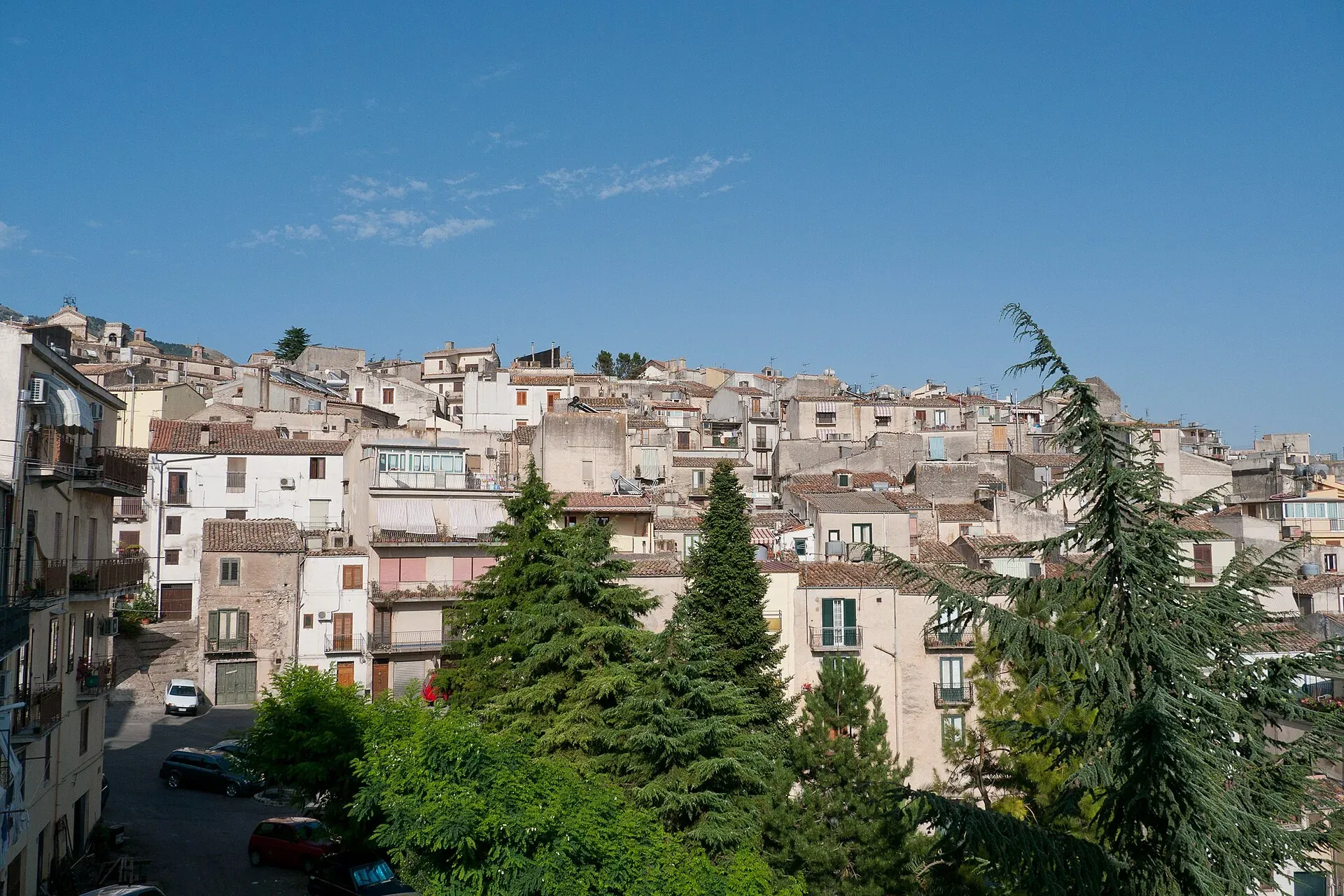
920 m a.s.l.
The town of the Abies nebrodensis, sfoglio and badda beans
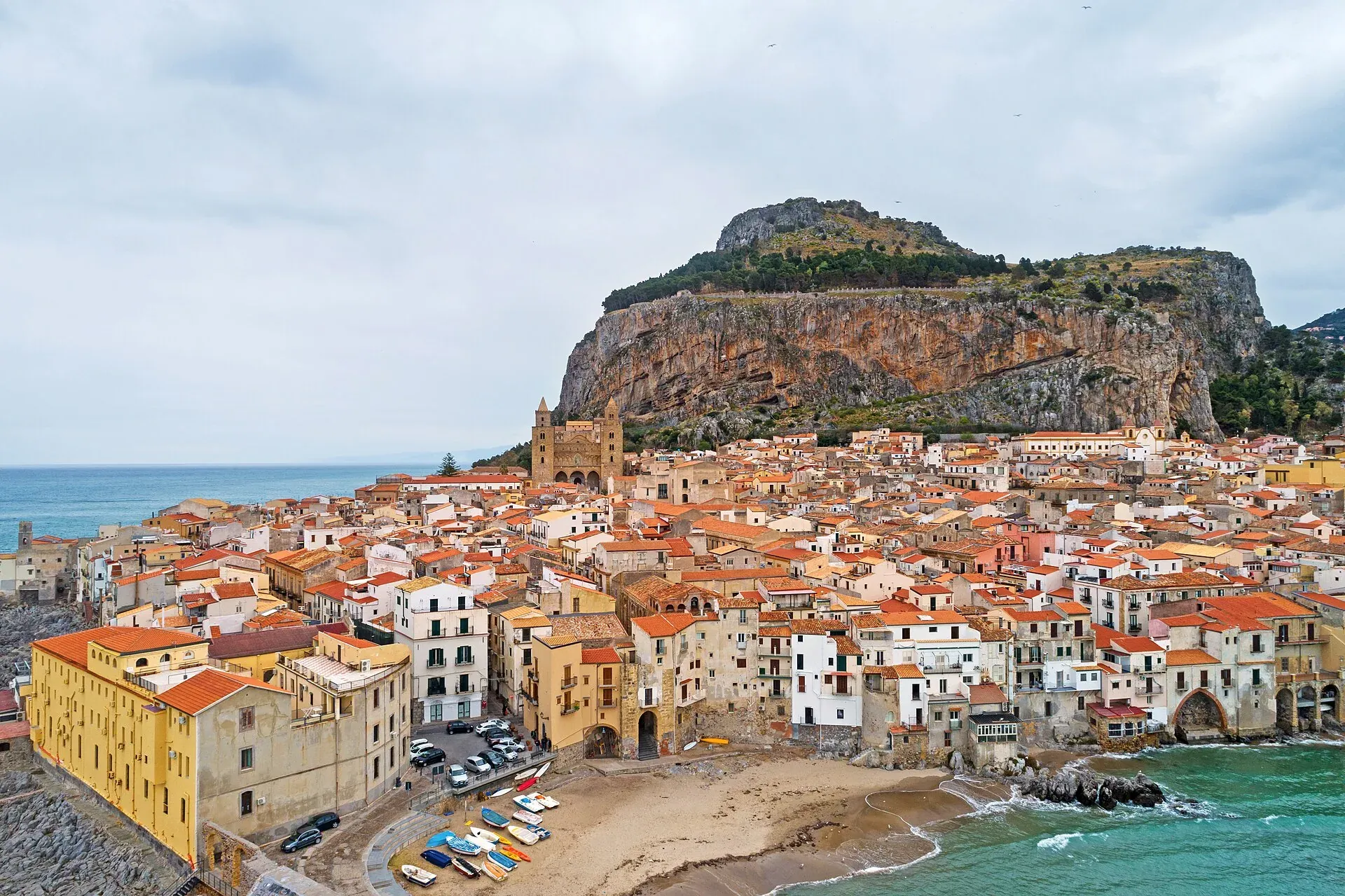
16 m a.s.l.
The Norman cathedral, the Rocca and the sea at the foot of the Madonie
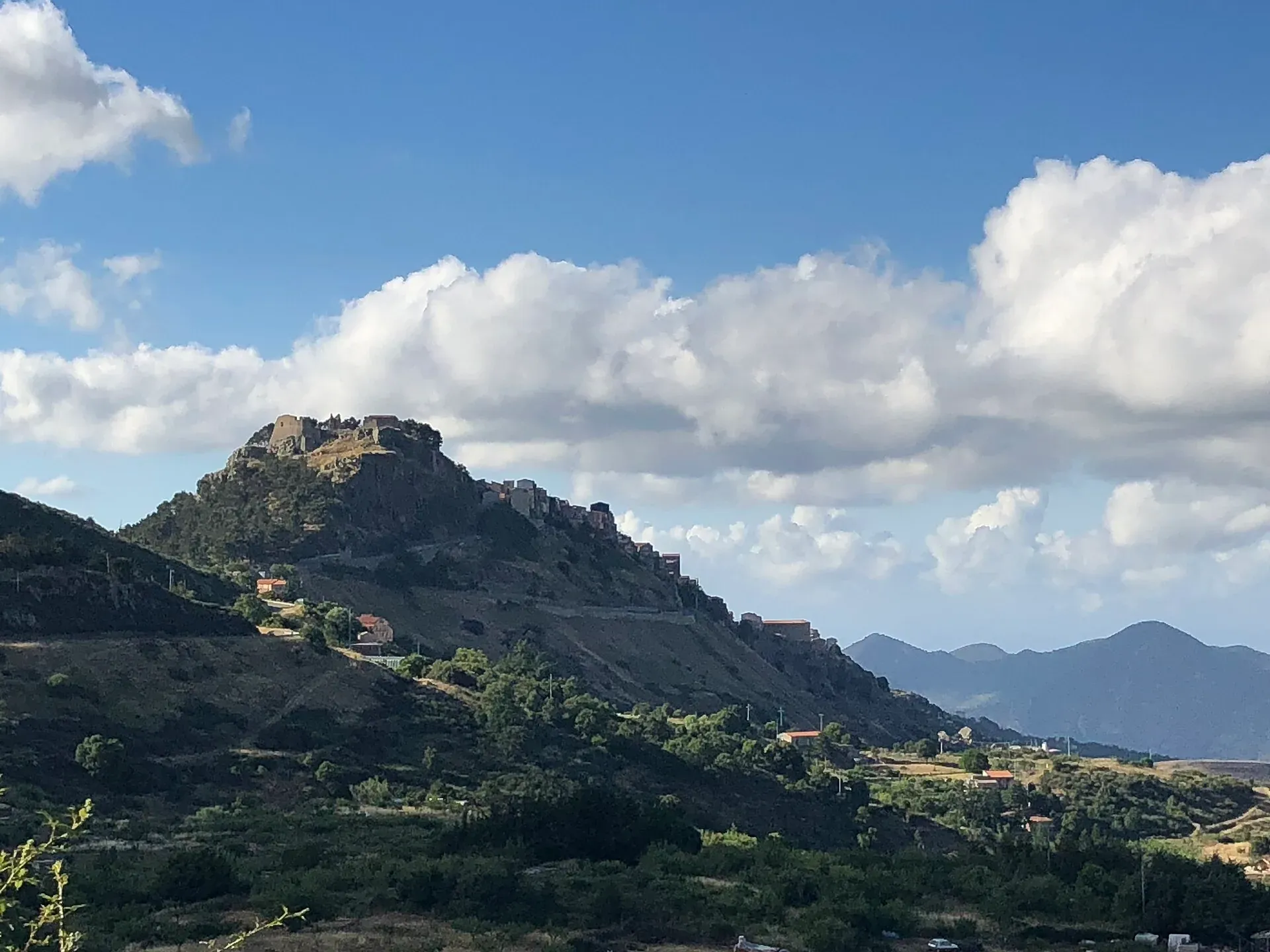
1,077 m a.s.l.
The first capital of the Ventimiglia, above the Madonie woods
1,039 m a.s.l.
Home of the Madonie Park, at the foot of Piano Battaglia
Nature
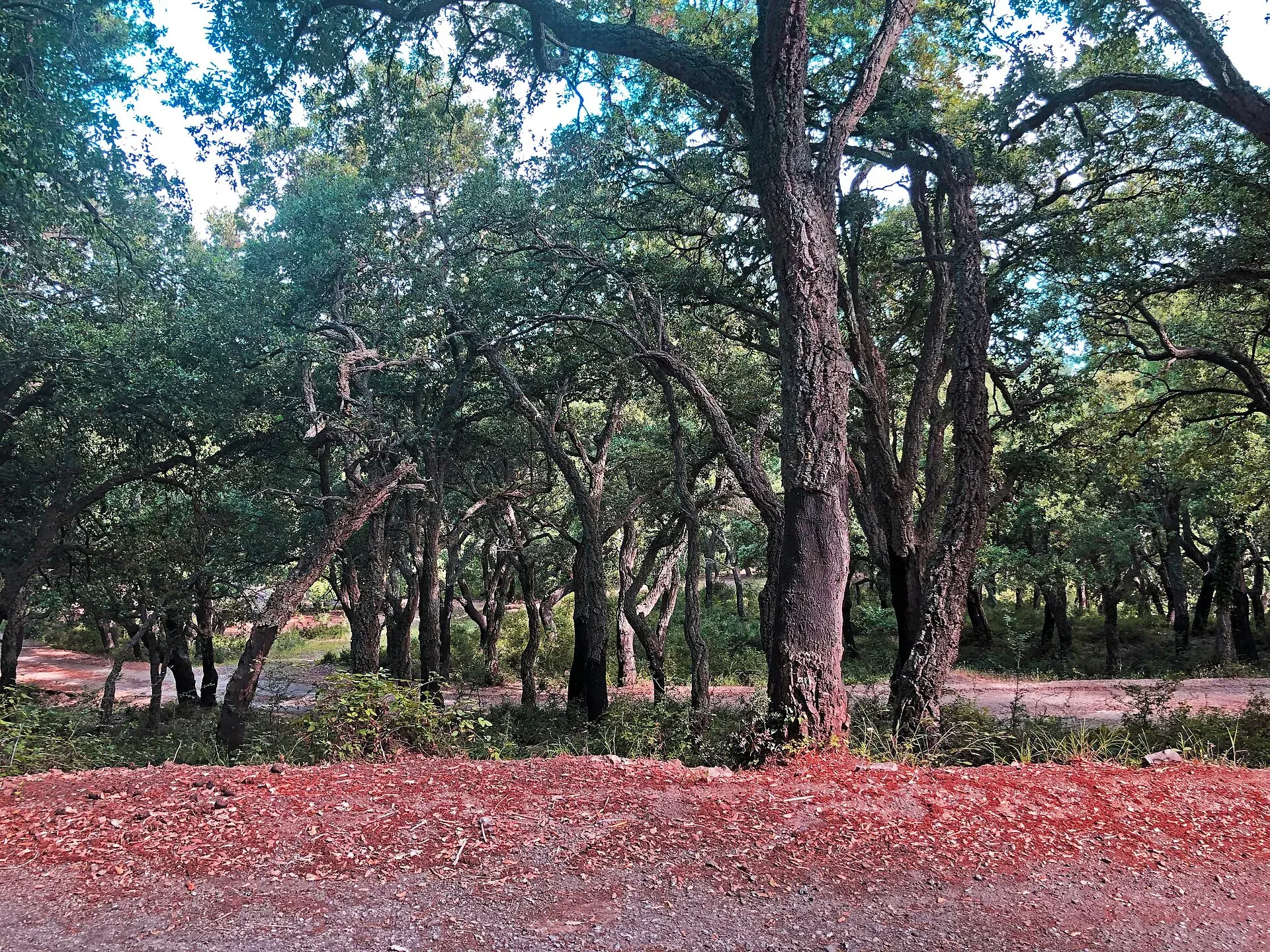
Madonie woods: beech forests up to 1,900 m, holm oaks, cork oaks, giant hollies and trees 800 years old. Where they are, how to tell them apart and when to go.
Nature
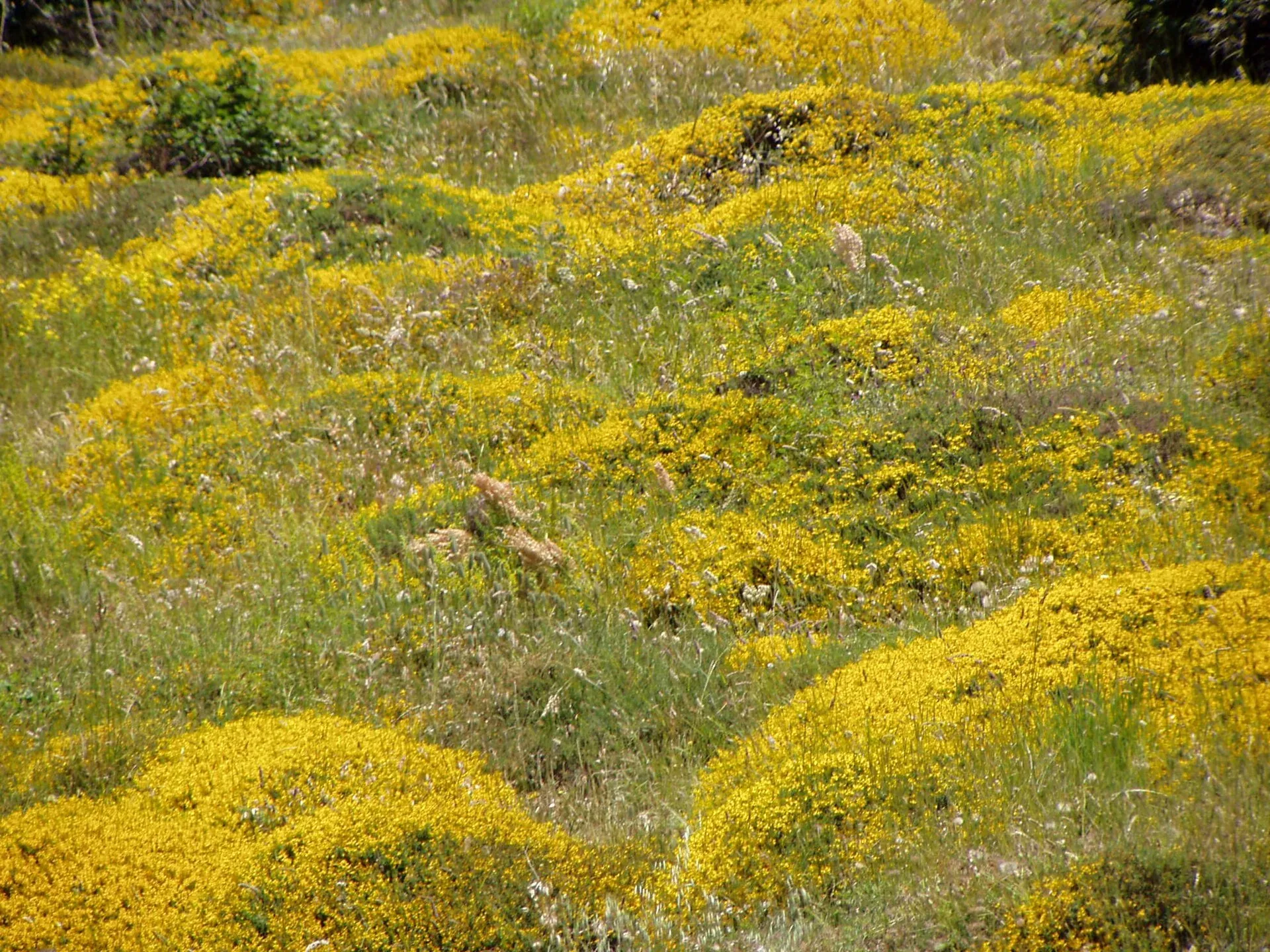
Madonie flora: about 1,500 species and 170 endemics, over half of Sicily's plants. Endemic plants, orchids, peonies, where to see them and when they flower.
Nature
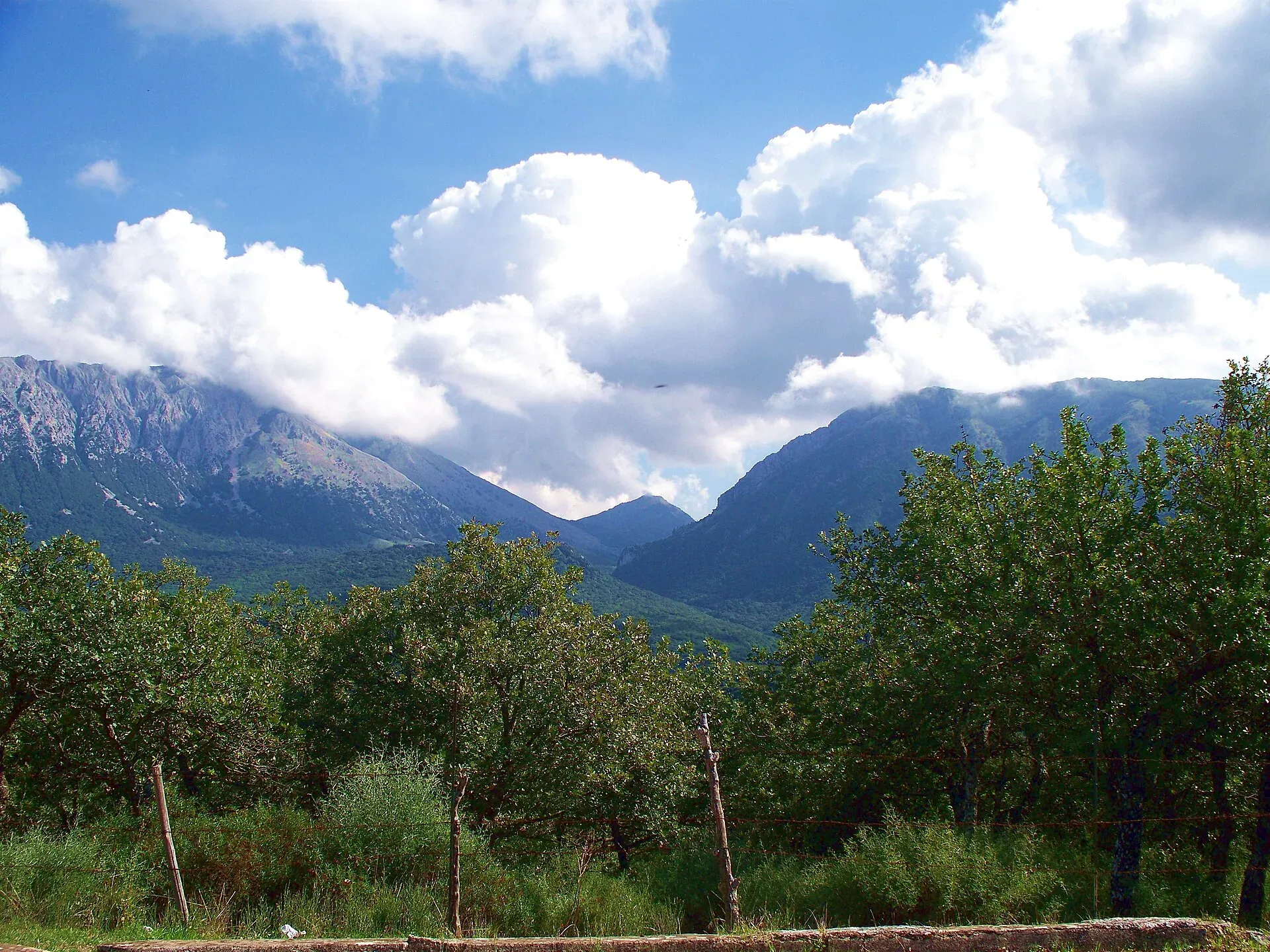
Madonie Park (Parco delle Madonie): 39,679 hectares and 15 towns between Cefalù and the Petralias, founded in 1989. Zones, rules, sights and how to get there.
Nature
The peaks of the Madonie: Pizzo Carbonara 1,979 m, Pizzo Antenna Grande, Monte San Salvatore, Quacella and Mufara. Table of heights, trails and practical tips.
Nature
Madonie UNESCO Global Geopark: a geopark since 2001, UNESCO since 2015, 70 geosites and 220 million years of history. What to see, geological trails, museums.
Nature