Food
History and culture
Madonie crafts: the majolica of Collesano, baskets woven from cane and dwarf palm, the embroidery of Isnello, puppets, the stone of Petralia and salt sculpture.
Madonie crafts grew out of farm work and the churches: the majolica of Collesano, baskets woven from cane, willow and dwarf palm, the modano embroidery of Isnello, the Lumachella stone of Petralia, wood and wrought iron. Some of these crafts are still alive in a few workshops; others are mainly seen in museums and churches.
At a glance
Collesano is the ceramics town of the Madonie. The Ente Parco writes that the town developed its ceramics industry between the 16th and 18th centuries, under the Cardona, Moncada and Aragona, and is still known for it today.
The best documented period is the second half of the 17th century. In those years masters such as Rizzuto, Saldo and Savia built up Collesano’s workshops, in contact with the other great Sicilian centres: Palermo, Sciacca, Burgio, Trapani and Caltagirone. The exhibition “Fatta in Collesano” at Palazzo Abatellis in Palermo showed 26 jars and albarelli from the 17th-century Collesano workshops (Artribune).
A study by the Palermo Soprintendenza (Notiziario Archeologico 61/2022) tells of the master Giuseppe Savia, born in Burgio in 1630, who worked in several Madonie towns, including Collesano. After his death, recorded in 1676, his widow moved to Collesano.
Late 17th-century Collesano tiles are small (about 14.5 centimetres a side), square, trapezoidal or rhomboid, painted in blue, light blue, green, white and black and combined to form patterns such as eight-pointed stars. Between the 17th and 18th centuries a typical tile was divided into two triangles, green and white, laid to form chequerboards, diamonds and bands. Few old floors survive in Collesano; one is in the church of Santa Maria dell’Annunziata.
Madonie workshops make reproductions of Sicilian tiles for restoration, vases, amphorae, reliefs and tableware, with traditional or more modern decoration; some craftsmen also do ceramic restoration and glazed lava stone (Consorzio Cefalù Madonie Himera).
In Collesano you see ceramics in the street too: along the old Targa Florio circuit there are ceramic panels by the local artist Joe Manganello showing the race’s most famous editions (Ente Parco delle Madonie). The town is on the Collesano page; the race in our Targa Florio guide.
For centuries Madonie farmers and shepherds wove their containers from what they found: cane, willow, dwarf palm, elm and wild olive, called agliastro in Sicilian (Balarm). It was all done by hand, in breaks from work or at home in winter, and every shape had its use.
This table summarises the traditional baskets described by the sources.
| Name | What it is like | What it was for |
|---|---|---|
| cufinu | large, up to a metre and a half, of cane and willow | storing and carrying crops; a smaller version for bread |
| cartedda | smaller, with base and handles | everyday carrying |
| panaru | of cane, wild olive and willow, in various sizes | fish (flat base, tall handle), fruit and grapes (deep) |
| coffa | woven dwarf palm | fodder for horses, loads on mules; today also a bag |
Sources: Balarm, Consorzio Cefalù Madonie Himera.
Today basketry is at risk. In August 2024 Balarm told the story of Emanuele Pollara, a craftsman from Isnello then aged nineteen, who learned as a child by watching his uncle and still makes cannistri with two tools: pruning shears and a small knife.
Besides baskets, Madonie tradition includes working ferula, cane, withies and rush, wooden furniture, stools and wrought iron, and the maidda, the wooden board on which bread was kneaded (Consorzio Cefalù Madonie Himera).
Isnello has a long tradition of church linen and bridal textiles, with fine 19th-century work. The village still uses the techniques of filet, or modano, embroidery on knotted netting, and drawn-thread work in the 15th-century tradition (Ente Parco delle Madonie).
The Museo Trame di filo, on via Impillitteri, displays traditional pieces alongside new creations. According to the Ente Parco page it opens Monday to Friday in the morning and on Thursday also in the afternoon: call the park information point in Isnello before you go. The village is on the Isnello page.
Embroidery was also at the heart of the corredo da zita, the bride’s trousseau. You can see it in the Ethnographic Museum at Palazzo Sgadari in Gangi, next to the tools of rural life.
The MOPS, the Museum of Sicilian Puppet Theatre of the Madonie, opened in 2008 inside the Museo Civico of Caltavuturo, with the collection of the Palermo scholar and playwright Angelo Sicilia (Ente Parco delle Madonie).
The museum explains the two schools of Sicilian puppetry:
Inside the museum is a working theatre where Palermo-style puppet shows are staged. The town is on the Caltavuturo page.
Petralia Sottana used to quarry Lumachella, a limestone full of fossil shells. The six pairs of columns in the Chiesa Madre of Petralia Sottana come from the Lumachella quarry of “Vazu di Santu Tieru” (Consorzio Cefalù Madonie Himera). The story of the stone is also told in the geology section of the Museo Collisani.
The bell tower of the same church, in white limestone, about 30 metres high, was finished in 1680. The town is on the Petralia Sottana page.
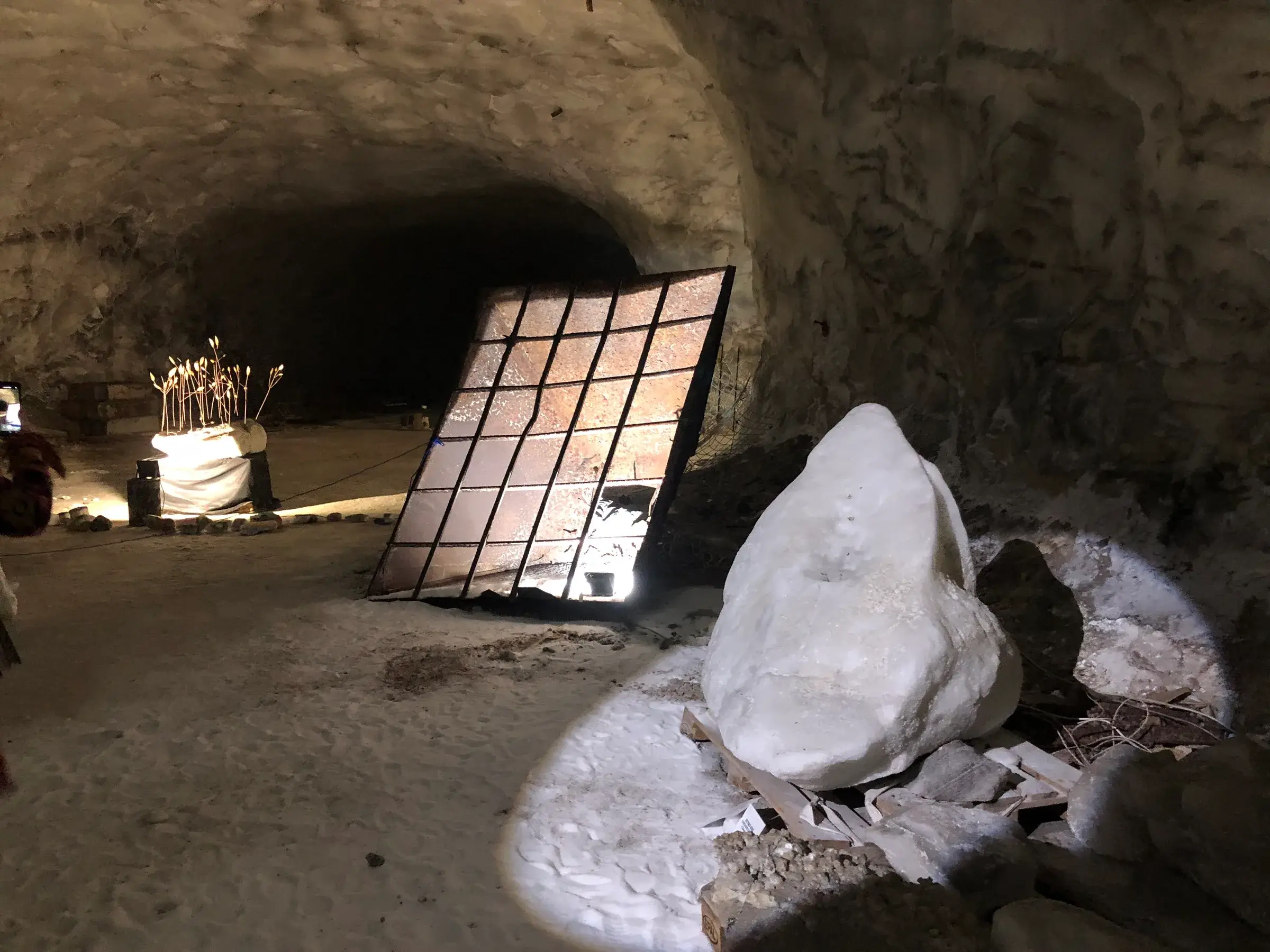
In the Italkali mine at Raffo, a hamlet of Petralia Soprana, rock salt is still extracted. In its tunnels is MACSS, the SottoSale museum of contemporary art, with 40 rock salt sculptures made over six Biennials by invited artists (Balarm). It is not traditional craft, but it is the most unusual way to see a Madonie material being worked.
Visits are limited because the mine is working. How to book is explained in our guide to the Madonie museums.
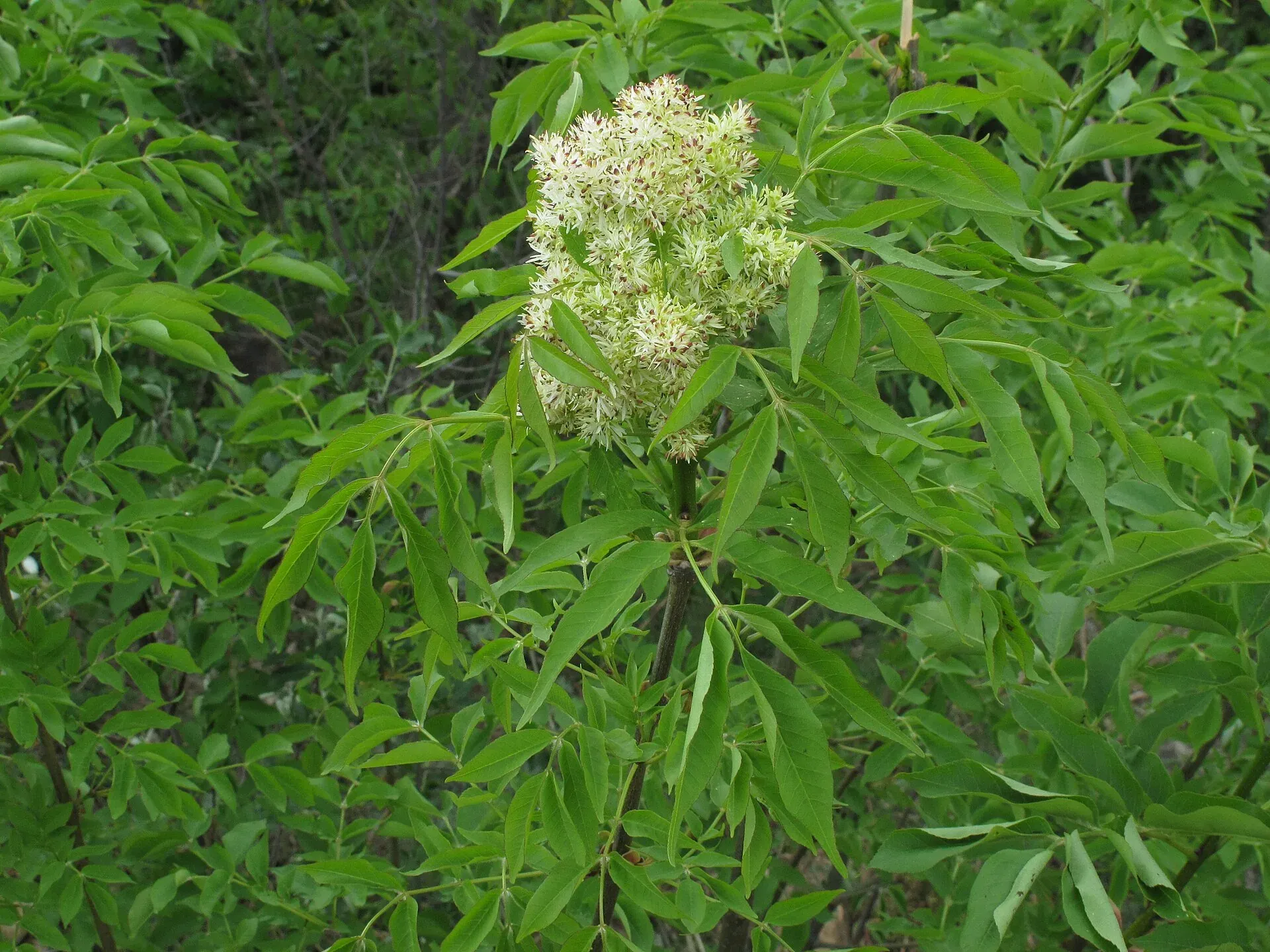
On the hills between Castelbuono and Pollina, ash trees are still cut to collect manna, from July to September, using a technique handed down from father to son (Ente Parco delle Madonie). It is farm work more than craft, described in our article on Castelbuono manna and in the Food section.
The festivals when embroidery, silverware and statues come out are in our guide to Madonie festivals and traditions.
Updated on 19 October 2026
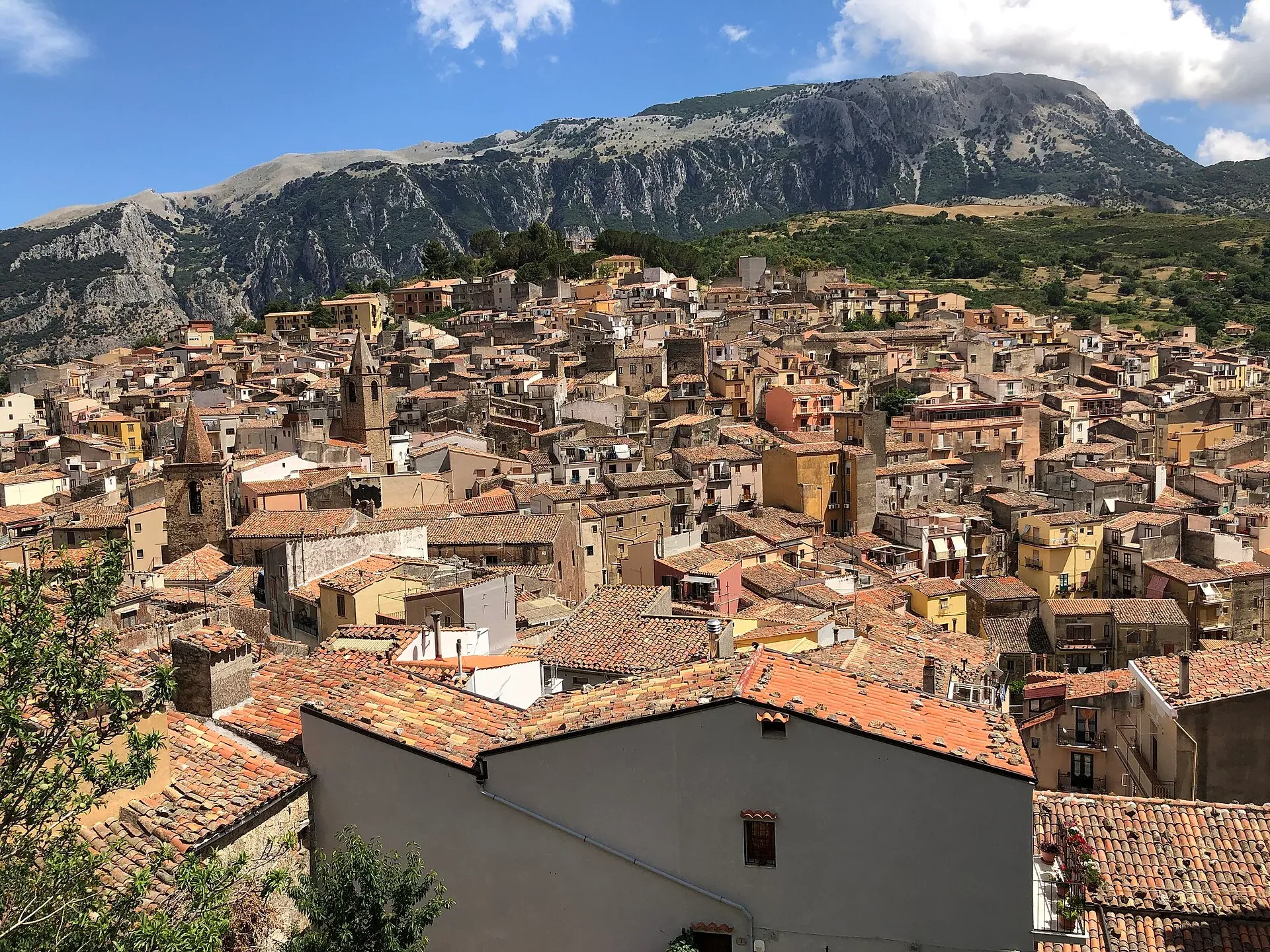
470 m a.s.l.
Ceramics, a castle and the Targa Florio museum
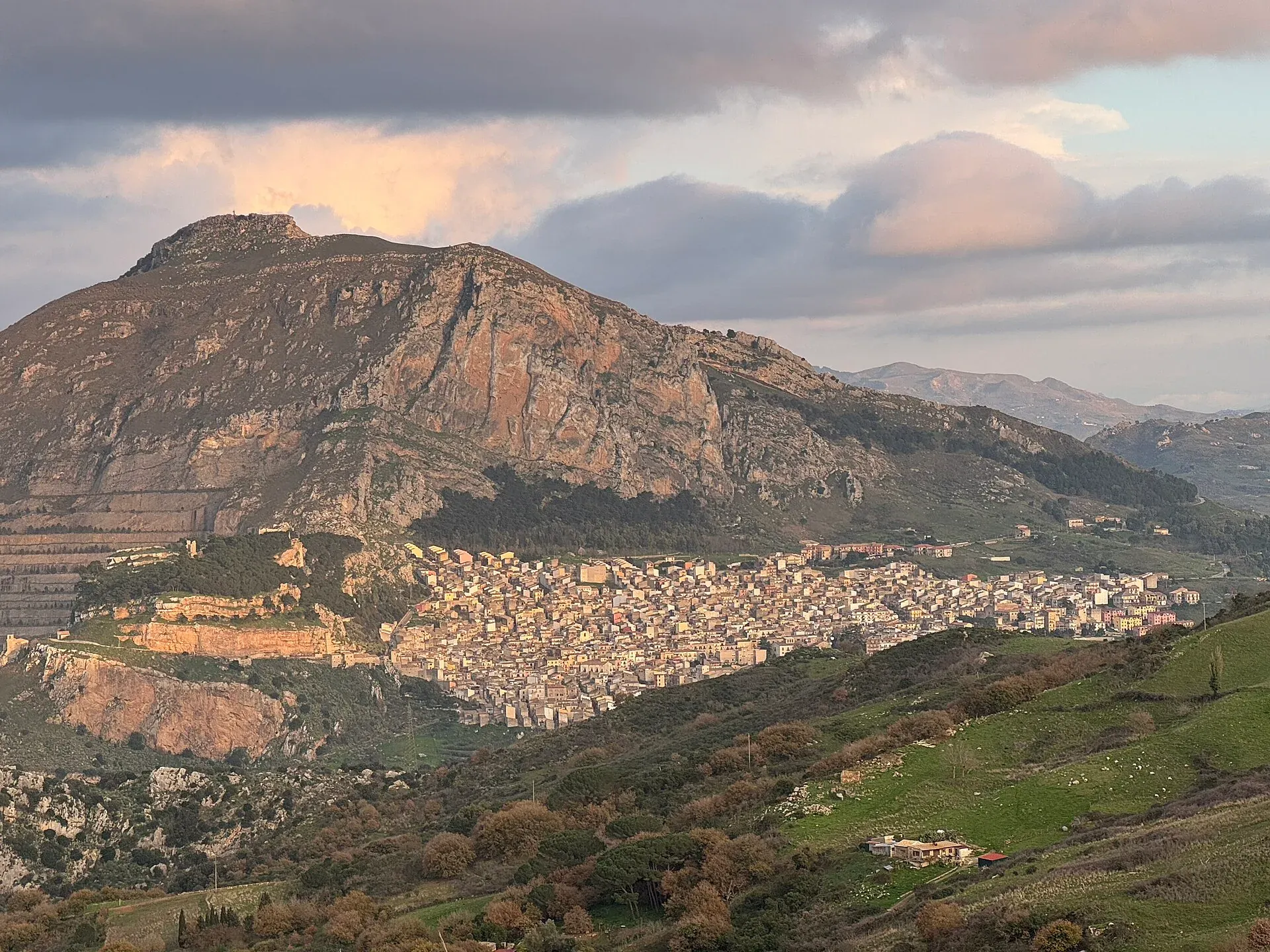
583 m a.s.l.
The town of the stars, beneath the Madonie cliffs
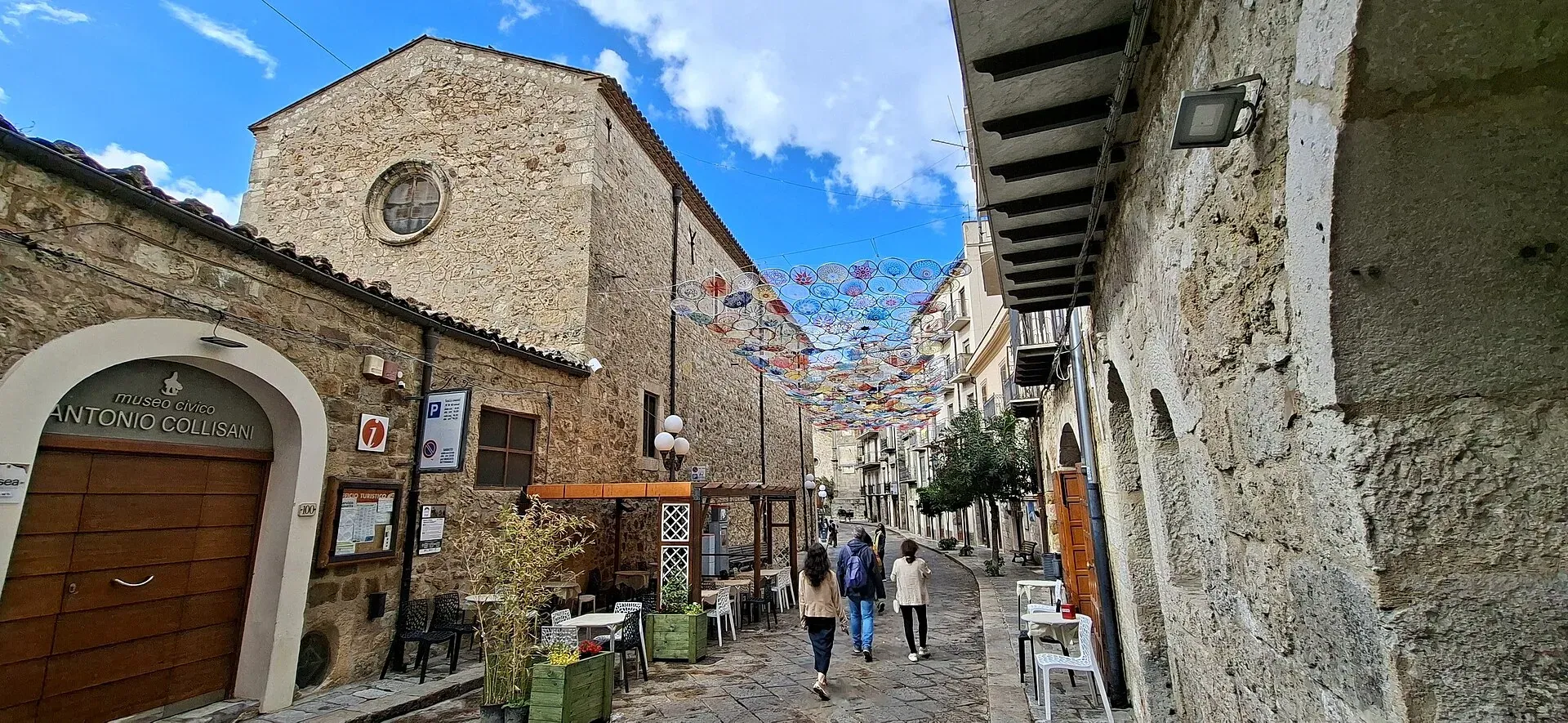
631 m a.s.l.
The village below the Rocca di Sciara
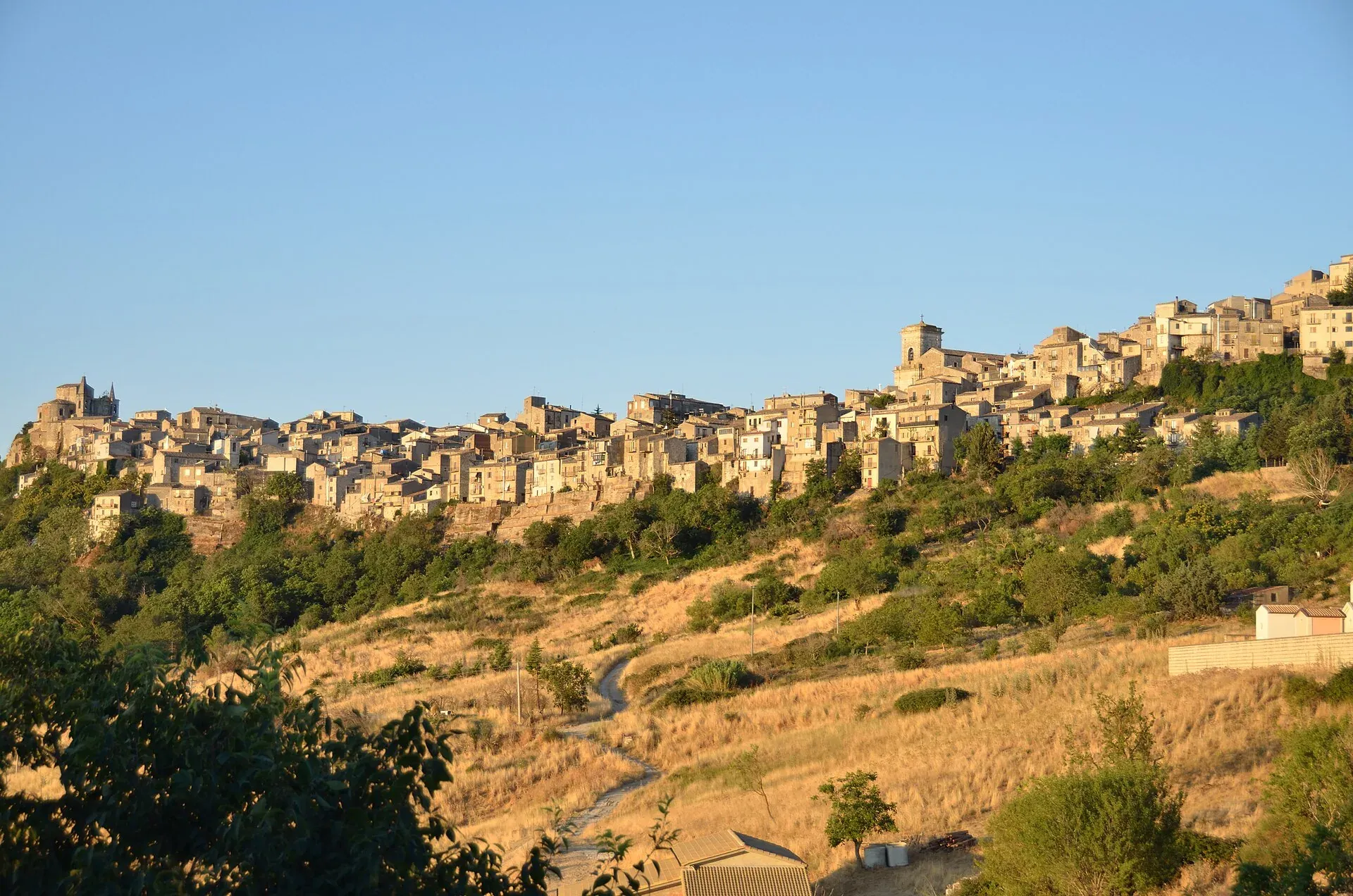
1,039 m a.s.l.
Home of the Madonie Park, at the foot of Piano Battaglia
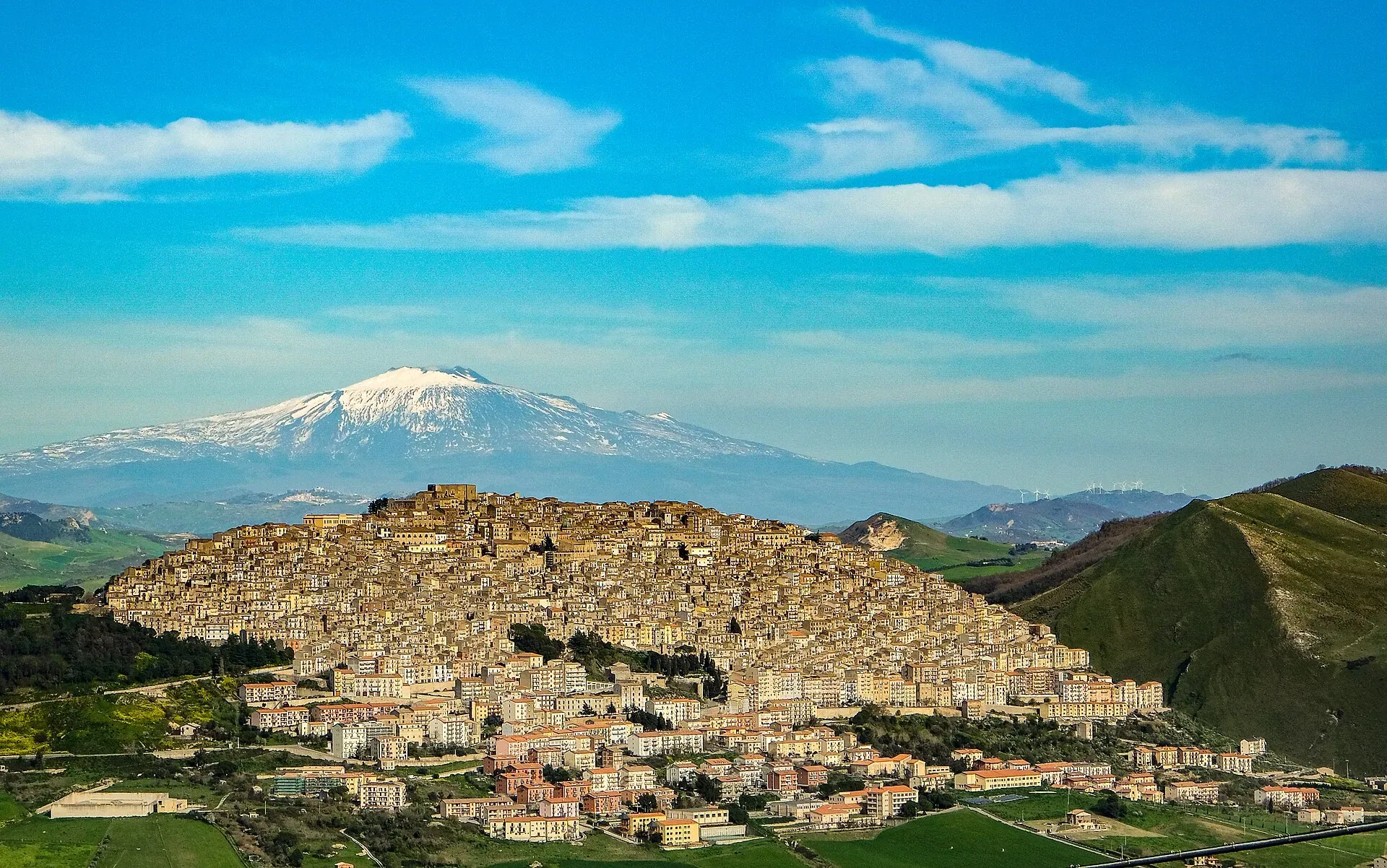
1,147 m a.s.l.
The highest town in the Madonie, Borgo dei Borghi 2018
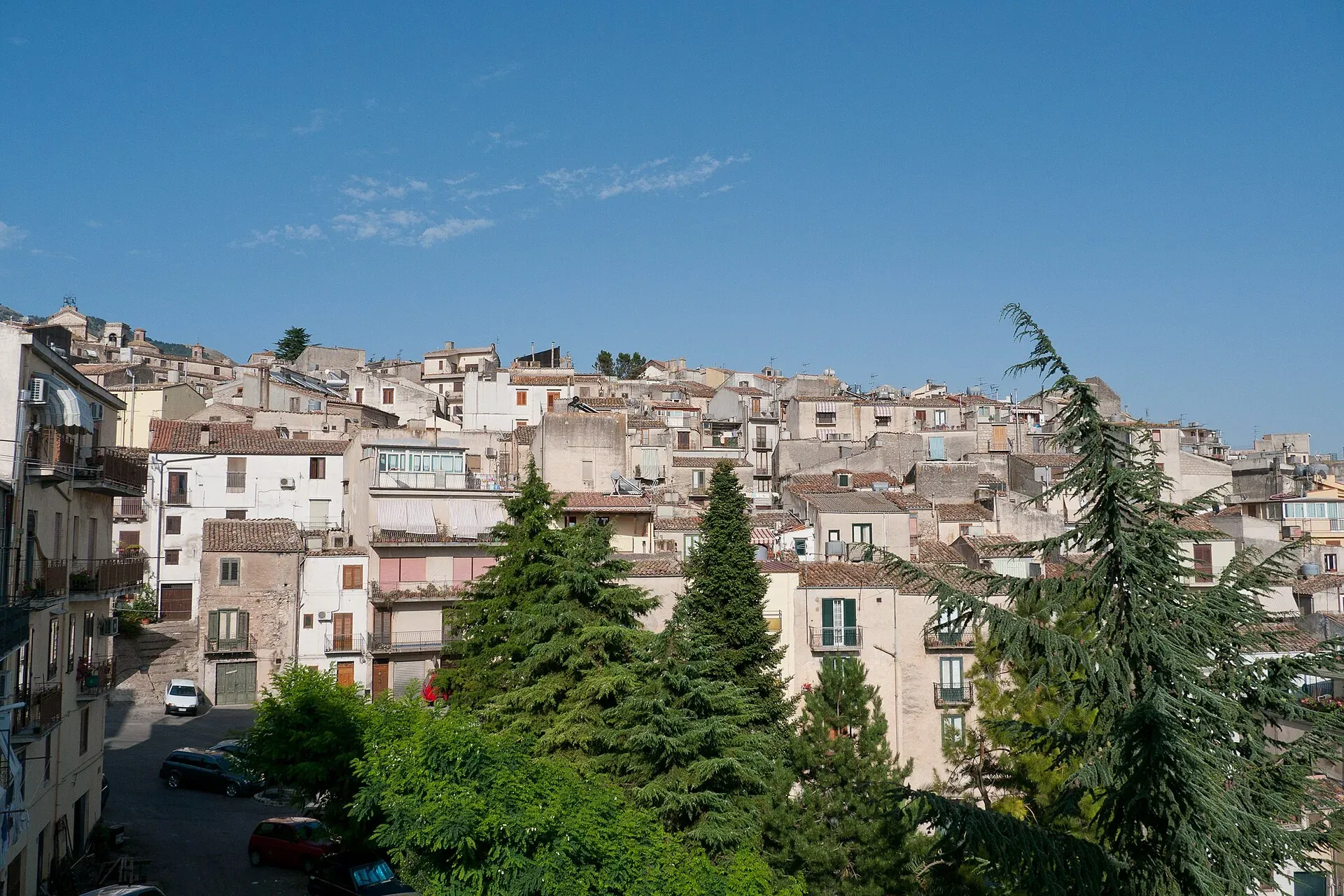
1,011 m a.s.l.
Borgo dei Borghi 2014, all stone on Monte Marone
920 m a.s.l.
The town of the Abies nebrodensis, sfoglio and badda beans
Culture
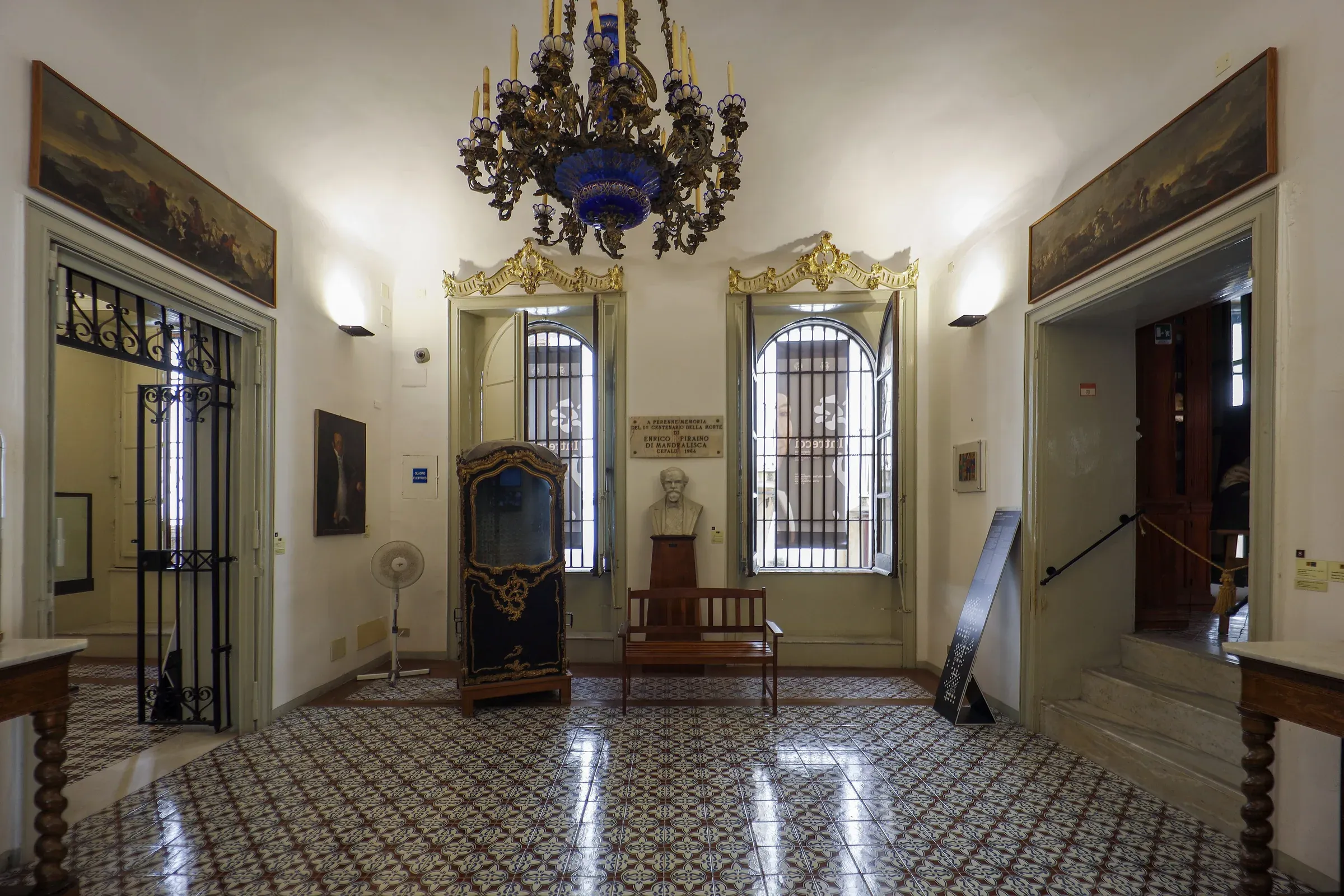
Museums of the Madonie: the Mandralisca in Cefalù, the Museo Civico in Castelbuono castle, Minà Palumbo, the Targa Florio, salt sculptures and rural life.
Culture
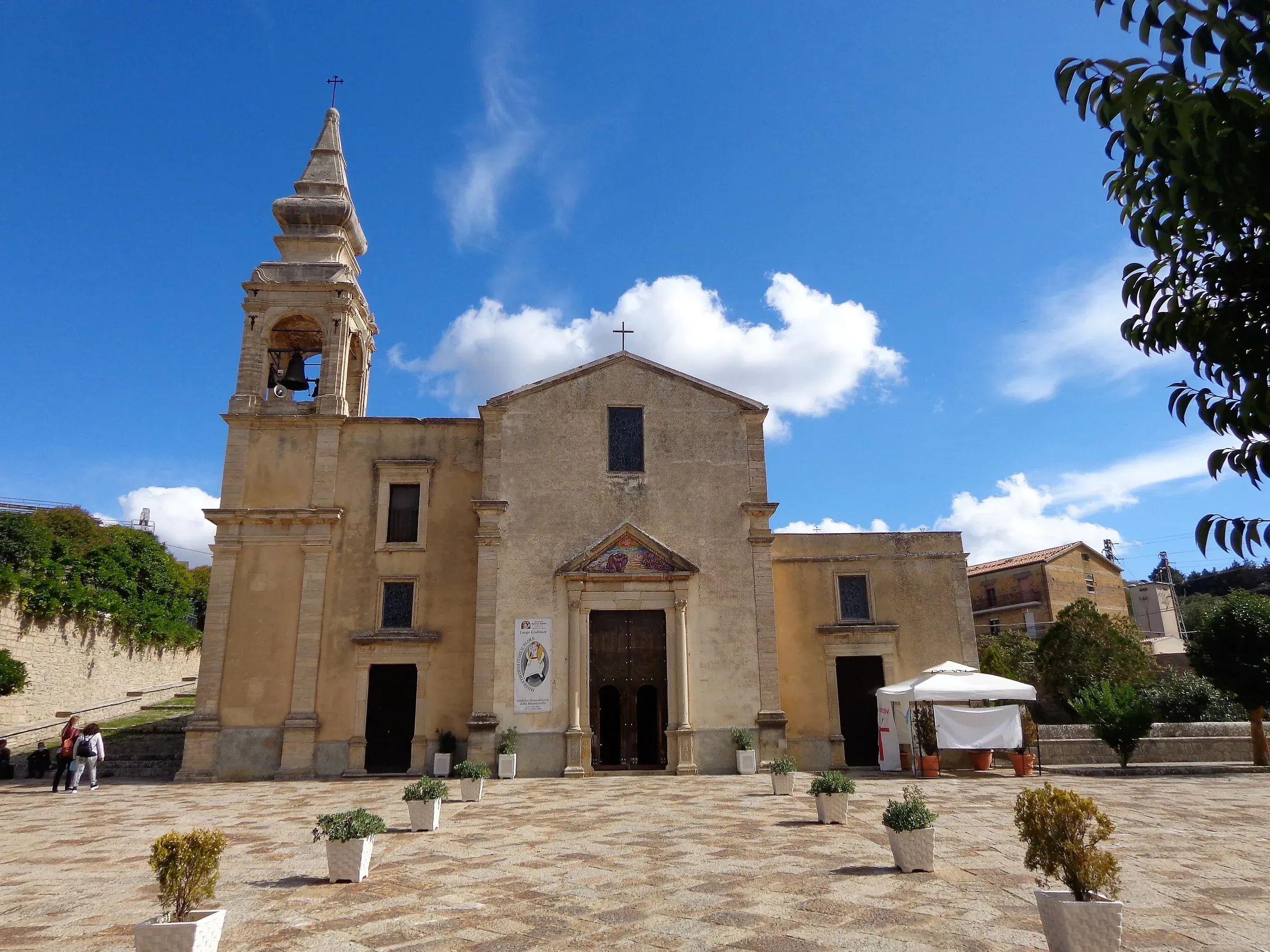
Madonie traditions month by month: Holy Week, the Miracula of Gangi, Sant'Anna, the Ballo della Cordella, the Giostra dei Ventimiglia and nativity scenes.
Food