239 m a.s.l. · Madonie Park
Scillato
Springs, water mills and oranges
- Springs
- Water mills
- Biondo di Scillato
Things to do in Scillato: the springs that supply Palermo, the water mills, the Catena sanctuary and the Sentiero dei Borghi. Oranges, festivals, getting there.
Page updated on 19 October 2026
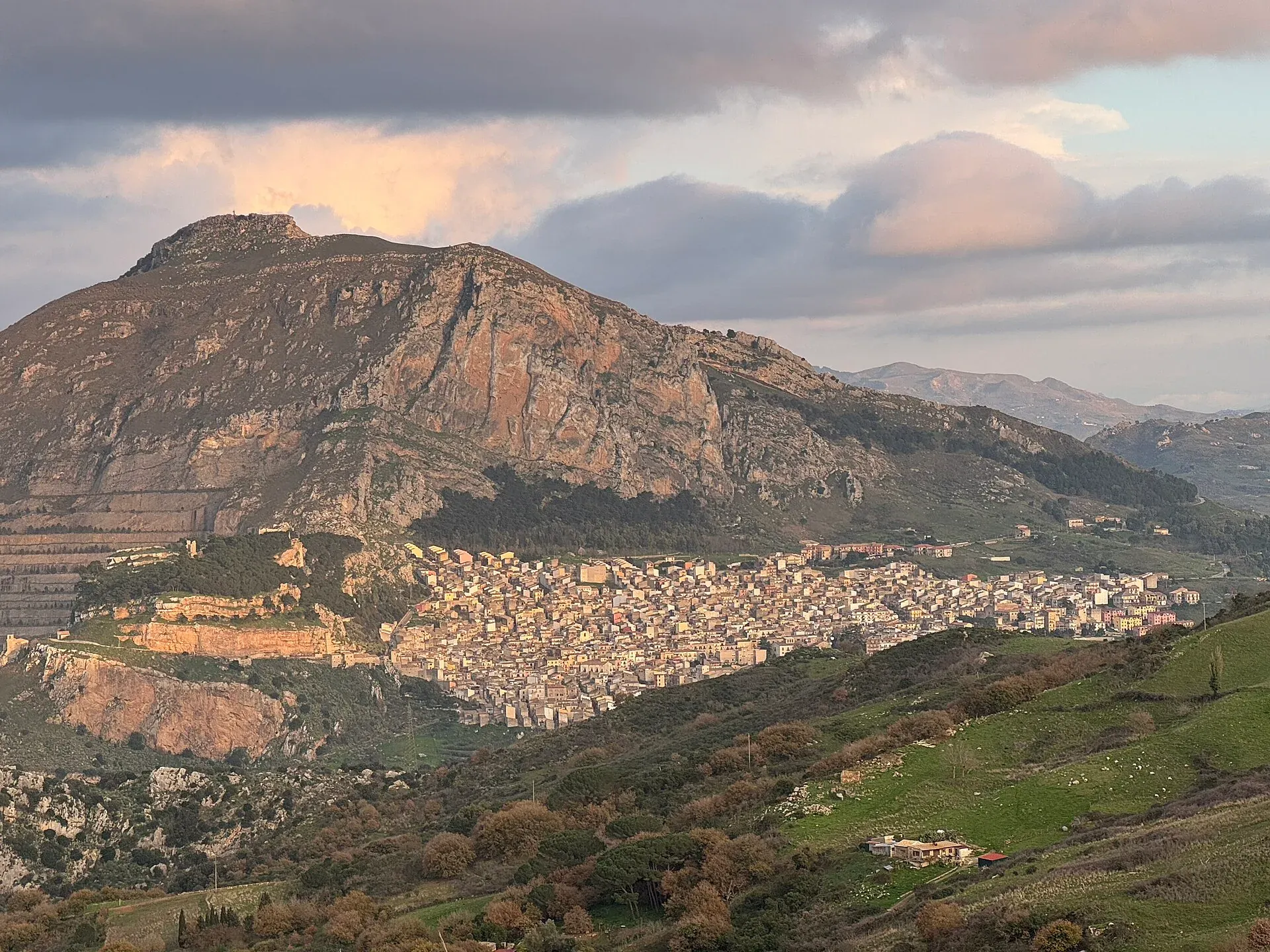
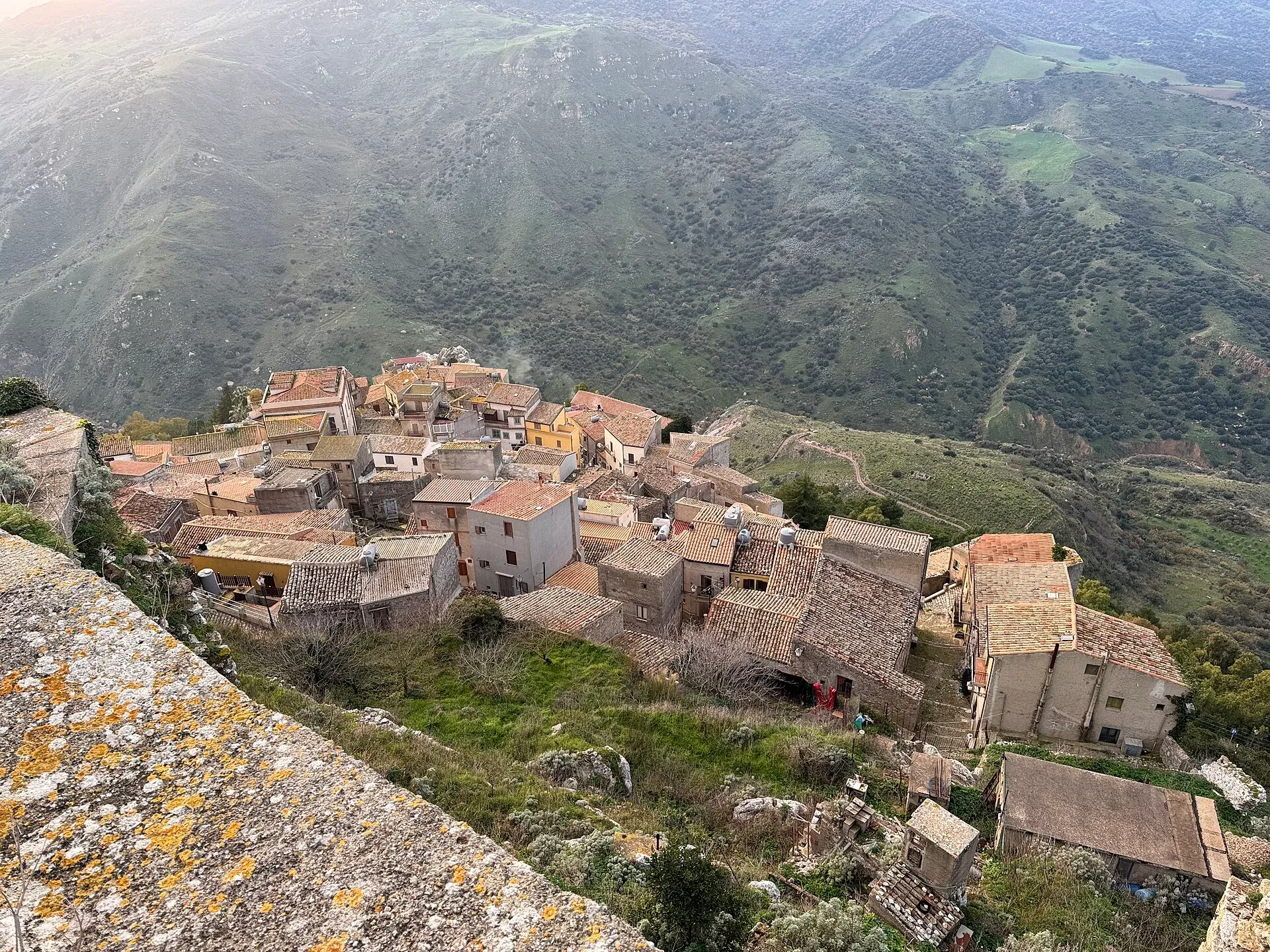
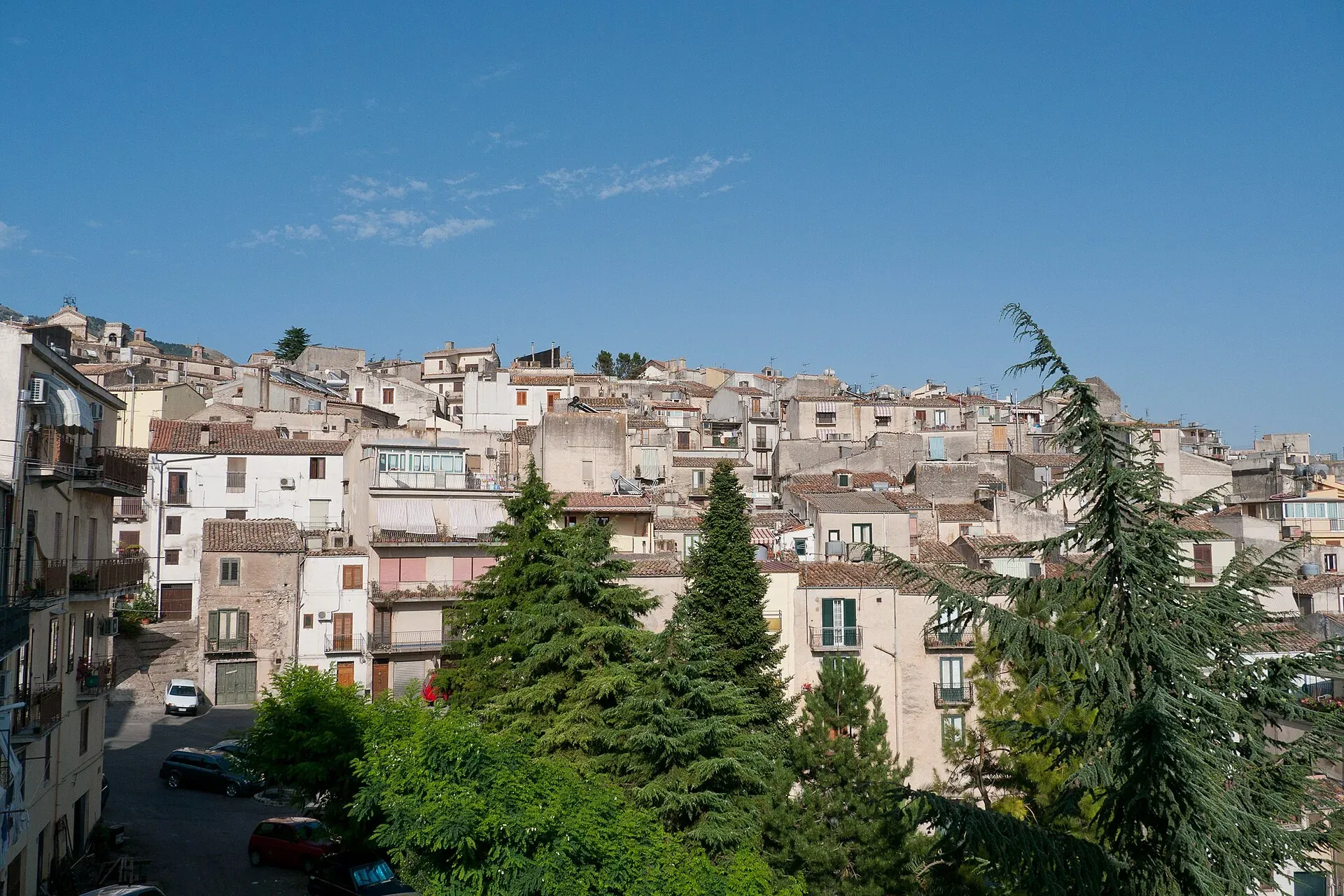
Scillato is a village of 564 people, 239 metres above sea level, on the western edge of the Madonie Park (Parco delle Madonie), in the Imera valley. It grew up around water: its springs, at the foot of Monte Fanusi, feed one of Palermo’s aqueducts, and along the channels stand mills built between the twelfth and nineteenth centuries. Palermo is about 68 km away, almost all of it on the motorway.
You come here for a walk among mills and orange groves, for the orange festival in May, or to set off on the Sentiero dei Borghi towards Collesano.
Scillato at a glance
The key facts, with sources at the bottom of the page.
| Where | Western edge of the Madonie Park, Imera valley |
| Altitude | 239 m at the town hall (ISTAT); the municipality rises to almost 1,800 m |
| Population | 564 (ISTAT estimate, 1 January 2026) |
| Area | about 32 km² |
| From Palermo | 68 km, about 1 h by car (Scillato exit of the A19) |
| Patron saint | Maria Santissima della Catena (20 August) |
| Known for | springs, water mills, Biondo di Scillato oranges |
A short history
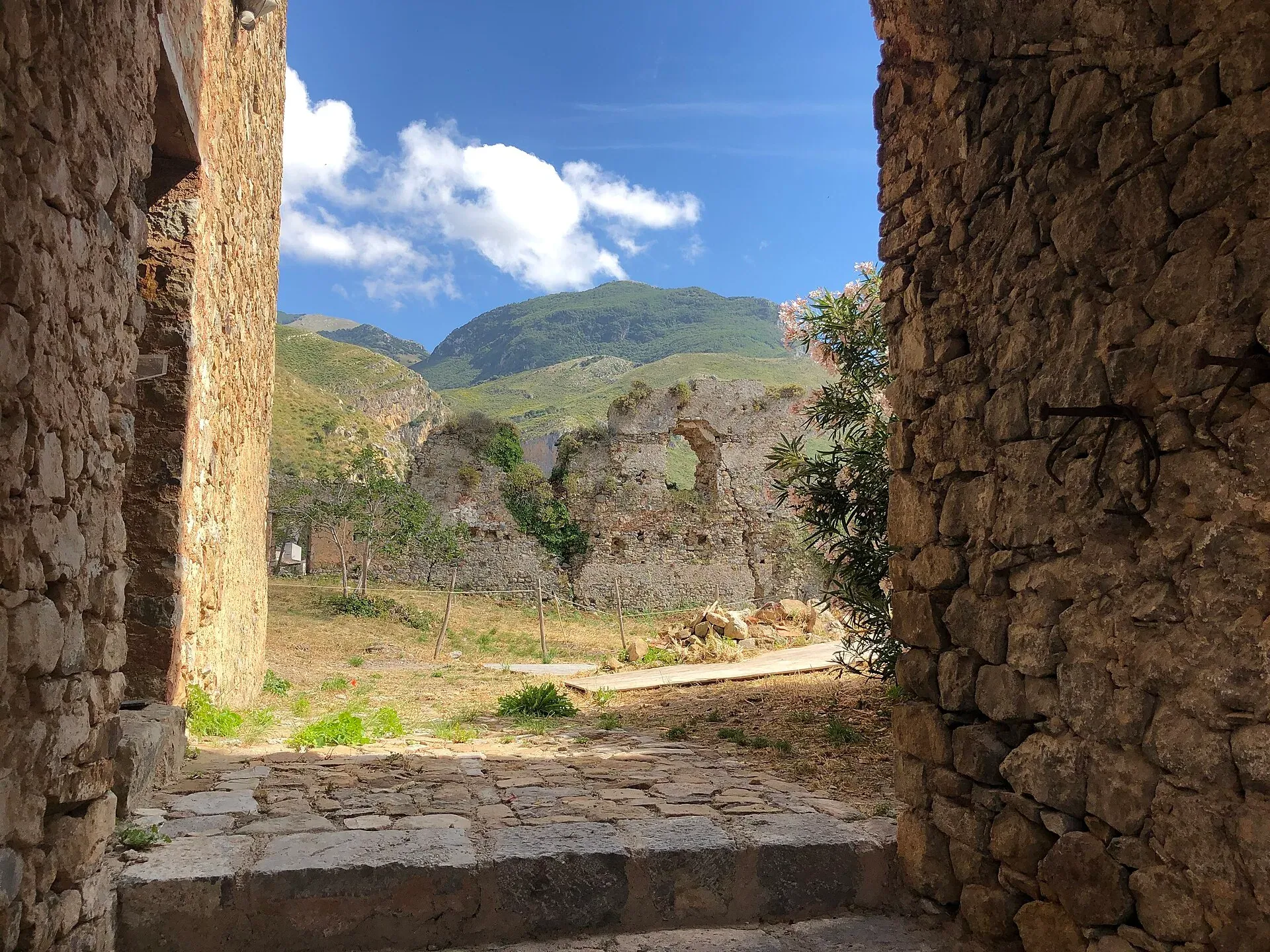
Scillato grew up around its mills. A mill is already mentioned in a document of 1156, a donation by Countess Adelasia, niece of King Roger, to the diocese of Cefalù, and the place name, Xillatum, appears in documents from the late twelfth century. Between 1156 and the nineteenth century 13 mills were built; today almost all are in ruins or absorbed into other houses.
Until 1961 Scillato was a hamlet of Collesano; that year it became an independent municipality.
Things to see in Scillato
The water and mills trail
After a long period of neglect, the village has laid out a trail that follows the Agnello and Gulfone channels to the Water Museum. Along the way you meet the best-preserved mills:
- the Asiniddaru mill, where the rooms and part of the machinery can still be seen;
- the Paraturi mill, the only one used for working textiles, still active in the nineteenth century, today home of the Water Museum education centre;
- the Rasu mill, the last to stop grinding wheat, in the 1960s.
The springs
The Scillato springs are the reason the village exists. According to the Madonie Park authority they can only be visited at certain times of year. One of Palermo’s aqueducts starts here: in 2020 the Sicilian Region began work on a bypass around the stretches of pipe damaged by landslides, to bring about a thousand litres per second to the city.
The sanctuary of Maria Santissima della Catena
This is the main church, from the seventeenth century, dedicated to the patron saint of customs officers: it stood guard over the road from the mountains to the sea. Inside is a small statue of the Virgin from the same century, attributed to the Gagini school.
Palaces, farmhouses and stone houses
Palazzo Cirino, from the late eighteenth century, is the only notable palace in the village. Outside the centre is the Masseria Firrionello, founded in the seventeenth century, and the Case Cava are an example of local stone buildings. In Piazza Aldo Moro there is a sculpture by Vincenzo Gennaro.
Vallone dell’Inferno and the Stretta di Scillato
The Madonie Park authority also points out the archaeological site of Vallone dell’Inferno, with Neolithic excavations, and the Stretta di Scillato geosite.
Things to do in and around Scillato
- Walk to Collesano on the Sentiero dei Borghi, about ten kilometres past farm hamlets, springs and Second World War remains, opened on 27 January 2026.
- Head up into the mountains: from Scillato you drive towards Portella Colla and Piano Battaglia, about 30 km away.
- Visit nearby villages: Caltavuturo 8 km, Collesano 11, Sclafani Bagni 15, Polizzi Generosa 18.
More ideas on things to do in Scillato.
When to go
The best season is spring: in early May there is the orange festival and the trails are green. On 20 August there is the patron saint’s feast. In summer it is hot, because the village lies low: for walking, choose the early hours of the day. The weather in Scillato tells you what to expect.
How to get to Scillato
Scillato is a few minutes from the A19 Palermo-Catania exit of the same name, the one you also use for Polizzi Generosa and Piano Battaglia. Distances calculated on OpenStreetMap:
| From | Distance | Driving time |
|---|---|---|
| Palermo | 68 km | about 1 h |
| Cefalù | 41 km | about 40 min |
| Catania | 144 km | about 1 h 55 |
| Caltavuturo | 8 km | about 20 min |
| Collesano | 11 km | about 20 min |
We have not found official, up-to-date bus timetables: for now a car is best. In winter, on the A19 from Scillato inland, chains or winter tyres may be required: the rules are on the page about Madonie roads. For all roads and connections there is the guide on how to get to the Madonie.
What to eat in Scillato
The signature product is the Biondo di Scillato, a late-season orange which, together with the Scillato apricot, is on the list of traditional Sicilian food products. The village celebrates it with the orange festival. Provola delle Madonie cheese is also made in the area.
Home cooking is rustic: rice with beans, tagliatelle with lentils, pasta with wild fennel, ghiotta of sweet-and-sour vegetables, artichokes and cardoons fried in batter. For dessert, rice pudding, sfinci d’ova and pignolata, small pieces of fried dough with honey and cinnamon. More local produce is in our guide to Madonie food.
Festivals and events
- San Giuseppe, 19 March, with a procession and tastings of local produce.
- Orange festival, in early May.
- Maria Santissima della Catena, the patron saint, 20 August, with a procession and a show in the square. Festival page.
Dates are on events in Scillato.
Where to stay and where to eat
We do not know of any accommodation in the village: tips for staying in Collesano, Caltavuturo and Polizzi Generosa are on where to stay in Scillato. The few places to eat are on where to eat in Scillato.
What to see
- Sanctuary of Maria SS. della Catena
- Water and mills trail
- Asiniddaru mill
- Paraturi mill and Water Museum
- Scillato springs
- Palazzo Cirino and Masseria Firrionello
- Stretta di Scillato geosite
Weather in Scillato
Full forecast →19°
Mostly clear
- Today
- 17° / 25°
- Wind
- 10 km/h S
- Snow on ground
- no
- Freezing level
- 3,850 m
- Tue 2017° 25°
- Wed 2117° 23°
- Thu 2216° 21°
- Fri 2314° 21°
- Sat 2414° 20°
Updated on 20 October at 08:48 · Forecasts Open-Meteo.com (CC BY 4.0)
What to taste
Dates
Frequently asked questions
- What is there to see in Scillato?
- In Scillato the sights are all about water: the springs, open to visitors only at certain times of year, the mills trail along the Agnello and Gulfone channels with the Asiniddaru mill and the Paraturi mill, home of the Water Museum. In the village is the seventeenth-century sanctuary of Maria Santissima della Catena. Outside it is the Stretta di Scillato geosite.
- Is it true that Palermo's water comes from Scillato?
- One of the aqueducts that supply Palermo starts at the Scillato springs. In 2020 the Sicilian Region started work on a bypass around the stretches of pipe damaged by landslides, designed by Amap, Palermo's water utility, with the aim of bringing about a thousand litres of water per second to the city.
- What is the Biondo di Scillato?
- The Biondo di Scillato is a late-season orange grown in the Imera valley, recognised as a traditional Sicilian food product together with the Scillato apricot. The village celebrates it every year with the orange festival in early May: in 2026 it took place on 9 and 10 May, with tastings, visits to the water mills and concerts.
- What is the Sentiero dei Borghi between Scillato and Collesano?
- The Sentiero dei Borghi is a route of about ten kilometres between Scillato and Collesano, opened on 27 January 2026 with the CAI Cefalù section. It passes the farm hamlets of Eras B and Eras C, Monte Fanusi, the Scillato springs and the Neolithic excavations of Vallone Inferno, on paths and minor roads with gentle climbs.
- How far is Scillato from Palermo?
- Scillato is about 68 km from Palermo, an hour by car according to routing on OpenStreetMap, and right next to the Scillato exit of the A19 Palermo-Catania motorway. Cefalù is about 41 km away, Catania about 144 km. Caltavuturo and Collesano are about twenty minutes away.
- When is Scillato's patron saint festival?
- Scillato's patron saint is Maria Santissima della Catena, celebrated on 20 August with a procession through the village and an evening show in Piazza Aldo Moro. Her sanctuary dates from the seventeenth century and holds a small statue of the Virgin attributed to the Gagini school.
Sources
- ISTAT, popolazione residente al 1° gennaio 2026 (stima)
- ISTAT, principali statistiche geografiche sui comuni (altitudine del municipio, superficie)
- Ente Parco delle Madonie, scheda del Comune di Scillato (PDF)
- Regione Siciliana, acquedotto di Scillato: al via il cantiere del by-pass (27 febbraio 2020)
- Madonie Press, inaugurazione del Sentiero dei Borghi (27 gennaio 2026)
- Wikipedia, Scillato
- Distanze e tempi in auto: OSRM su dati OpenStreetMap
Page updated on 19 October 2026
Nearby