Things to do in the Madonie
Stargazing in the Madonie: GAL Hassin park in Isnello
GAL Hassin astronomy park in Isnello: planetarium, telescopes, 2026 opening hours and tickets, summer stargazing nights and the Starlight sky of the Madonie.
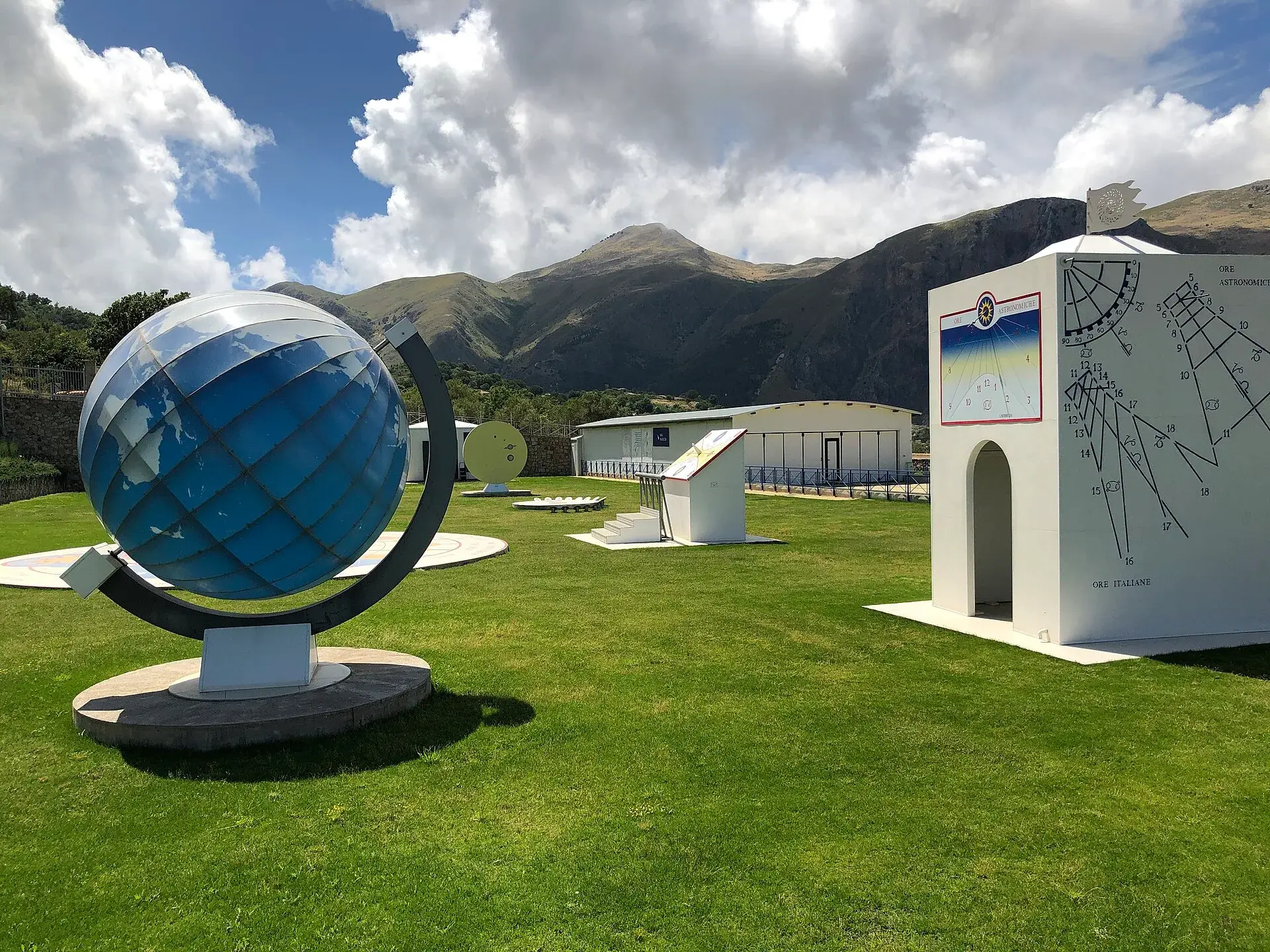
For astronomy in the Madonie, the place to go is GAL Hassin, the International Centre for Astronomical Sciences in Isnello: planetarium, meteorite museum, a terrace with telescopes and visits guided by astronomers. Entry is by booking only, with a standard ticket of 20 euros. From July to September there are sky observation evenings, from 21:30 to 23:45.
The sky above the centre and the village is certified as a Starlight Stellar Park by the Starlight Foundation. In the same mountains, at 1,865 metres on Monte Mufara, a research telescope has discovered three near-Earth asteroids since 2025.
At a glance
- Where: GAL Hassin, via della Fontana Mitri 3, Isnello (PA). Outside car park; you walk in through the pedestrian gate.
- When: from October to June, afternoon visit at 15:30, closed on Sundays. From July to September, visit at 17:00 and sky observation at 21:30, closed on Mondays.
- How much: 20 euros full price, 10 euros for ages 6 to 10, free under 6. Summer Full Day 30 and 20 euros.
- Booking: compulsory, online. Visits in Italian.
- Source: official GAL Hassin website, checked on 19 October 2026.
What GAL Hassin is and why it is in Isnello
The Madonie sky has always been dark. In the 1970s Piano Battaglia was studied as a possible site for the Telescopio Nazionale Galileo, which ended up in the Canary Islands instead. The centre tells this story on its history page.
The Comune of Isnello started from that sky and promoted a centre for research and outreach. CIPE, the interministerial committee for economic planning, funded the project in November 2009 and GAL Hassin opened on 11 September 2016. Today it is run by a foundation: the Comune of Isnello is the promoting founder, and Castelbuono, Collesano and Petralia Sottana are among the member founders.
The centre does two jobs. The first is outreach, which is what you see as a visitor. The second is real research, with two telescopes:
- the Galhassin Robotic Telescope (GRT), a 40 cm reflector in a 3-metre dome, used to follow asteroids, comets and space debris;
- the Wide-field Mufara Telescope (WMT), a 1-metre wide-field telescope installed in September and October 2020 on the top of Monte Mufara, at 1,865 metres. According to GAL Hassin it is the second highest observatory in Italy.
With the WMT the research team discovered 2025 QK3, 2025 VA3 and, in September 2026, 2026 RL38: three near-Earth asteroids in 13 months. In April 2026 the Foundation signed a contract with the European Space Agency to run Flyeye, the European asteroid survey telescope that GAL Hassin expects to be operational on Monte Mufara from 2027.
What you see during the visit
The visit lasts about two hours and a quarter and is led by an astronomer. The centre has four areas, and what you see depends on the season and the weather.
- Planetarium: projections on the dome, from the Moon to Saturn’s rings and out to the galaxies. It is part of the standard ticket all year round.
- Museum: meteorites, impacts, the history of astrophysics told through the people who made it. From October to February the visit is museum plus planetarium.
- Observation terrace: from March to June, if the sky is clear, you look at the Sun through telescopes fitted with filters. In bad weather you go back to the museum.
- Space and Time Park: the lawn with sundials, solar clocks and the Circle of Hipparchus around the planetarium. It helps you understand the apparent motion of the Sun and stars.
The sundials in the park are by the gnomonist Giovanni Paltrinieri, who also designed the 2.6-metre sundial on the façade of the church of the Santissima Annunziata, in the village.
Opening hours and tickets 2026
These prices apply from 1 January 2026. Tickets are only valid for the period and year you buy them for.
| Period | Activity | Time | Closed | Full / reduced ages 6-10 |
|---|---|---|---|---|
| October-June | Standard visit | 15:30, gate at 15:00 | Sunday | 20 € / 10 € |
| July-September | Standard afternoon visit | 17:00-19:15, gate at 16:30 | Monday | 20 € / 10 € |
| July-September | Sky observation | 21:30-23:45, gate at 21:00 | Monday | 20 € / 10 € |
| July-September | Full Day (afternoon and evening) | 17:00 and 21:30 | Monday | 30 € / 20 € |
Entry is free for children under 6. The centre states that it gives no discounts to police, teachers visiting with their families, journalists, tour guides, university students or lecturers.
Annual closures: 1 January, Easter Sunday, Easter Monday, 1 May, 2 June, 15 August, 7 September (patron saint’s day), 25, 26 and 31 December.
One practical detail. From October to June public activities are concentrated on Saturday afternoons, so book a few days ahead.
When to look at the stars through the telescopes
Night observation for the public happens in summer. From July to September, on opening evenings, you first look at the sky with the naked eye in the Space and Time Park, then move on to the telescopes.
The rest of the year there are special evenings linked to events. These are the ones published for 2026, which also show how the calendar repeats from year to year.
| 2026 event | Dates | Ticket |
|---|---|---|
| Asteroid Day | 27, 29 and 30 June | Standard, no sky observation |
| On the Moon | 4, 5, 11 and 12 July | Standard or Full Day |
| On the Moon Again | 19 July | Sky Observation |
| Shooting stars | 9, 11, 12, 13 and 14 August | Standard, Sky Observation or Full Day |
| International Observe the Moon Night | 19 September | Full Day or Sky Observation |
| Alla Luna (To the Moon) | 17 October and 21 November | Standard, with Moon observation from about 17:30 |
On 7 November 2026 the centre also opens for Sapori d’autunno in Isnello, with the standard visit at 15:30.
For schools, evening sky observation is suspended for the 2026/2027 school year. Daytime visits remain, to be arranged with the centre.
Why the sky over Isnello is so dark
The area of GAL Hassin and of the church of the Santissima Annunziata holds the Starlight Stellar Park certification of the Starlight Foundation, a label recognised by the International Astronomical Union, UNESCO and the World Tourism Organization. According to the statement from the Comune of Isnello, it is the second Stellar Park in Italy, after the area of the Saint-Barthélemy observatory in the Aosta Valley.
The darkness is not only down to the mountains. Since 2015 the Comune has redone its street lighting and in four years cut the village’s light pollution by a factor of three.
In the village the certification also covers two instruments in the church of the Annunziata, installed in 2013 and used with schools and visitors: the 2.6-metre sundial on the façade and a Foucault pendulum in the bell tower, set up by Professor Romano Serra of the University of Bologna.
Stargazing on your own in the Madonie
There is no official list of observation spots. Common sense applies, plus a few Park rules.
- Pick the night: no Moon, or with the Moon already set. With a full Moon the faint stars disappear.
- Get away from the villages: the high plateaus are far from lights, but in winter the roads can close for snow. Check the roads and the mountain forecast for Piano Battaglia.
- Wrap up: even in August GAL Hassin recommends a sweatshirt or jacket for the evening outdoors. Up high it is colder than in Isnello.
- Respect the Park: camping, bivouacking and fires are forbidden in the Parco delle Madonie. For a night near the plateaus there are mountain huts and places to stay.
- Park properly: no cars along forest roads or on meadows; the Park forbids parking outside suitable areas.
If you want to photograph the Milky Way, the guide to photography in the Madonie has light and dark times for each season.
What to combine with the visit
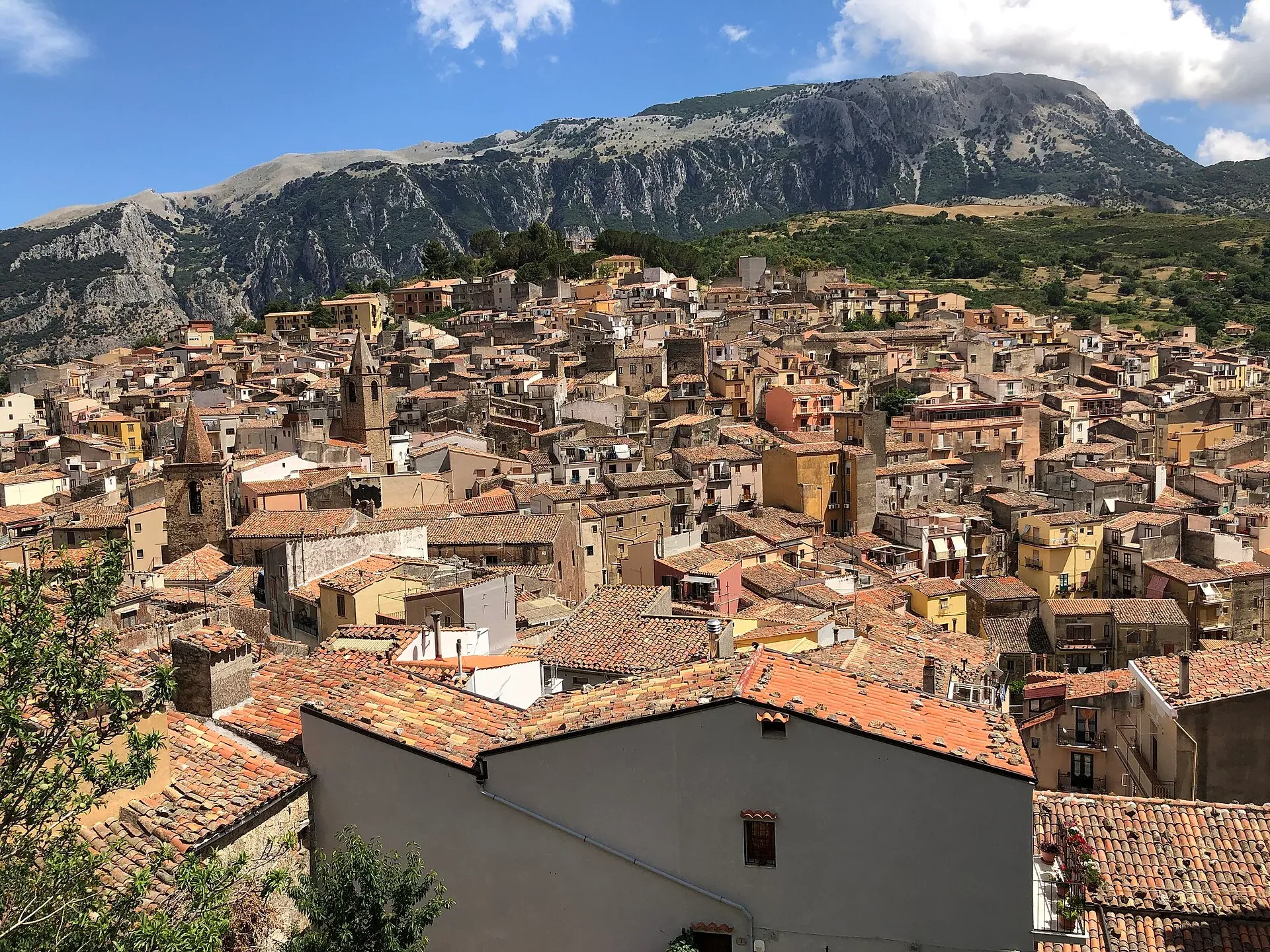
Isnello lies on the northern side of the Madonie, a few kilometres from Piano Zucchi. The afternoon visit fits well with a morning in the woods or in the village.
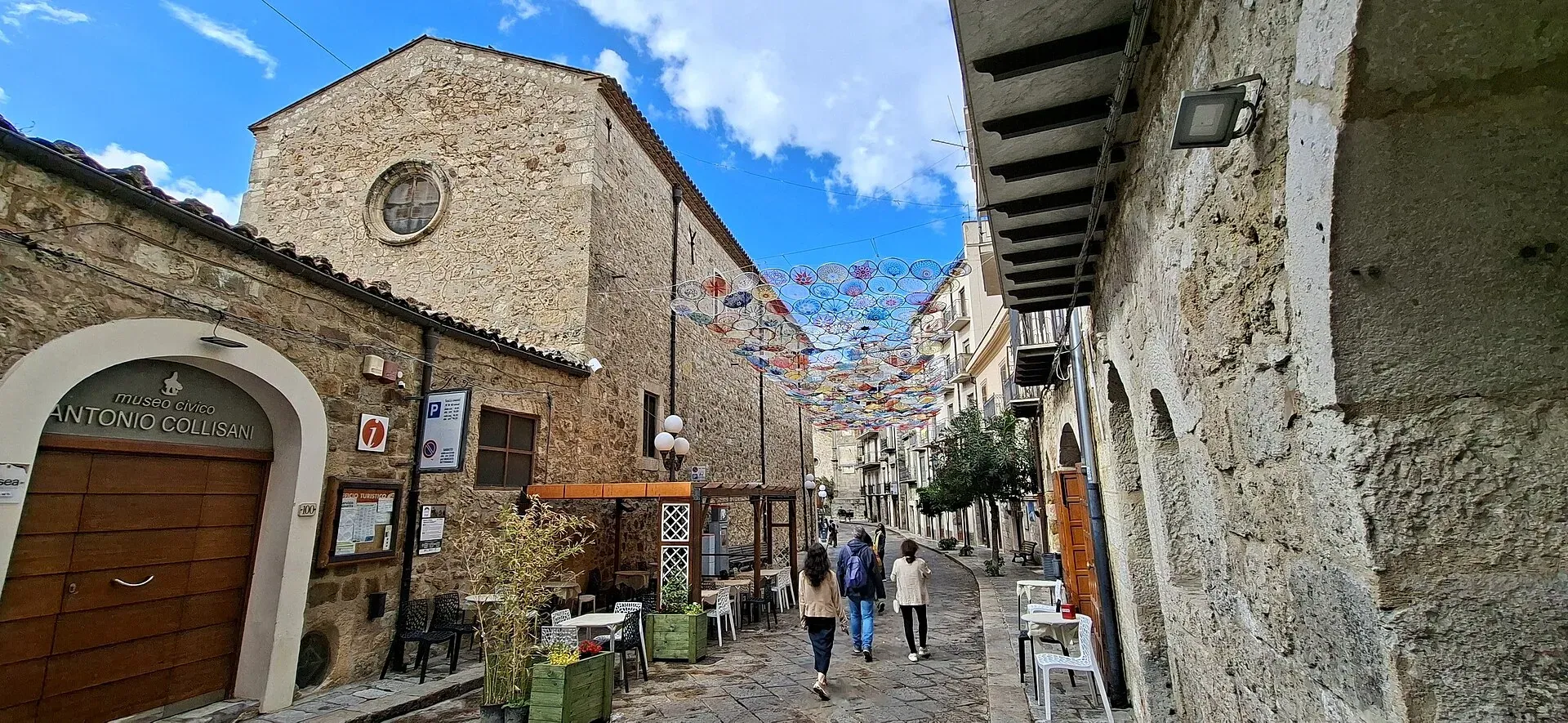
- In the village: the ruins of the castle on the crag and the church of the Annunziata with its sundial and pendulum. It’s all on the page about Isnello.
- To sleep: places to stay in the village are on the page where to stay in Isnello.
- With children: GAL Hassin is one of the stops in the guide to the Madonie with kids.
- Food: in April there is the Festa delle verdure, in November Sapori d’autunno.
Frequently asked questions
- How much does it cost to visit GAL Hassin in Isnello?
- Since 1 January 2026 the standard ticket costs 20 euros, reduced to 10 euros for children aged 6 to 10. Children under 6 go in free. In summer the evening sky observation also costs 20 euros, while the Full Day, an afternoon visit plus an evening at the telescopes, costs 30 euros full price and 20 reduced. There are no other discounts.
- Do I need to book a visit to GAL Hassin?
- Booking is compulsory and is done online on galhassin.it, choosing the ticket and the date. Card or PayPal payment must be completed within 30 minutes. If nobody has booked a date, the centre can cancel the activity even on the morning itself, and it can suspend it for bad weather or lack of staff.
- When can you look at the stars through the GAL Hassin telescopes?
- Sky observation evenings run from July to September, from about 21:30 to 23:45, with the Sky Observation ticket or the Full Day. From October to June the visit takes place in the afternoon: planetarium, museum and, from March to June, observation of the Sun through filters when the weather allows.
- Is GAL Hassin suitable for children?
- The planetarium and the meteorite museum work well with children too, and the prices reflect it: reduced for ages 6 to 10, free under 6. The standard visit lasts about two hours and a quarter. With small children choose the afternoon visit; the telescope evening ends around 23:45.
- Are GAL Hassin visits also in English?
- Guided visits are in Italian. The 2026 event pages say so explicitly, with the note "No English". If you don't understand Italian, the planetarium is still enjoyable for the images, but you will miss the astronomers' explanations.
- Can you drive right up to the observatory?
- Visitors cannot drive into the centre. You leave the car in the outside car park and walk in through the pedestrian gate, which opens half an hour before the visit. The inner car park is reserved for staff and school coaches.
- Can you visit the telescope on Monte Mufara?
- The Wide-field Mufara Telescope, at 1,865 metres above Piano Battaglia, is a research instrument run by GAL Hassin and operated remotely. The Foundation's website does not offer public visits to the dome. Public visits and observations take place at the centre in Isnello.
Sources
- GAL Hassin, Divulgazione per il pubblico ed eventi 2026
- GAL Hassin, Prenotazioni, orari e chiusure
- GAL Hassin, Biglietto standard ottobre-giugno (tariffe 2026)
- GAL Hassin, Biglietto Full Day luglio-settembre
- GAL Hassin, Biglietto Osservazioni del cielo
- GAL Hassin, La storia del GAL Hassin
- GAL Hassin, I telescopi GRT e WMT
- GAL Hassin, nuovo asteroide 2026 RL38 (15 settembre 2026)
- GAL Hassin, contratto con l'Agenzia Spaziale Europea per il Flyeye (10 aprile 2026)
- GAL Hassin, evento Alla Luna (17 ottobre e 21 novembre 2026)
- GAL Hassin, Sapori d'autunno 2026
- Comune di Isnello, comunicato sulla certificazione Starlight Stellar Park
- Ente Parco delle Madonie, elenco dei divieti (27 giugno 2026)
Updated on 19 October 2026
See also
Things to do
The Madonie with kids: adventure parks, stars and snow
What to do in the Madonie with children: Parco Avventura Madonie, Pollina Adventure, GAL Hassin, picnic areas, easy trails and sledging, with 2026 prices.
Things to do
Photographing the Madonie: light, seasons, places, rules
Photography in the Madonie: autumn colours, snow, flowers, sunrise and sunset at Piano Battaglia, the Milky Way over Isnello, hill villages, wildlife, drones.