Culture
History and culture
The castles of the Madonie town by town: Castelbuono with its museum, the ruins of Geraci, Collesano, Caltavuturo, Isnello, Pollina and the Rocca di Cefalù.
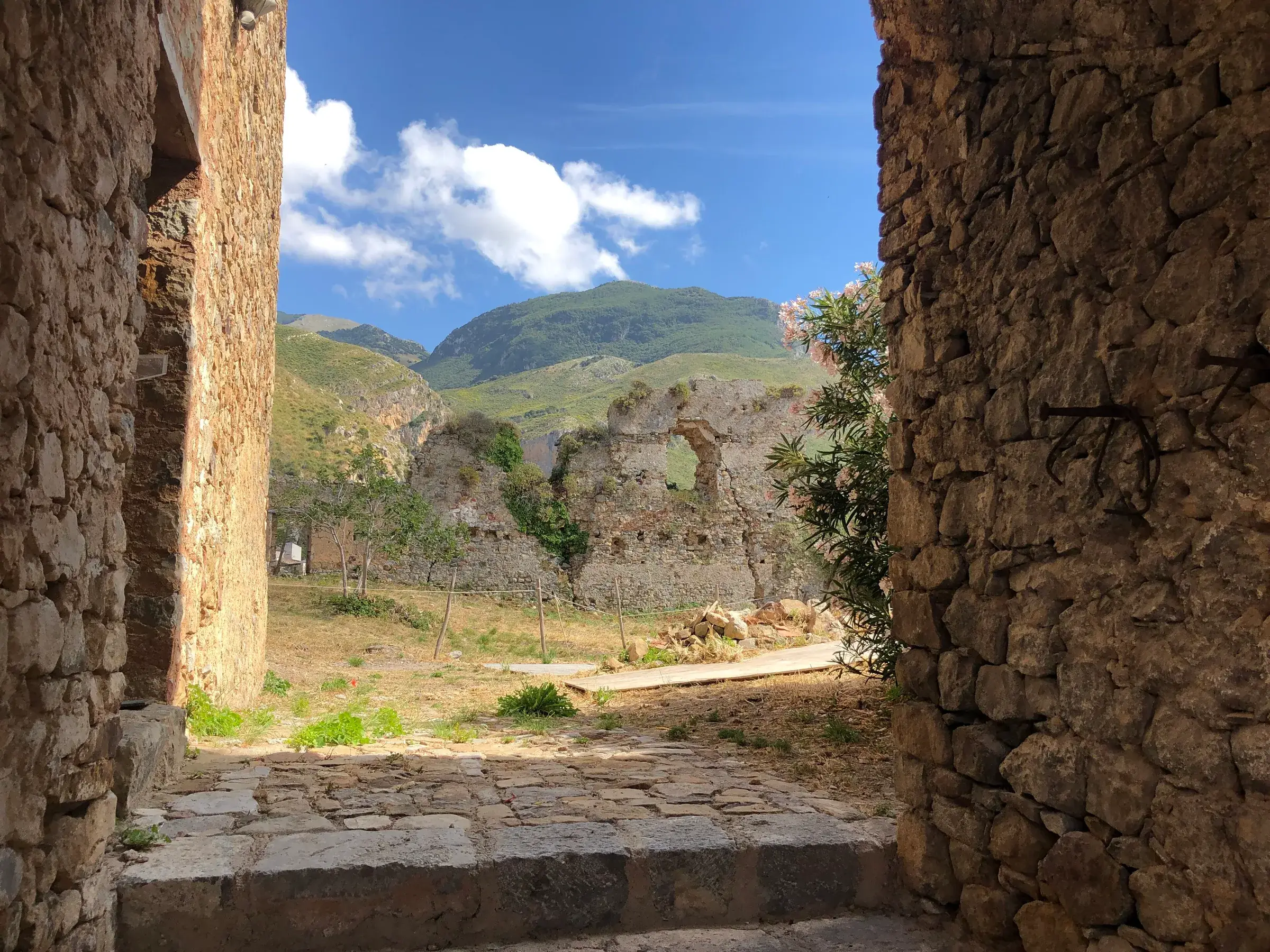
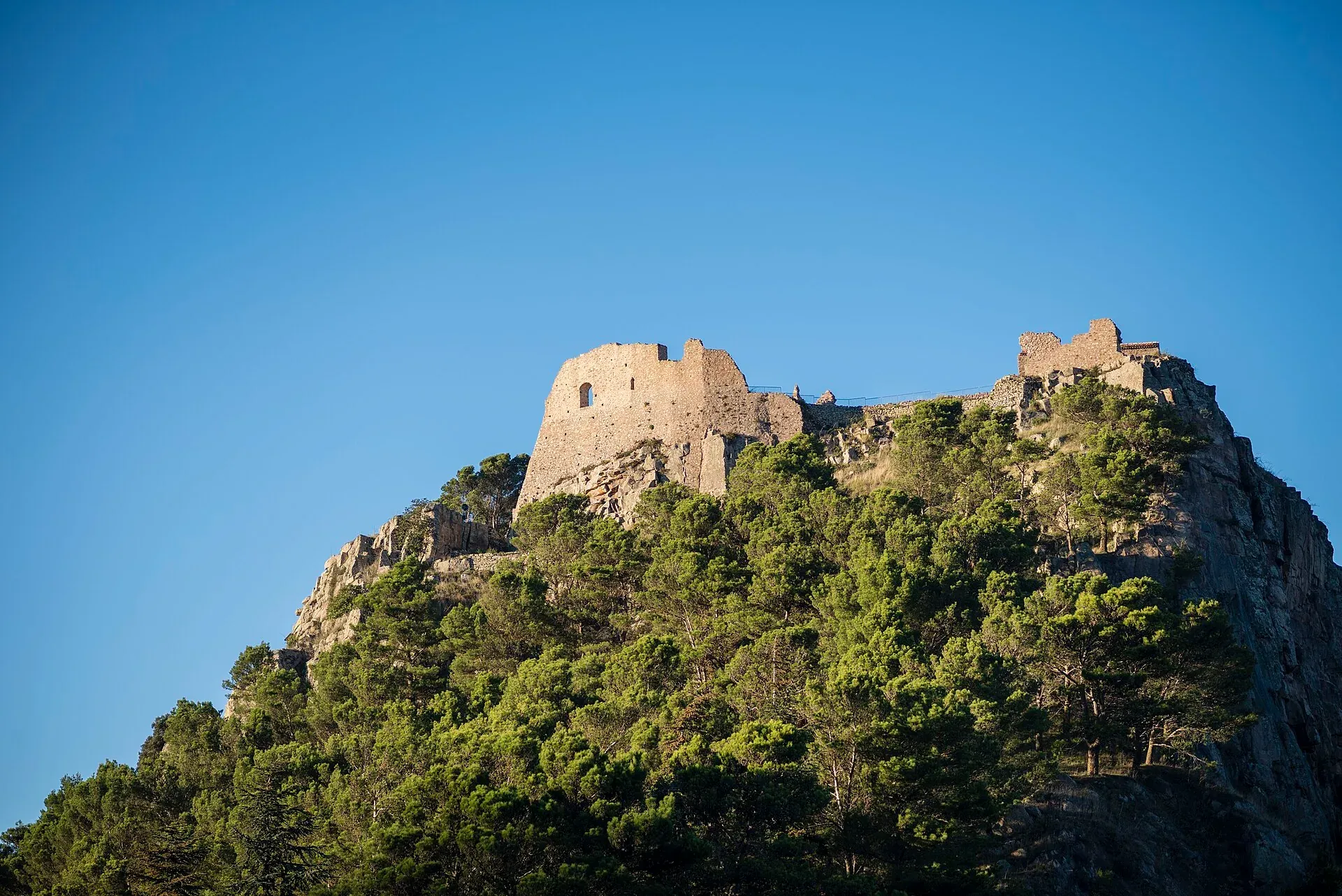
There are about a dozen castles in the Madonie, almost all founded between the Byzantine and Norman periods and then held for centuries by the great feudal families, above all the Ventimiglia. Only one is complete and can be visited inside: the castle of Castelbuono, home of the Museo Civico. The others are ruins on crags and hilltops above the villages, almost always free to enter, from Geraci Siculo to Caltavuturo, from Collesano to the Rocca di Cefalù.
At a glance
This table lists the castles in the towns of the Madonie Park (Parco delle Madonie) and in Gangi, with what survives and how to visit. Their condition comes from the Ente Parco descriptions, the Museo Civico di Castelbuono and Balarm.
| Town | Castle | What survives | Visit |
|---|---|---|---|
| Castelbuono | Ventimiglia castle | complete building, Palatine Chapel | Museo Civico, ticket |
| Geraci Siculo | Ventimiglia castle | ruins, intact chapel of Sant’Anna | free |
| Gangi | Ventimiglia castle | converted into a palace | private, outside only |
| Caltavuturo | Terravecchia castle | walls, three towers, semi-underground rooms | free, on foot |
| Collesano | Medieval castle | panoramic ruins | from outside, unsafe |
| Isnello | Castle on the crag | remains of two buildings, possibly towers | by climbing the crag |
| Polizzi Generosa | Piazza Castello castle | ruins and bell tower of the castle church | free |
| Petralia Soprana | Castle | ruins | free |
| Pollina | Castle and tower | square tower and parts of the castle | archaeological park at the top of town |
| San Mauro Castelverde | Castle | ruins in the upper town | free |
| Sclafani Bagni | Castle | ruins, Porta Soprana | free |
| Cefalù | Rocca castle | battlemented walls, remains of the fortress | with the Rocca ticket |
The crags of the Madonie were fortified before the castles we see today. The Ente Parco attributes the ruins of Isnello to the Byzantine presence of the 8th century and links the name of Caltavuturo to an Arab stronghold, the Qal’at of Abi Tur. In 938, according to the Cambridge Chronicle, the commander Halil subdued the strongholds of Caltavuturo, Collesano and Sclafani.
Then came the Normans. Count Roger, after 1060, fortified the crags of Petralia and Polizzi; his granddaughter, Countess Adelasia, had the castle of Collesano built in the early 1100s.
From the 13th century the Madonie were a land of counties. In 1258 the county of Geraci passed to the Ventimiglia, a family of Genoese origin, who ruled it for three centuries from Geraci and then from Castelbuono. Other counties grew up at Collesano and Sclafani, with the Centelles, Cardona and Moncada at Collesano and Matteo Sclafani, in the 14th century, at Sclafani.
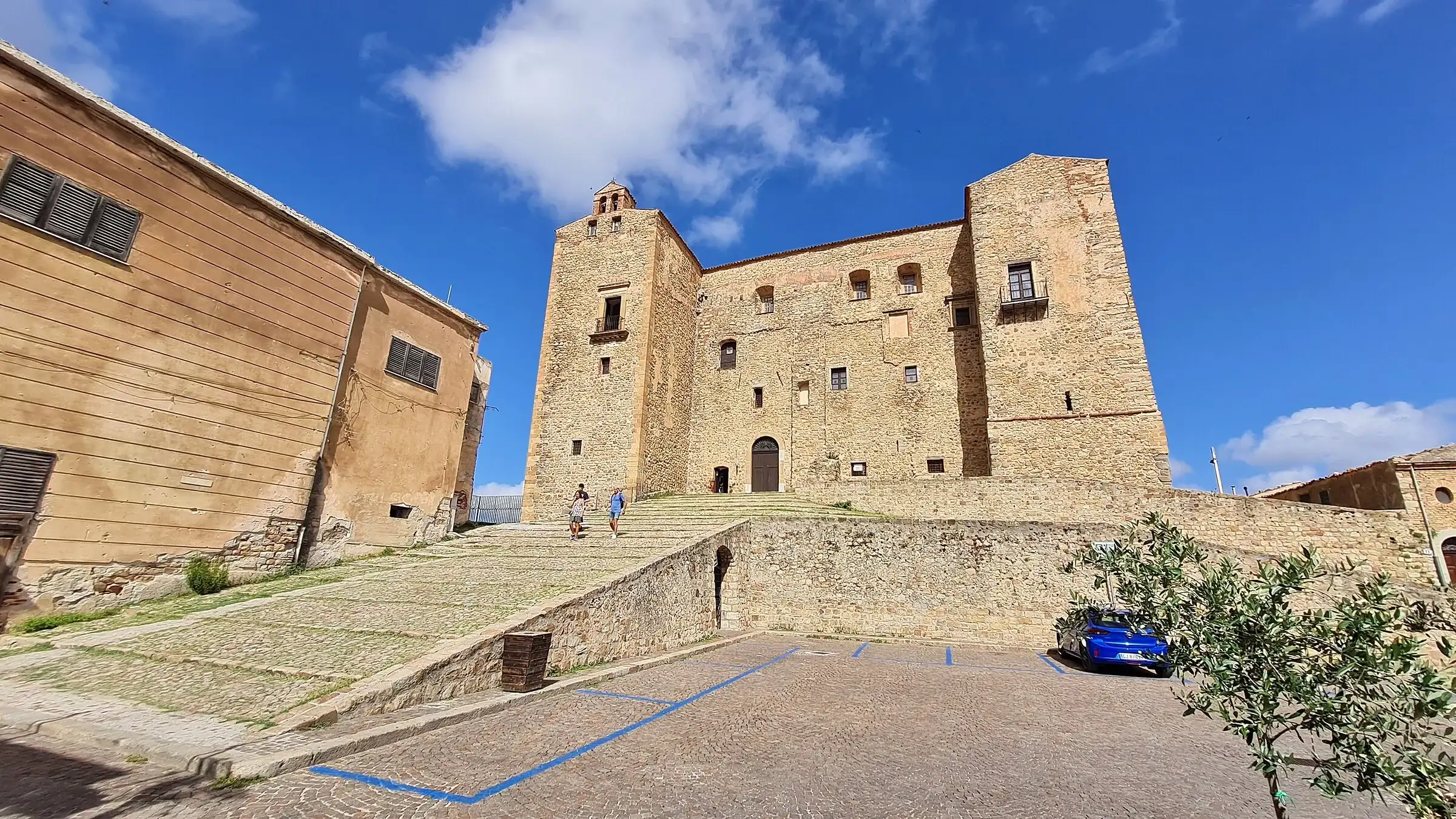
It is the only complete castle in the Madonie and the most visited. Francesco I Ventimiglia had it built in the early 14th century on the hill above the Byzantine hamlet of Ypsigro: the Ente Parco gives 1316, the historian Orazio Cancila 1317. The town takes its name from the castle, the Castrum bonum.
In 1920 the people of Castelbuono bought it at a public auction with a popular collection, for 20,000 lire (Ente Parco delle Madonie). Today it houses the Museo Civico.
What to see inside:
Opening hours and tickets (Museo Civico di Castelbuono, checked on 19 October 2026):
| Period | Hours |
|---|---|
| November-March | every day, 9.30 am-4.45 pm |
| April-October | every day, 9.30 am-1 pm and 3-6.30 pm |
Full price 6 euros, reduced 4 euros (ages 8 to 18, over-65s, groups of more than 12), 2 euros for residents and people born in Castelbuono, free up to age 7. The museum warns that opening times may change: the ticket office answers on +39 0921 671211.
The family history, dates and the Palatine Chapel are told in full in our article on the Ventimiglia castles. The town is on the Castelbuono page.
Geraci was the first capital of the Ventimiglia county. The castle stands on the highest point of the town, above 1,100 metres, and controlled the roads towards Catania and Messina (Soprintendenza di Palermo).
The ruins of the towers survive, with two cisterns and the chapel of Sant’Anna, the only intact building. In 2004 the Soprintendenza uncovered the tops of the walls and made the first survey of the complex. The area is always open and entry is free.
On the first weekend of August the castle is the backdrop to the Giostra dei Ventimiglia, a re-enactment of the 14th century with a knights’ tournament. The town is on the Geraci Siculo page.
Francesco I Ventimiglia had it built between the late 13th and early 14th century on Monte Marone, in the upper part of the town. From 1625 it passed to the Graffeo and Valguarnera families and became more palace than fortress (Balarm).
It is privately owned and not open to visitors. From piazza Valguarnera you can see the facade with its rusticated portal between two towers. The rest of the town is on the Gangi page.
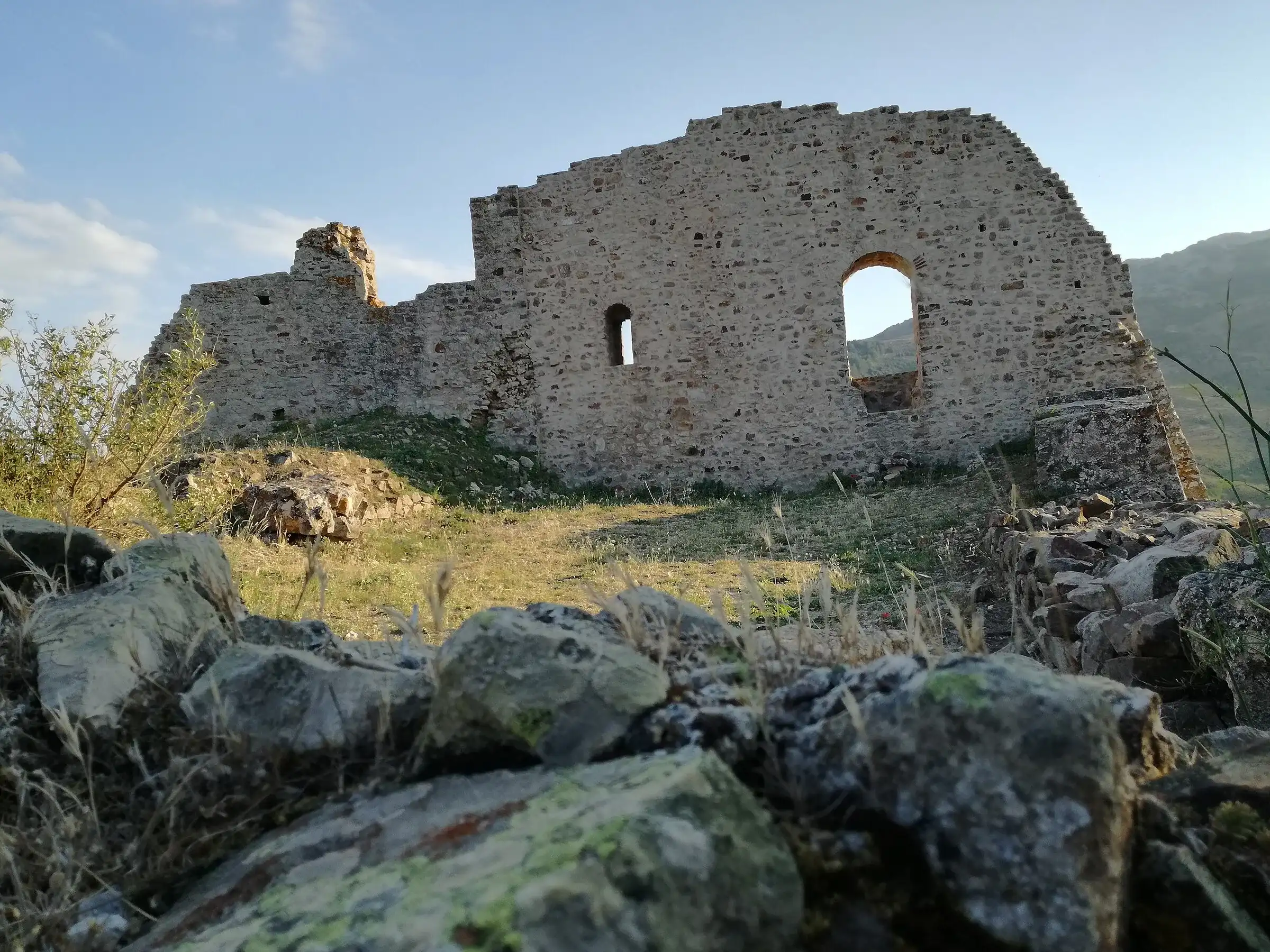
Above Caltavuturo is the Terravecchia crag, a rocky plateau at about 700 metres where the medieval village stood. According to the Ente Parco, the castle is Norman, built for defence and turned into a noble residence in the 14th and 15th centuries.
What you find on the way up:
You walk up from the centre, to an open-air site with no facilities. Some finds from the castle are displayed in the Museo Civico of Caltavuturo. The town is on the Caltavuturo page.
Countess Adelasia had it built in the early 1100s on the oldest core of the town, the Bagherino quarter. The first document to mention it dates from 1194 (Balarm, Ente Parco).
In the 14th century it passed to the Ventimiglia, then to the Centelles, Cardona and Moncada. Under the Moncada, in the 17th century, one of the largest halls became a theatre for the performances of the Accademia degli Offuscati. The earthquake of 1693 made it unusable and it was never repaired.
Today the ruins can be seen from outside, above the town. In March 2021 the Regione Siciliana commissioned the detailed design to consolidate the rock face below the castle, classified as very high risk. The town, with the motor racing museum, is on the Collesano page; the story of the race is in our Targa Florio guide.
The ruins stand on the crag above the village. According to the Ente Parco they probably date from the Byzantine presence of the 8th century; in the Norman-Swabian period the village grew around the castle.
What survives is mainly the remains of two buildings, possibly towers, adapted to the steep rock. The village passed to the Abbate, Filangeri, Ventimiglia and Santacolomba families, until in 1788 the people of Isnello bought back the lands of the county. The village is on the Isnello page.
Piazza Castello, in the upper part of Polizzi, was the castle’s parade ground. Built in the Byzantine period, it was fortified by the Normans: the Ente Parco writes that Count Roger had the Rocca and the Castle fortified.
Abandoned in the 19th century, the castle was dismantled and its stones were used to restore the facades of churches and palaces. The ruins survive, along with noble palaces built on the old foundations and the castle church, closed in 1897, whose staircase and bell tower are covered in vegetation (Visit Polizzi Generosa). The Museo Ambientalistico Madonita is on the same square. The town is on the Polizzi Generosa page.
In 1062 the Normans conquered Petralia and Count Roger fortified its castle, towers and bastions; in 1067 he had a second castle built outside the walls (Ente Parco delle Madonie). In 1258 Petralia passed to the Ventimiglia of Geraci.
Ruins of the castles survive, listed by the Ente Parco among the things to see in town. The town is on the Petralia Soprana page.
Pollina was a fief of the bishops of Cefalù until 1321, when it passed with its castle to Francesco Ventimiglia, count of Geraci (Consorzio Cefalù Madonie Himera).
At the top of the village is an archaeological park with the square tower, parts of the medieval castle and a viewpoint over the whole Madonie Park (Ente Parco). Next to it is the Pietrarosa theatre, built into the rock in 1970. The village is on the Pollina page.
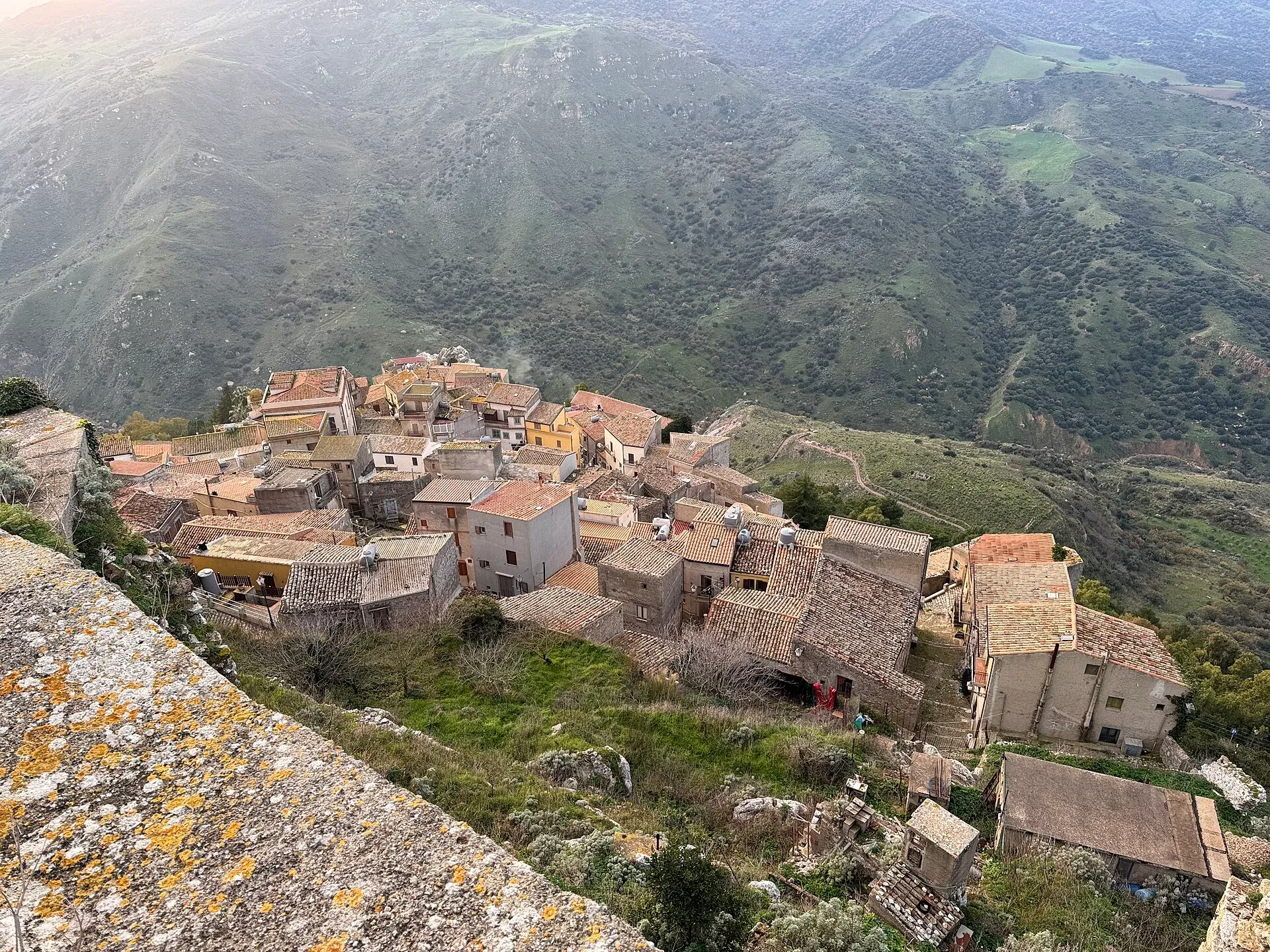
San Mauro stands above 1,000 metres, with views of the Aeolian Islands. The ruins of the castle can be seen in the upper part of the village (Ente Parco delle Madonie). The village is on the San Mauro Castelverde page.
Sclafani already appears in 938 among the strongholds taken by Halil. In the first half of the 14th century the fief belonged to Matteo Sclafani, one of the richest lords in Sicily: he built the town walls and remodelled the castle (Consorzio Cefalù Madonie Himera).
Today ruins of the castle survive. You enter the old town through the Porta Soprana, with its pointed arch. The village is on the Sclafani Bagni page.
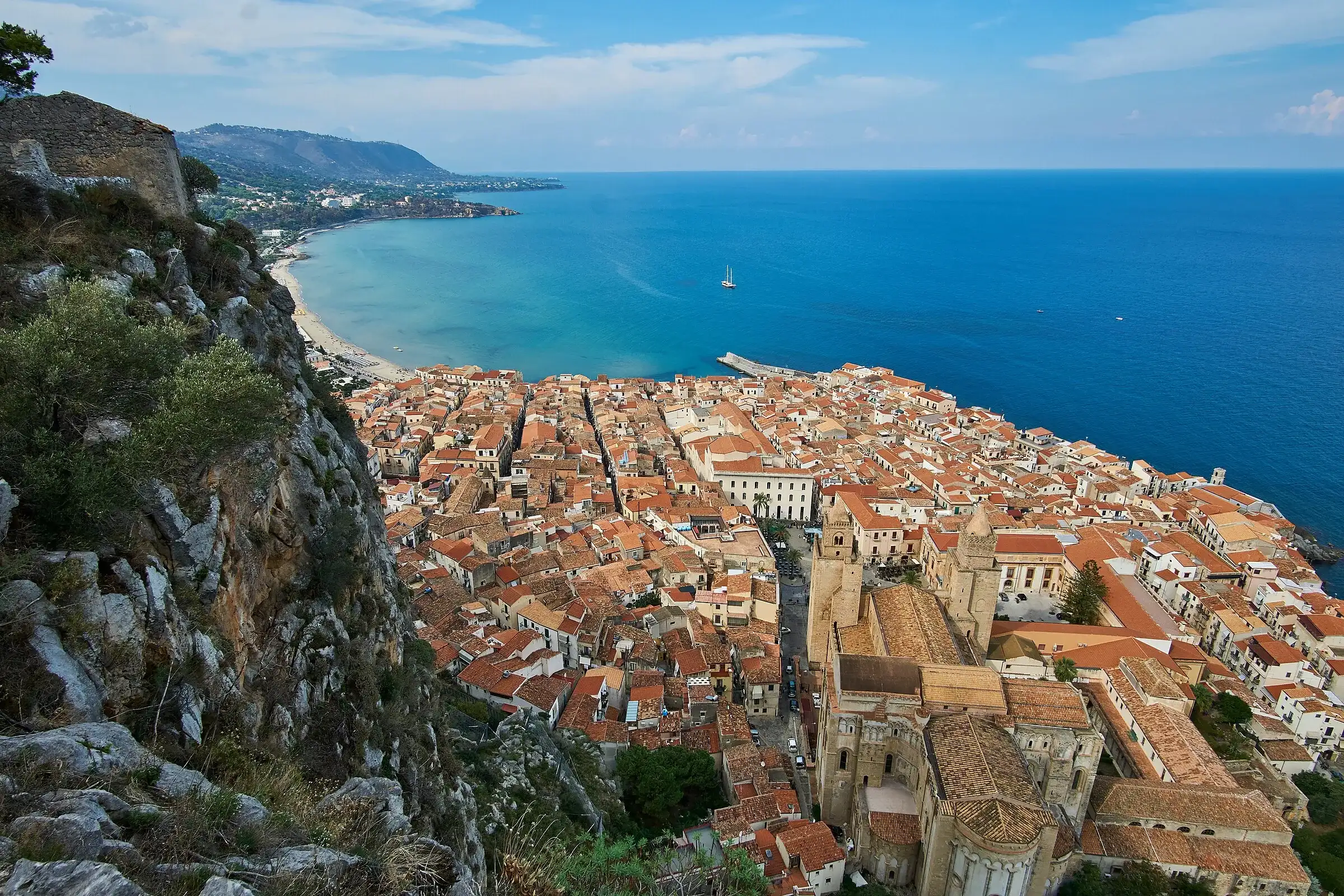
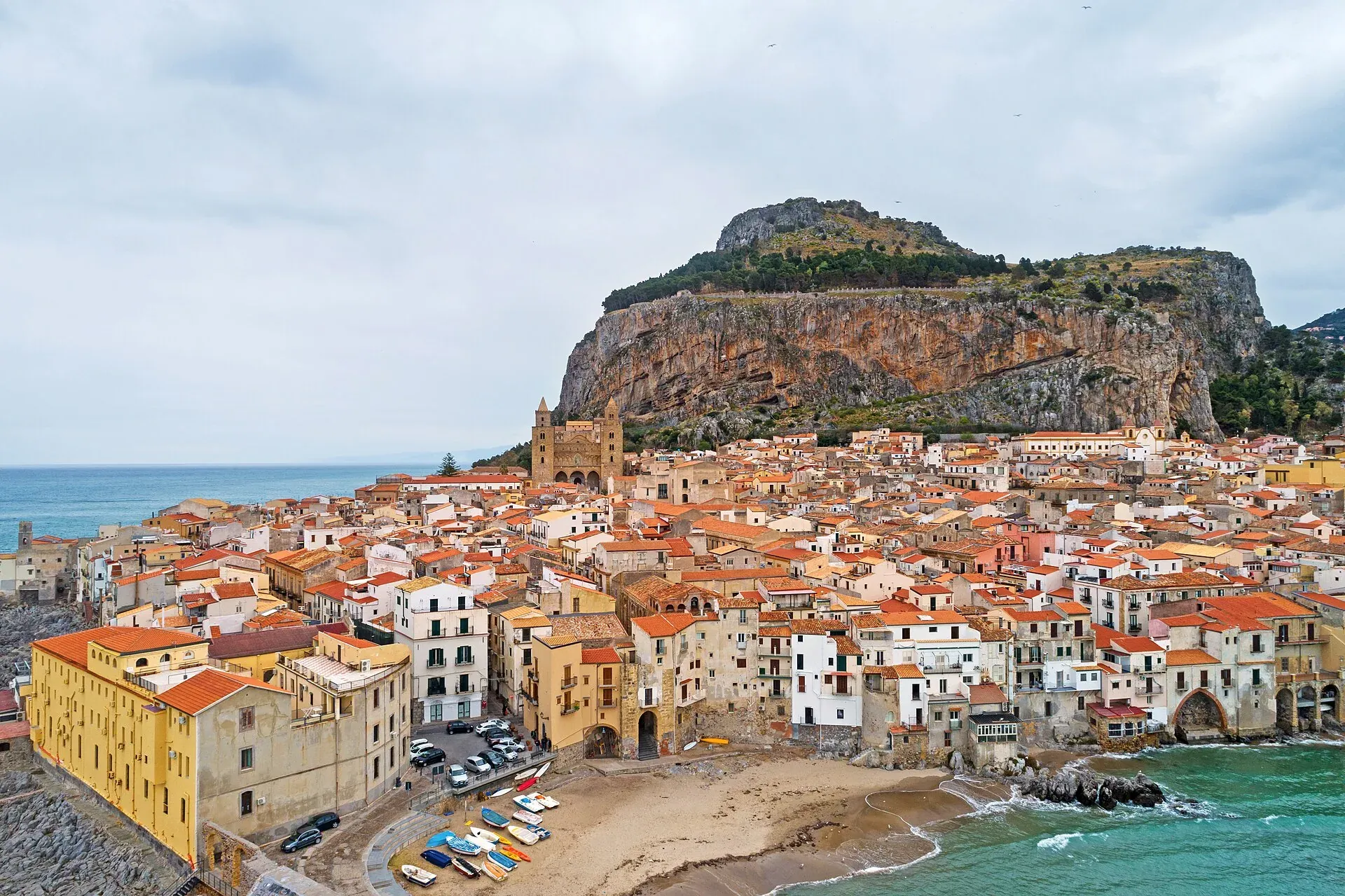
On the Rocca di Cefalù, the headland above the town, stands a medieval fortress. The lower walls date from the 12th to 14th centuries; the castle was used throughout the 14th and 15th centuries, remodelled in the 16th and 17th and then abandoned. Since 1989 there have been consolidation works, restoration of the walls and excavations (Balarm).
The battlemented walls are the ones you see from the seafront. On the way up you also pass the Temple of Diana. For opening times, ticket and route see the trail page for the Rocca di Cefalù; the rest of the town is on the Cefalù page.
This route links the most interesting castles with short distances. Driving distances come from our OpenStreetMap calculations on the Madonie roads page.
Day 1: the Ventimiglia castles
Day 2: the inland strongholds
Where to stay overnight: where to stay in Castelbuono or where to stay in Gangi. More places from Madonie history are in the History and culture section.
Updated on 19 October 2026
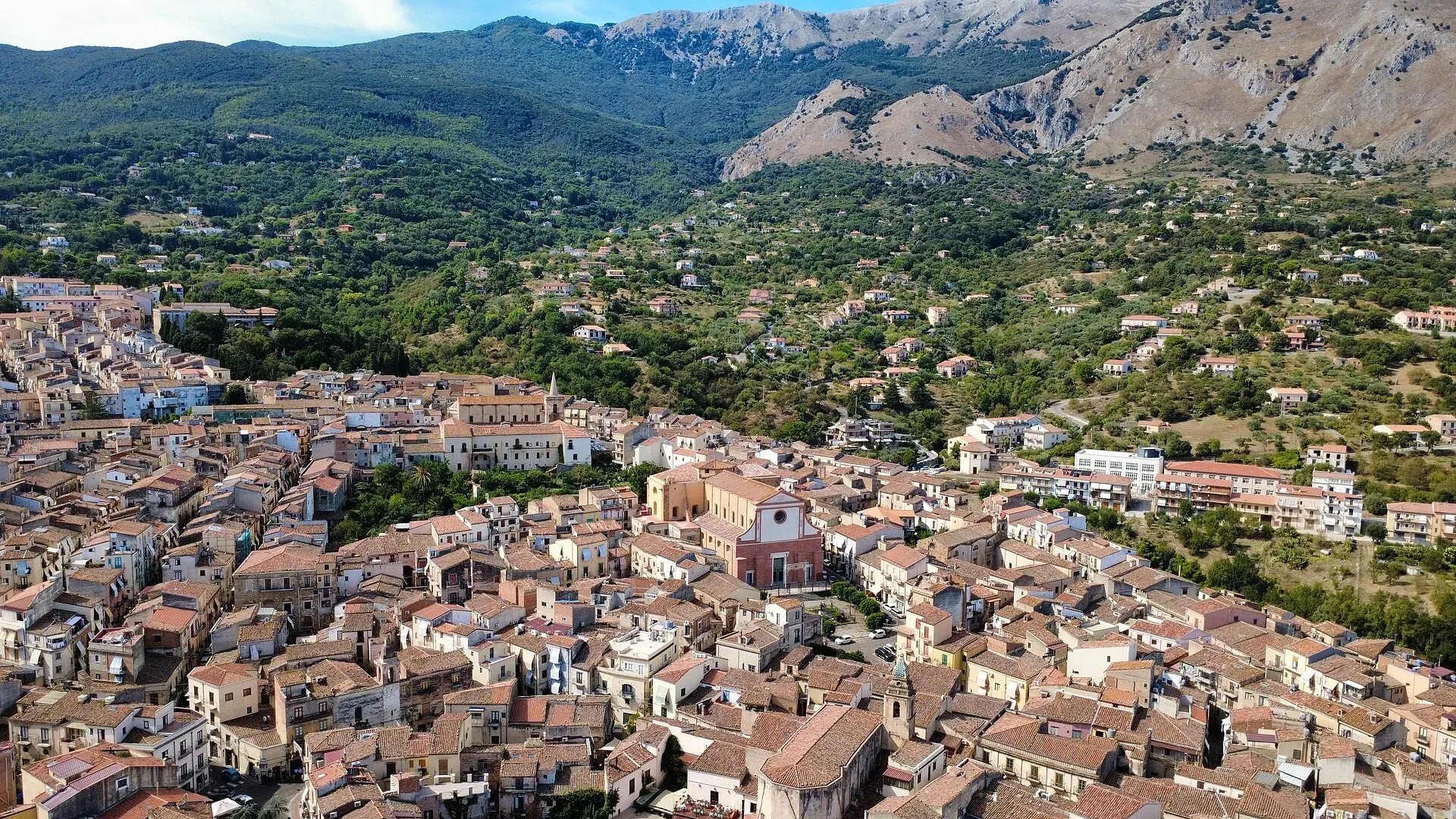
423 m a.s.l.
The town of the Ventimiglia castle, manna and testa di turco
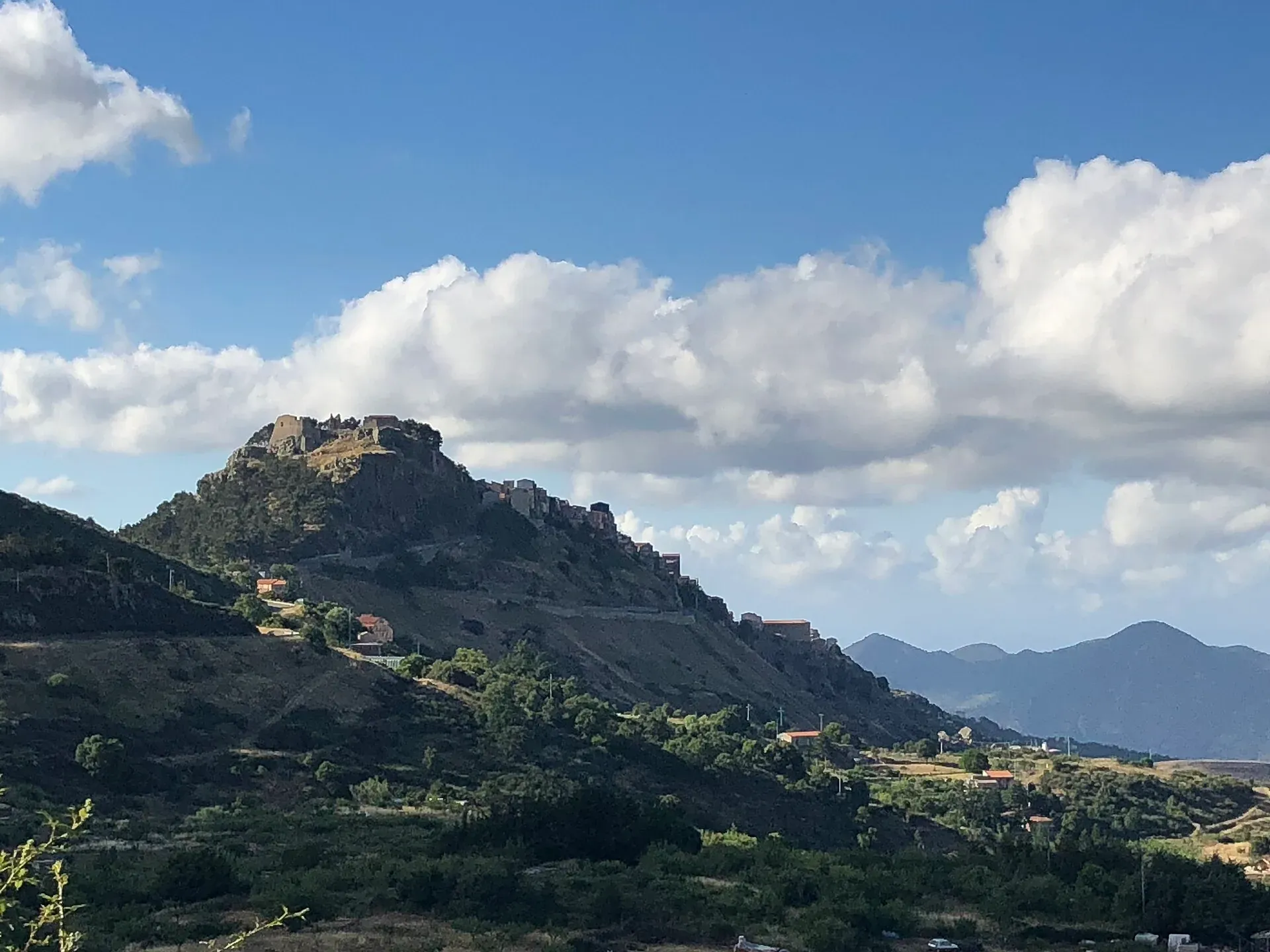
1,077 m a.s.l.
The first capital of the Ventimiglia, above the Madonie woods
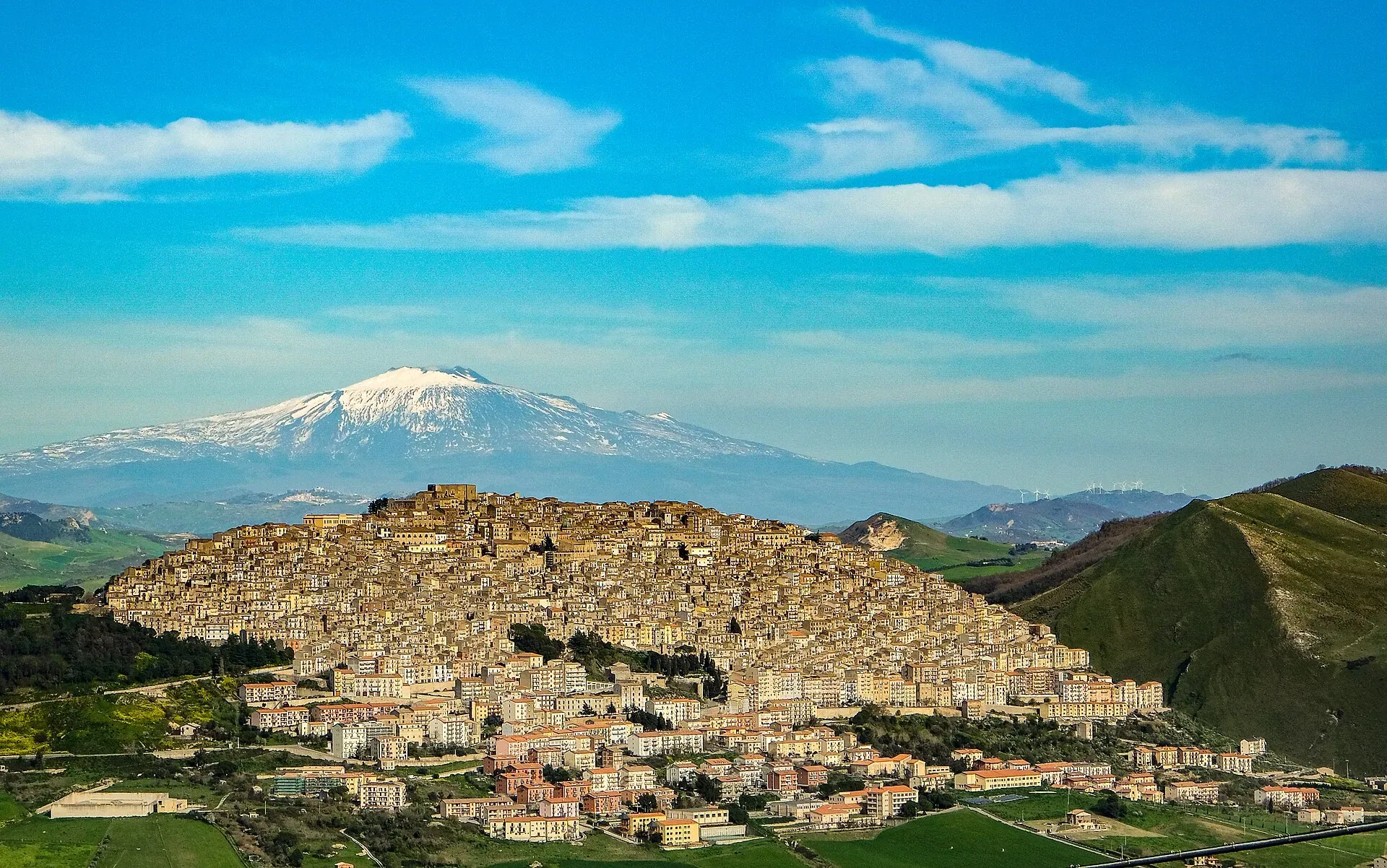
1,011 m a.s.l.
Borgo dei Borghi 2014, all stone on Monte Marone
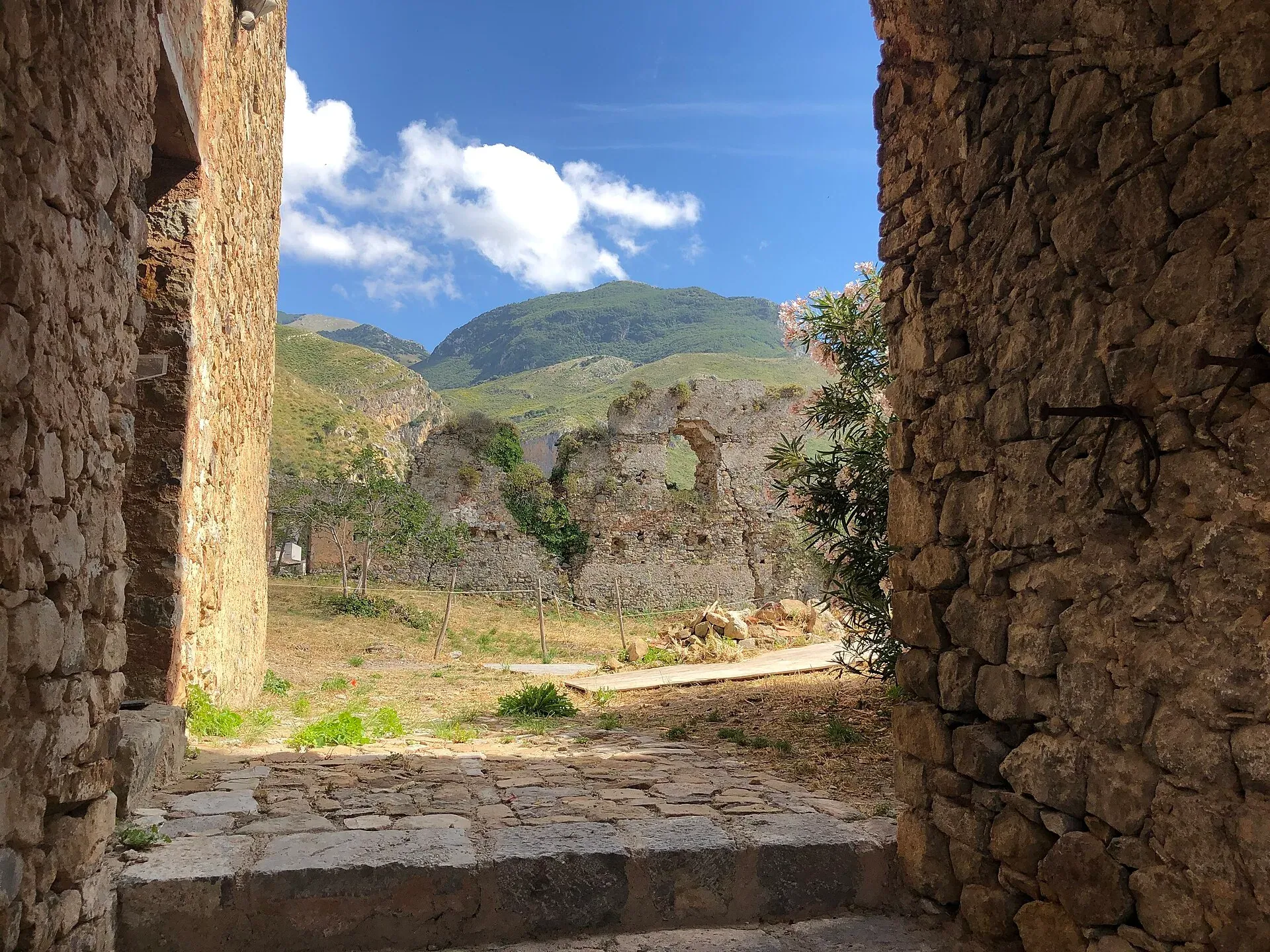
470 m a.s.l.
Ceramics, a castle and the Targa Florio museum
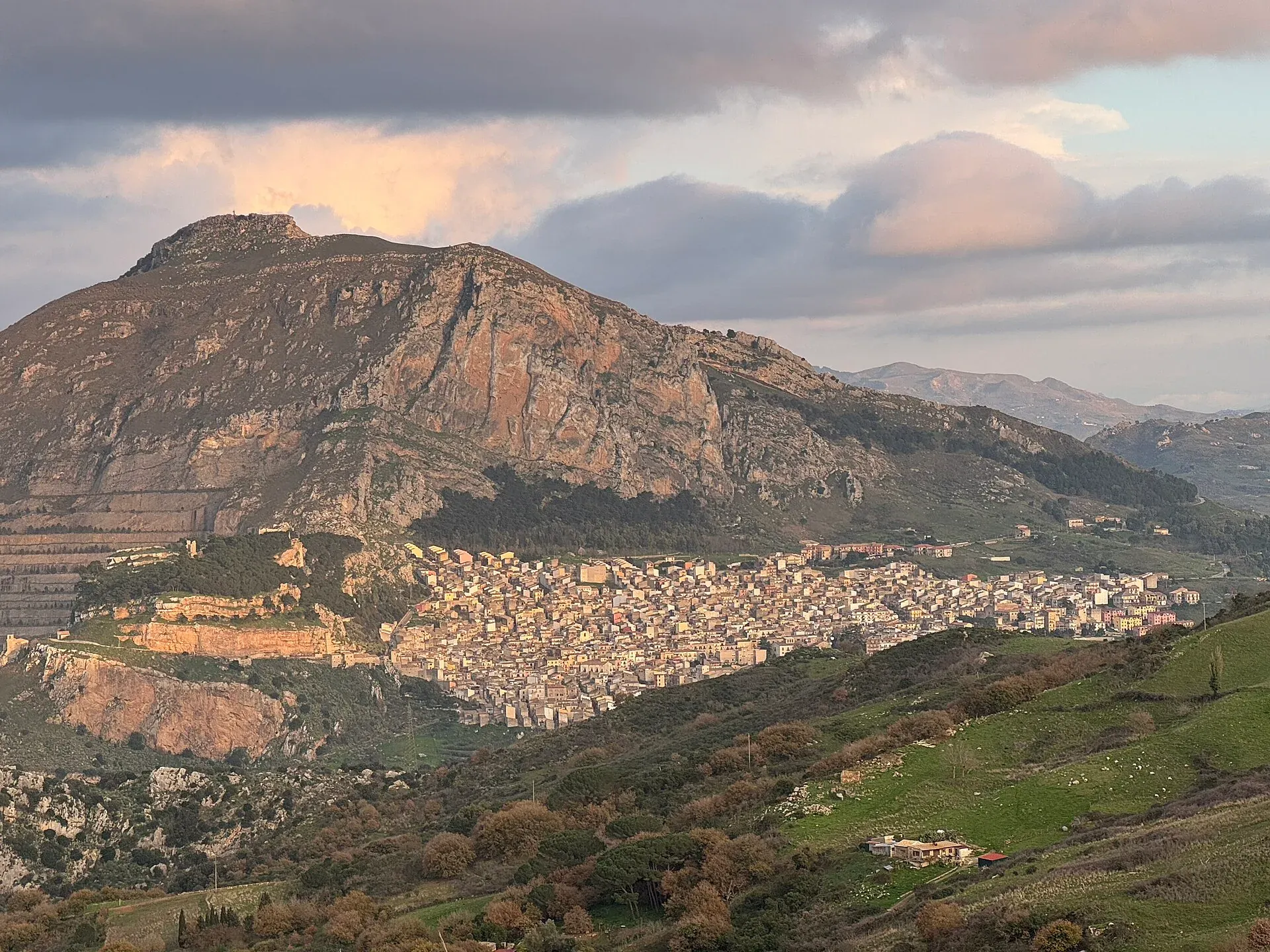
631 m a.s.l.
The village below the Rocca di Sciara
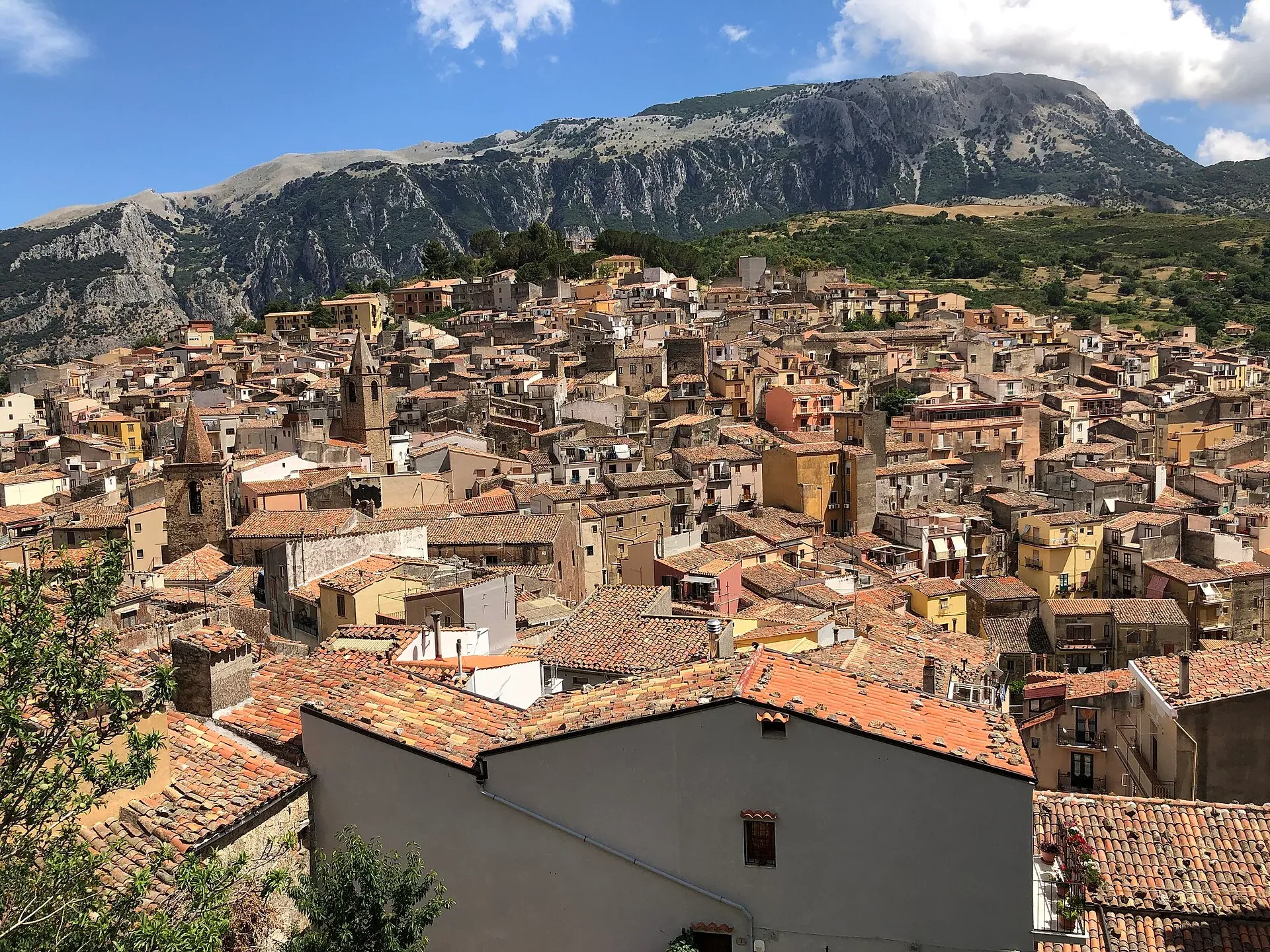
583 m a.s.l.
The town of the stars, beneath the Madonie cliffs
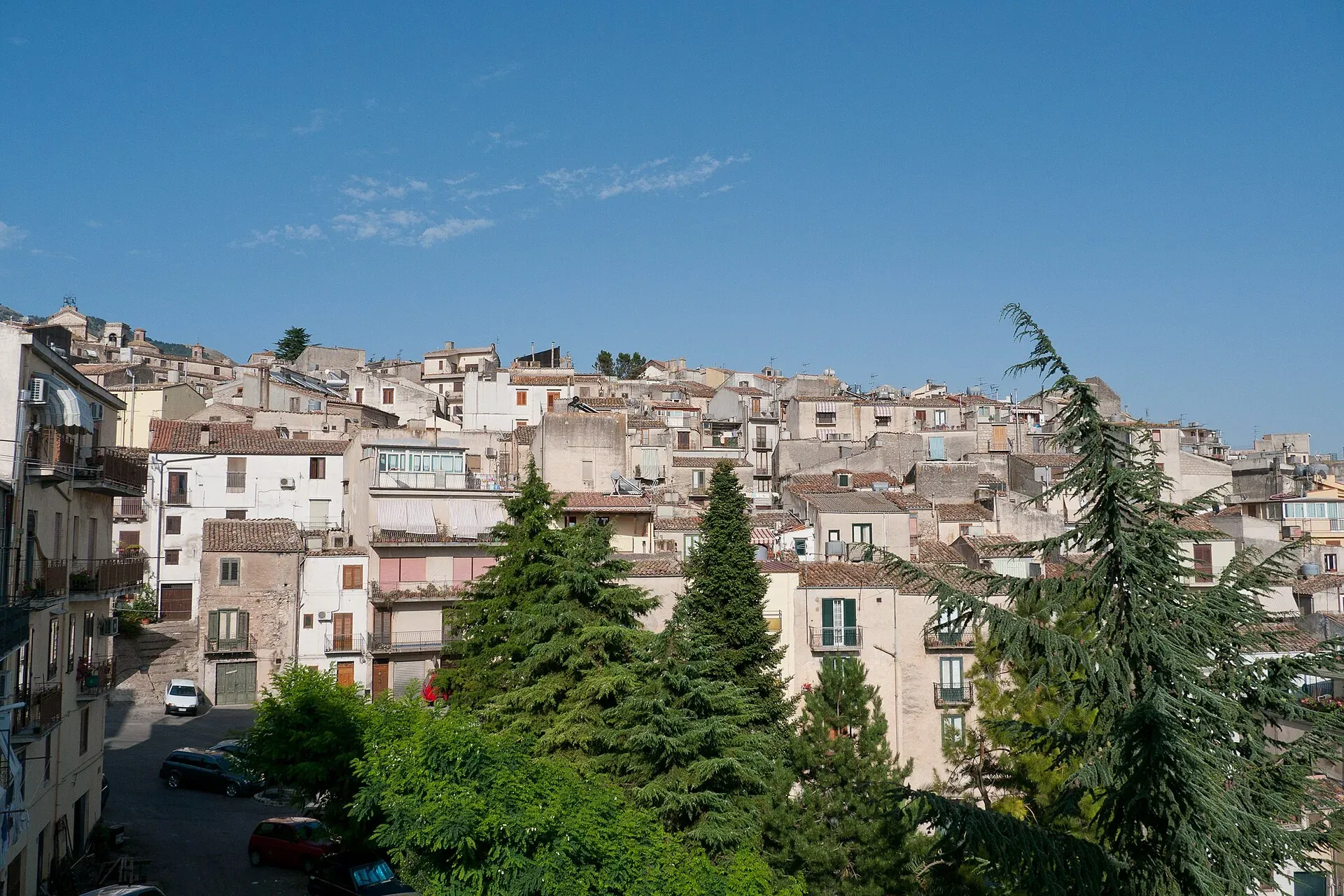
920 m a.s.l.
The town of the Abies nebrodensis, sfoglio and badda beans
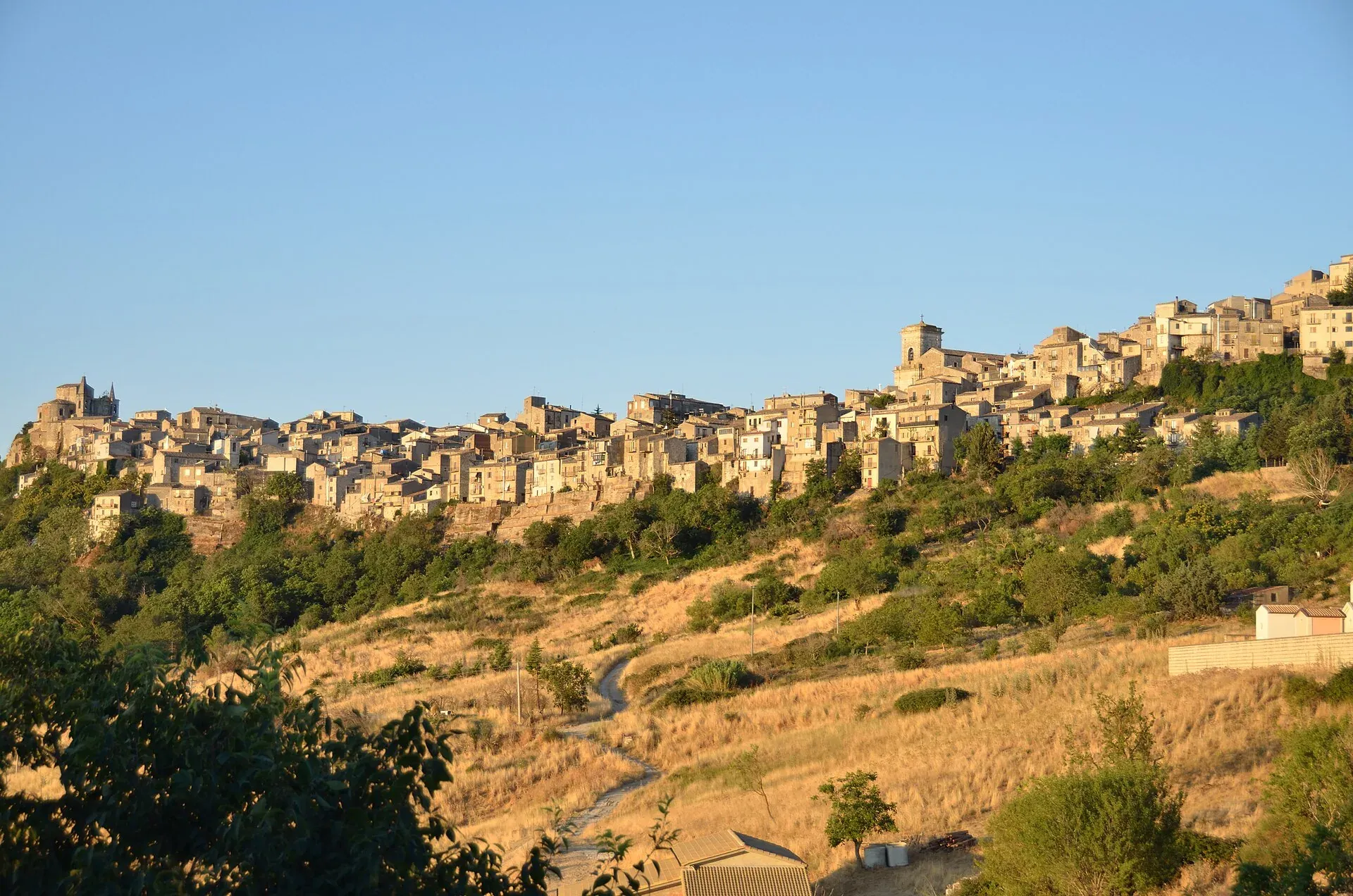
1,147 m a.s.l.
The highest town in the Madonie, Borgo dei Borghi 2018
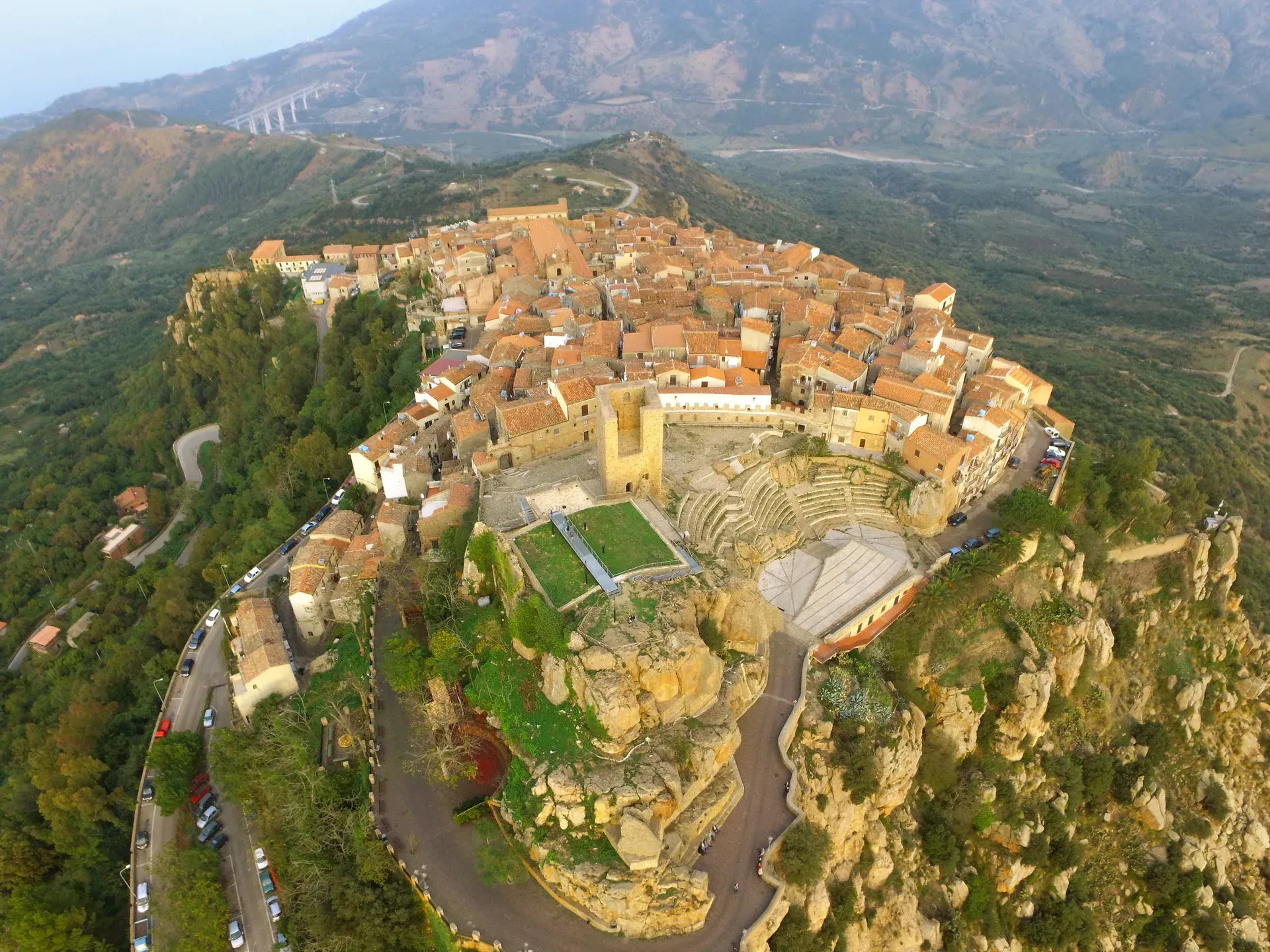
664 m a.s.l.
The stone theatre and the manna, above the sea at Finale
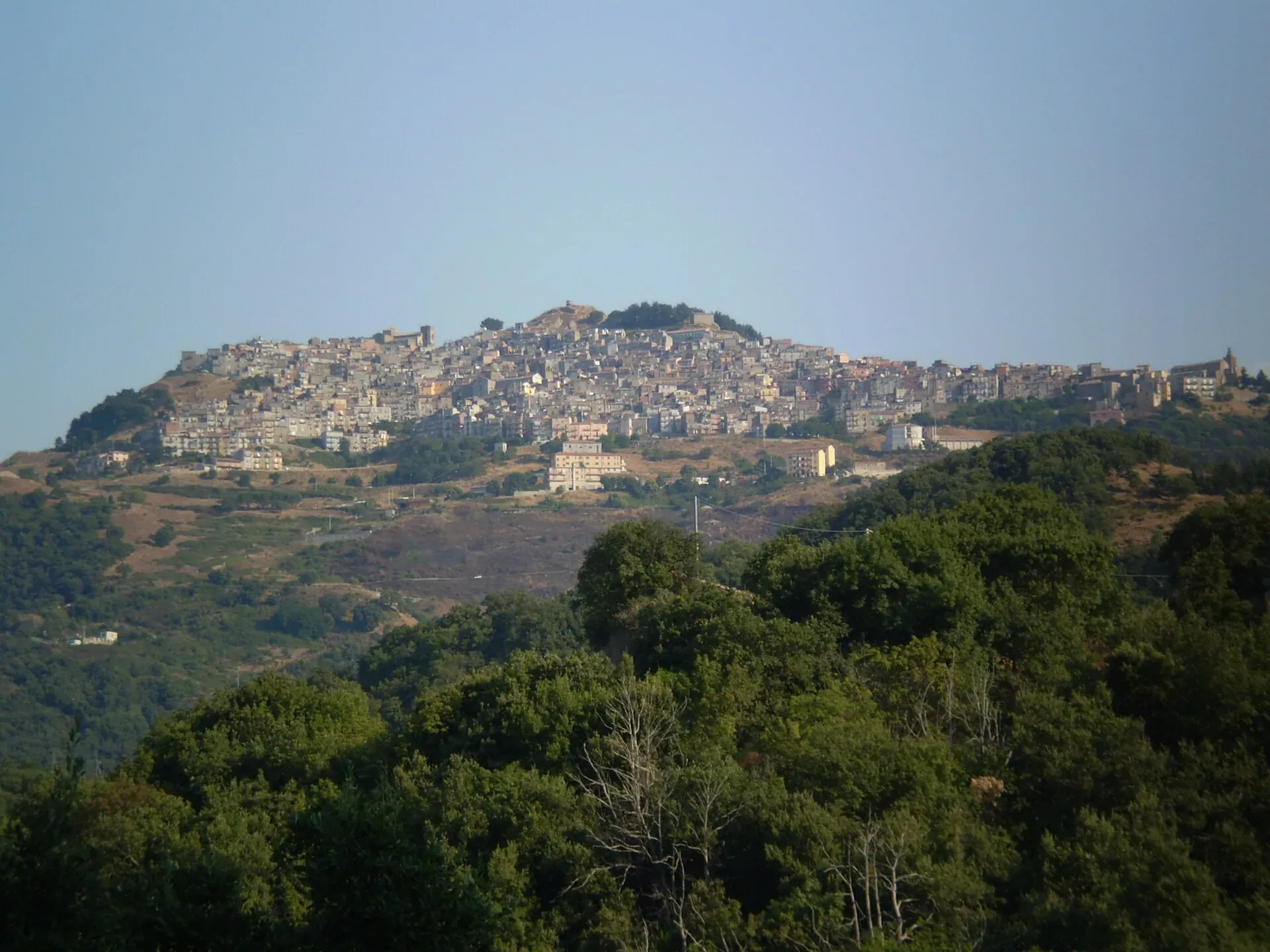
1,025 m a.s.l.
The village at a thousand metres above the Gole di Tiberio
755 m a.s.l.
The walled village on the rock and its hot spring
16 m a.s.l.
The Norman cathedral, the Rocca and the sea at the foot of the Madonie