Food
Culture
The Ventimiglia castles in the Madonie: Castelbuono, Geraci Siculo and Gangi. Family history, what to see, opening hours and tickets, a driving route.
The Ventimiglia, a family of Genoese origin, ruled much of the Madonie for centuries from 1258: first from Geraci, then from Castelbuono. Today you can visit three of their castles: the castle of Castelbuono, founded in 1317 and home to the Museo Civico (full ticket 6 euros), the ruins of the castle of Geraci Siculo with the chapel of Sant’Anna, free to enter, and the castle of Gangi, privately owned and visible only from outside.
At a glance
They were a family of Genoese origin who, once in Sicily, rose to a position of power, writes the Museo Civico di Castelbuono. For centuries the history of Castelbuono and theirs are one and the same.
The historian Orazio Cancila devoted two volumes to the family, I Ventimiglia di Geraci (1258-1619). The main milestones, following his table of contents and the Palermo Soprintendenza paper on the castle of Geraci:
| Year | What happens |
|---|---|
| 1258 | Enrico Ventimiglia marries Elisabetta Creon and obtains the barony of Geraci |
| 1311 | Francesco I builds, or perhaps rebuilds, the chapel of Sant’Anna in the castle of Geraci |
| 1317 | Francesco I founds Castrum bonum, that is Castelbuono |
| 1338 | the castle of Geraci is taken by royal troops and Francesco I dies |
| 1436 | Giovanni Ventimiglia becomes marquis of Geraci, the first such title in the Kingdom |
| 1454 | the residence moves from Geraci to Castelbuono, together with the relics of Sant’Anna |
| 1632 | under Giovanni III Castelbuono receives the title of city |
| 1684 | Francesco Rodrigo Ventimiglia commissions the stucco work in the Palatine Chapel |
Some dates vary from source to source. The Soprintendenza dates the castle of Castelbuono to 1316 and the title of marquis to 1433; we follow Cancila for the foundation (1317) and the marquisate (1436). The dates 1632 and 1684 come from the Museo Civico.
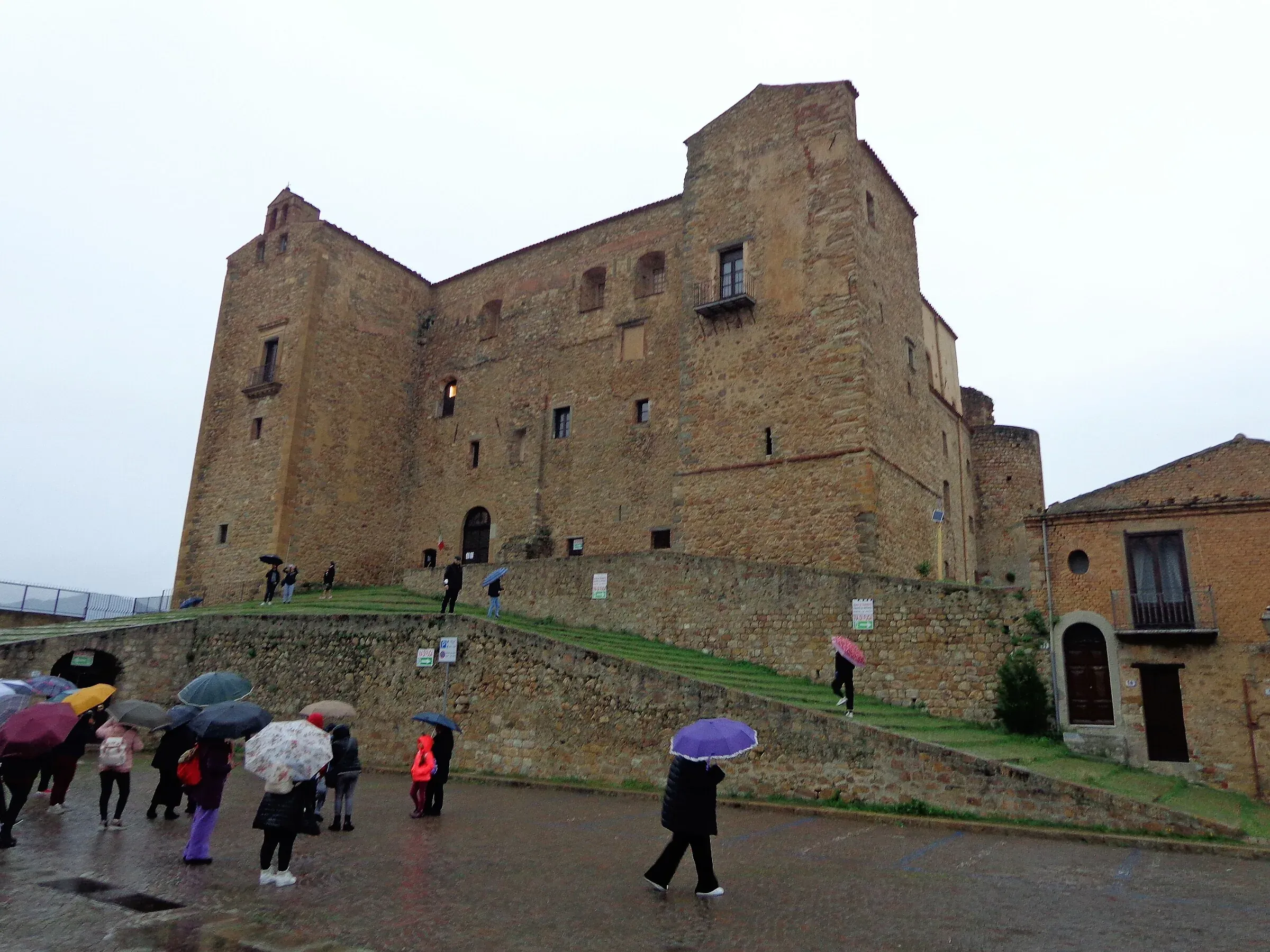
It is the best preserved of the three and the only one with a museum inside. It stands in Piazza Castello, in the upper part of the old town. The town takes its name from the castle itself, the Castrum bonum.
| Period | Hours |
|---|---|
| November-March | every day, 9.30 am-4.45 pm |
| April-October | every day, 9.30 am-1 pm and 3-6.30 pm |
Full ticket 6 euros, reduced 4 euros (ages 8 to 18, over 65 and groups), 2 euros for residents and people born in Castelbuono. Free entry for children up to 7 and for people with disabilities plus one companion. Ticket office: +39 0921 671211. Data from the Museo Civico di Castelbuono, checked on 19 October 2026: the museum notes that hours may change, so call ahead if you go on a public holiday.
Every year at the end of July the relic leaves the chapel. In 2026 the shrine was opened on Saturday 25 July and the procession took place on Monday 27; on the 27th the town receives the blessing from the balcony of the castle’s south-west tower. The full programme is on the page for the Festa di Sant’Anna in Castelbuono.
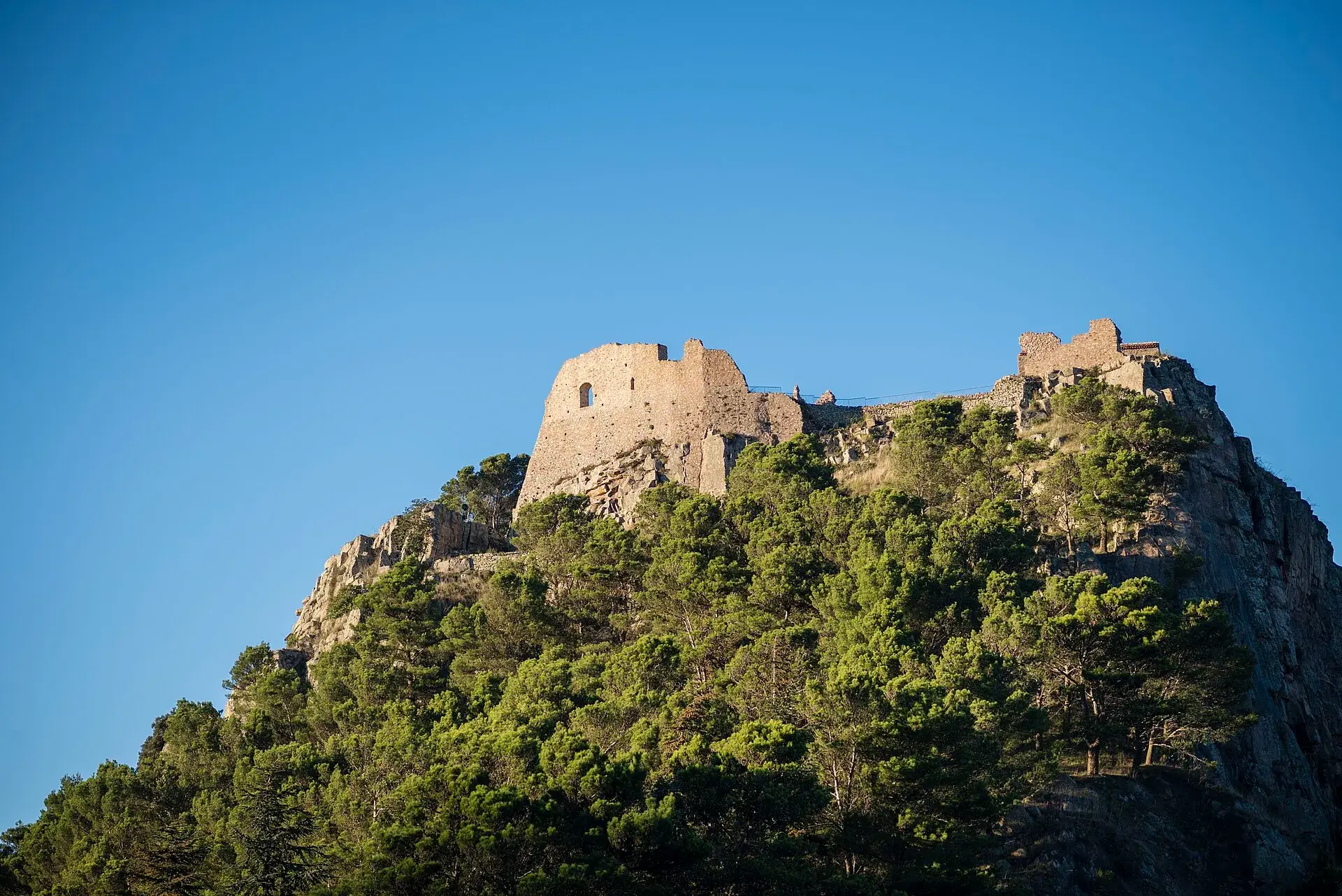
Geraci was the first capital of the Ventimiglia. The castle stands at over 1,100 metres, on the highest point of the village, and from there it controlled the roads towards Catania and Messina and the coast as far as the Aeolian Islands (Palermo Soprintendenza).
What remains are ruins: the cut-off corners of the towers, the arrow slits, two cisterns and the chapel of Sant’Anna, the only building still intact (Balarm). The plan is triangular and follows the shape of the rock. In 2004 the Soprintendenza carried out a first excavation campaign, which cleared the tops of the walls and made the first survey of most of the rooms possible.
The relics of Sant’Anna were kept here, in the palatine chapel, before they were moved to Castelbuono in the years when the court moved, around 1454.
Visiting: the area is always open and entry is free. Guided tours can be booked on +39 0921 643607 (Balarm).
When to go: on the first weekend of August there is the Giostra dei Ventimiglia, a re-enactment of the 14th century with a knights’ joust. In 2026 it took place on 1 and 2 August.
You will find more about the village on our page for Geraci Siculo.
The castle of Gangi stands on Monte Marone, in the upper part of the town. It was built between the late 13th and the early 14th century at the wish of Francesco I Ventimiglia. It stayed in the family until 1625, then passed to the Graffeo and the Valguarnera (Balarm).
In the 17th century it became more of a palace than a castle. Later it served as a prison and, between the 1960s and the 1980s, as a school. In 1931 the left wing was demolished to make room for the town aqueduct.
Visiting: it is privately owned and closed to the public. From outside you can see the façade on Piazza Valguarnera, between two old towers, with its rusticated doorway and the row of wrought-iron balconies on the main floor. The rest of the town is on our page for Gangi.
| Leg | Km | Road |
|---|---|---|
| Cefalù → Castelbuono | 23 | SS113, SS286 |
| Castelbuono → Geraci Siculo | 22 | SS286 |
| Geraci Siculo → Gangi | 14 | SS286, SS120 |
| Gangi → Palermo | 117 | SS120, A19 |
We calculated these distances on OpenStreetMap with OSRM.
Our advice: start in Castelbuono in the morning, when the museum opens at 9.30, and allow at least a couple of hours for the castle and the old town. Have lunch in Castelbuono or Geraci, walk up to the ruins in the early afternoon and finish in Gangi before sunset.
For food see where to eat in Castelbuono and where to eat in Geraci Siculo. If you want to stay overnight, see where to stay in Castelbuono.
Other castles, churches and museums in the area are under History and culture of the Madonie. The starting town is described on our page for Castelbuono.
Page updated on 19 October 2026