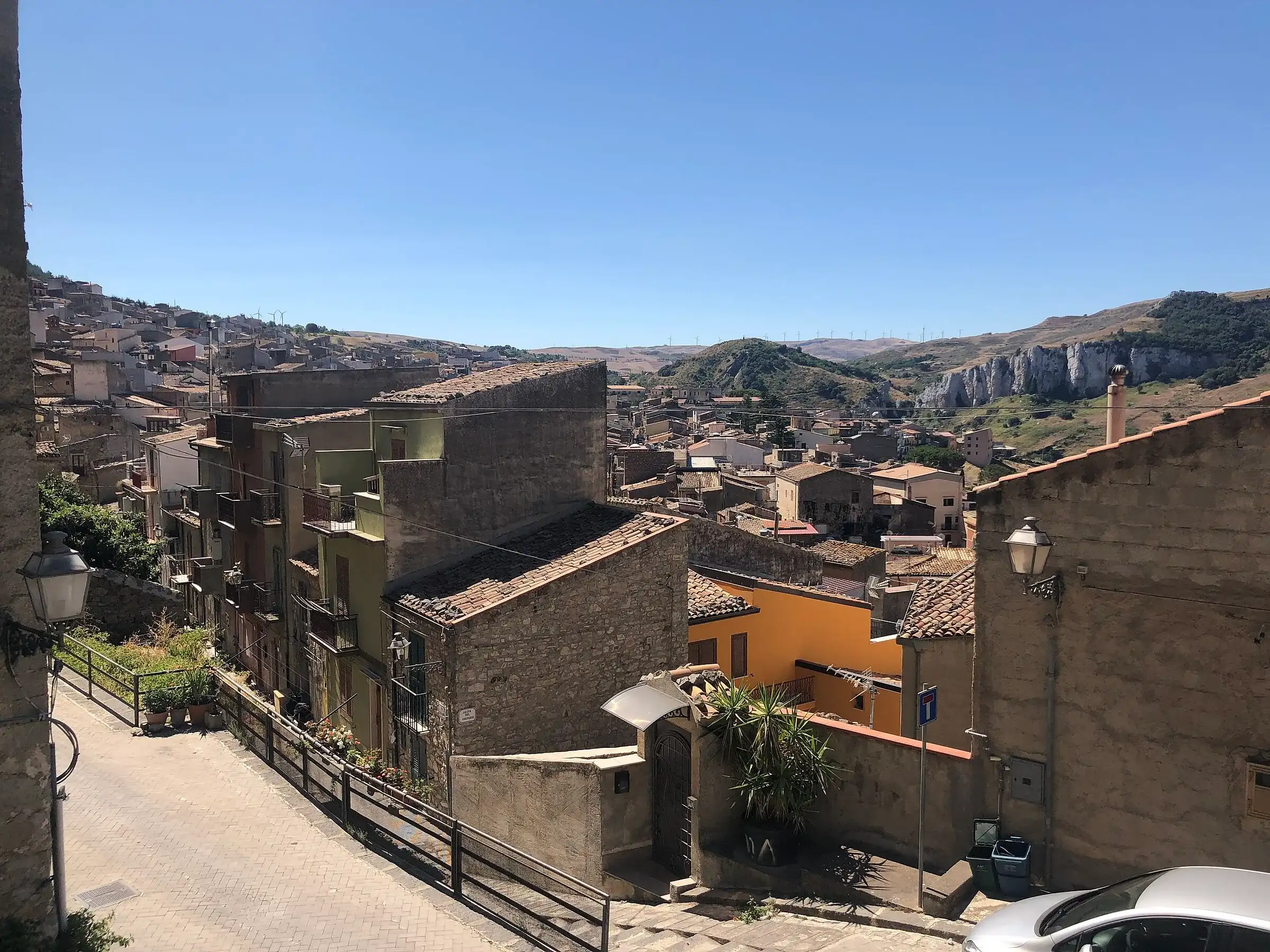
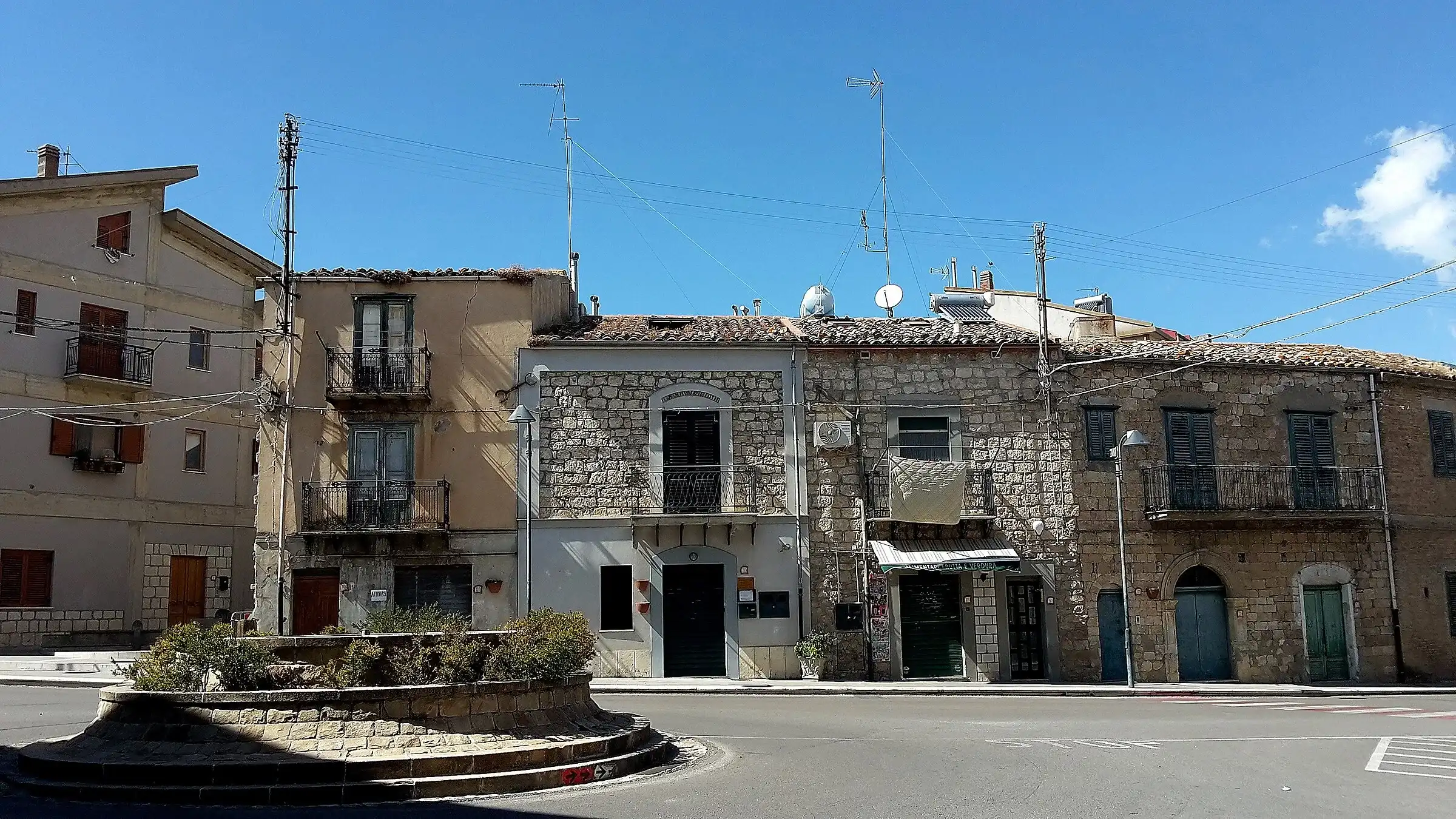
Culture · Petralia Sottana
Ballo della Cordella in Petralia Sottana
The Ballo della Cordella in Petralia Sottana, the Sunday after 15 August: 12 couples weave 24 ribbons around a pole after the wedding procession on horseback.
2026 edition
OverPiazza Gramsci and Corso Paolo Agliata (procession), Chiesa Madre, municipal sports ground (dance), Petralia Sottana
Programme
Sunday 16 August wedding procession at 15:00 from Piazza Gramsci, in front of Palazzo Pucci Martinez, and Ballo della Cordella at 17:00 at the municipal sports ground.
This edition is over. We update the page as soon as the next dates are out.
Source: madoniedintorni.com, checked on 19 October 2026
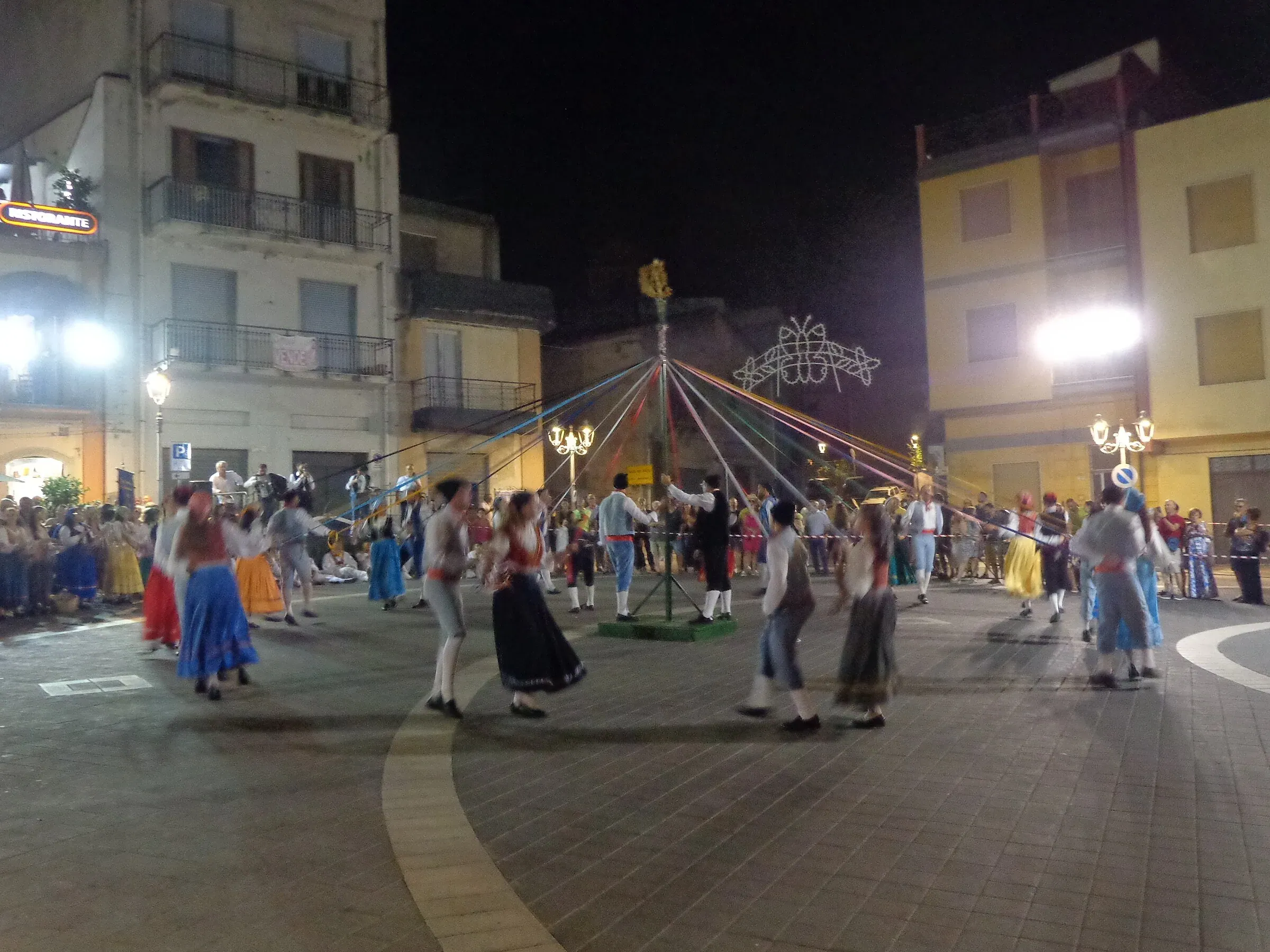
The Ballo Pantomima della Cordella is the ribbon dance of Petralia Sottana. It is danced every year on the first Sunday after 15 August, at 17:00, at the municipal sports ground: twelve couples weave twenty-four coloured ribbons around a pole and then unwind them by dancing in reverse. Before that, at 15:00, the Antico Corteo Nuziale, the old wedding procession, passes on horseback. In 2026 the Sunday of the dance was 16 August.
The dance is listed in the Register of Intangible Heritage of the Sicilian Region. Local news outlets speak of a tradition more than eighty years old in its current form, but its roots go much further back.
Where the Cordella comes from
The record of the Sicilian Region’s centre for inventory and cataloguing (CRicd) also calls it the “dance of jubilation”: a hymn of thanks for a good wheat harvest. It is a propitiatory rite of pagan origin, linked to the myth of Ceres, goddess of the harvest. With Christianity it became part of the feast of the Madonna dell’Alto, patron saint of Petralia Sottana, which used to be celebrated in May. Today it takes place in August.
In the old rite the procession set off from Piazza Duomo: at the front the bride and groom on a white horse, then bridesmaids and relatives, and at the back the twelve couples of dancers. They danced on a threshing floor laid out with sacks of wheat and sheaves of ears, around a pole two metres high. The signal to start came from the leader, “u capurali”, originally the bride’s father. Before starting, the dancers still recite a prayer of thanks to Jesus and the Madonna dell’Alto.
How it is danced: twelve couples, four figures
The twelve couples, arranged in a circle, stand for the twelve months of the year (or for the constellations turning around the sun). Each dancer holds the end of a ribbon, “u curdeddu”, hanging from the bunch of wheat ears at the top of the pole. To the rhythm of the tarantella and the commands of the leader with the staff, the couples perform four figures, which create weaves on the pole similar to those of a loom:
| Figure | Season | Stage of the wheat |
|---|---|---|
| First | Spring | growth and flowering |
| Second | Summer | ears and harvest |
| Third | Autumn | sowing |
| Fourth, “u paraccu” (the umbrella) | Winter | sprouting |
At the end the coloured weave is undone by dancing in the opposite direction, until the ribbons hang free again.
The wedding procession and the costumes
The procession recalls the bride’s journey from her father’s house to her new home, when the country tracks were travelled on horseback. The bride and groom, the mother-in-law, the bridesmaids and the farmers parade from the start of Corso Paolo Agliata, the village’s 19th-century main street, to the Chiesa Madre of Maria Santissima Assunta. There the thanksgiving hymn for the harvest is sung, with the 17th-century organ.
According to the regional record, the bride wears a silver-grey dress with 18th-century embroidery and lace and an ivory-white cloak, and carries a distaff and a rosary, symbols of industriousness and faithfulness. The groom wears a velvet suit with a blue jacket and an embroidered cap with a silk bow.
The programme of the festive days
The dance closes a few evenings of celebrations. In 2026 the Sunday went like this, according to Madoniedintorni:
- 16 August, 15:00: the Antico Corteo Nuziale sets off from Piazza Gramsci, in front of Palazzo Pucci Martinez;
- 16 August, 17:00: Ballo Pantomima della Cordella at the municipal sports ground.
On the evenings before, the Associazione Ballo Pantomima della Cordella usually stages the Serenata ’a Zita, a show weaving together theatre, song and music about the customs of rural engagements and weddings. In 2024 it was on the Saturday before the dance, at 21:30 in Piazza Finocchiaro Aprile (Balarm). For 2026 we found no official source with date, time and place, so we don’t give them. The same association started PetraSounds, the concert on the eve of 15 August: in 2024 it was held on 14 August at 22:00 in Piazza Duomo.
The sports ground has stands and looks towards the sanctuary of the Madonna dell’Alto, to whom the dance is dedicated. The sources do not mention tickets; to get a good spot, arrive early.
The dance is not only for August. During the Festa dei Sapori Madoniti d’Autunno in October, the association opens its headquarters to visitors. And in Castellana Sicula there is another Cordella group, which runs the festival Da Coffa a Visazza.
Getting there and where to stay
Petralia Sottana is about 105 km from Palermo (an hour and a half, A19 to Tremonzelli and then the SS120) and about 60 km from Cefalù (1 hour 5), according to our calculation on OpenStreetMap without traffic. The sources on the festival do not mention parking or shuttles: general information is in the guide to driving in the Madonie.
In mid-August it is best to book early. Start with where to stay in Petralia Sottana and where to eat in Petralia Sottana. Before you set off, check the Petralia Sottana weather. The other summer festivals are on the Petralia Sottana events page.
Past editions
- 2024 17 – 18 August 2024 Source
Frequently asked questions
- When is the Cordella danced in Petralia Sottana?
- The Ballo Pantomima della Cordella takes place every year on the first Sunday after 15 August, in the afternoon, after the wedding procession. In 2026 it was on Sunday 16 August: procession at 15:00 from Piazza Gramsci, dance at 17:00 at the municipal sports ground. In 2024 it was on Sunday 18 August, again at 17:00.
- What does the Ballo della Cordella represent?
- It is a thanksgiving for the wheat harvest and a wish of fertility for the newlyweds. The twelve couples stand for the twelve months, the four figures of the dance for the seasons and the wheat cycle, from sowing to harvest. The Sicilian Region's record links it to an ancient pagan rite for Ceres, later absorbed into the feast of the Madonna dell'Alto.
- What is the Antico Corteo Nuziale?
- It is the re-enactment of the procession on horseback with which, at farming weddings, the bride left her father's house. The bride and groom, the mother-in-law, the bridesmaids and the farmers parade along Corso Paolo Agliata to the Chiesa Madre, where the thanksgiving hymn for the harvest is sung with the 17th-century organ.
- Is the Ballo della Cordella UNESCO heritage?
- The dance is listed in the Register of Intangible Heritage (REI) of the Sicilian Region, which is a regional register and not the UNESCO list. Local news outlets describe it as the only folk dance listed in the register, which links it to the heritage of the wheat and bread cycle.
- Where can you watch the dance and is there seating?
- The dance takes place at the municipal sports ground of Petralia Sottana, which has stands for the public and a view of the sanctuary of the Madonna dell'Alto, to whom the dance is dedicated. The sources do not mention tickets. It is best to arrive early to find a seat in the stands.
- Are there other events on the same days?
- Usually yes, run by the same association. In 2024 the evening before the dance there was the Serenata 'a Zita, a show of theatre, song and music about rural engagements and weddings, in Piazza Finocchiaro Aprile, and on 14 August the PetraSounds concert in Piazza Duomo. For 2026 we found no official source with the date, time and place of the serenade.
- How do you get to Petralia Sottana?
- From Palermo it is about 105 km (an hour and a half) on the A19 to the Tremonzelli exit and then the SS120; from Cefalù about 60 km (1 hour 5). These are estimates from our calculation on OpenStreetMap without traffic. The sources do not mention dedicated parking for the dance.